Clonazepam – Uses, Side Effects, and Ayurvedic Support for Stress,
Abstract
Modern anxiety manifests as an unbridled storm of neurological fire—a chaotic surge of Vata that conventional medicine rapidly quells with Clonazepam. Operating as a flawless chemical brake, this benzodiazepine delivers immediate sanctuary by throwing a heavy blanket of Tamasic stillness over hyper-excitable neural networks. Yet, this borrowed peace carries a compounding cost. Prolonged clinical use alters the brain’s baseline chemistry, downregulating natural inhibitory receptors and morphing an emergency intervention into a restrictive loop of physical dependency. What began as a rescue molecule becomes a chemical tether, where the threat of rebound panic and severe withdrawal binds the individual to the drug. This article explores that razor-thin line between acute clinical utility and chronic habituation. By combining psychopharmacology with Ayurvedic paradigms of nervous system depletion, we present practical, real-world tapering frameworks and integrative strategies to safely transition the dependent mind from forced sedation back to sustainable, self-directed Sattva. Let’s discuss it in detail!
Introduction
Clonazepam is a go-to for anxiety because it works fast, calming the central nervous system by boosting GABA—a brain chemical that acts like a brake on stress. However, because long-term sedative use can lead to dependence, many are shifting toward sustainable alternatives. While conventional medicine targets chemical symptoms rapidly, Ayurveda takes a different root-cause approach, focusing on balancing Vata dosha (the energy of movement and mind) through adaptogenic herbs, nervous system tonics (Medhya Rasayanas), and lifestyle rhythms to build lasting mental calmness. Never reduce or stop clonazepam abruptly. Tapering requires strict medical supervision to avoid dangerous withdrawal symptoms.Let’s discuss this in detail!

What is Clonazepam?
Clonazepam is a potent, prescription-only medication belonging to the benzodiazepine drug class. Globally, it is widely recognized under brand names like Klonopin® and Rivotril®. Primarily used to manage panic disorders, severe anxiety, and certain types of seizures, it is tightly regulated due to its high potency and potential for dependence. In the brain, clonazepam acts as a central nervous system depressant by enhancing the effects of GABA (gamma-aminobutyric acid), the body’s primary inhibitory neurotransmitter. When stress or anxiety causes neurons to fire rapidly and uncontrollably, GABA acts as a natural brake to restore order. Clonazepam binds specifically to GABA-A receptors, increasing the receptor’s affinity for GABA. This binding causes an influx of chloride ions into the nerve cells, hyperpolarizing them. By making the neurons less responsive to excitatory signals, the medication effectively dampens hyperactive brain activity. This mechanism produces a rapid, profound calming effect, easing muscle tension, slowing racing thoughts, and sedating an overstimulated nervous system within hours of administration.
How does it work?
Target: The Brain’s & Brake” System
- Clonazepam acts directly on the central nervous system by targeting GABA-A receptors.
- GABA (gamma-aminobutyric acid) is the brain’s primary inhibitory neurotransmitter—essentially the body’s natural braking system that slows down overactive nerve signals.
Mechanism: Boosting the Calming Signal
- Clonazepam does not replace GABA; instead, it acts as a booster (a positive allosteric modulator).
- It binds to a specific site on the GABA receptor, changing its shape so that the brain’s natural GABA binds much more tightly and effectively.
Cellular Action: Opening the Floodgates
- Once activated by this combination, the receptor opens a channel that allows an influx of negatively charged chloride ions into the nerve cell.
- This sudden drop in electrical charge causes hyperpolarization—meaning the nerve cell becomes electrically quiet and stabilized.
Result: Stopping the Overfiring
- Because the nerve cells are hyperpolarized, it becomes much harder for them to trigger a new electrical impulse.
- This effectively dampens high-frequency, rapid nerve firing in the brain, bringing hyper-excited neural networks back to a calm state.
The widespread dampening of this system produces three distinct medical outcomes:
- Anti-Anxiety Effect: It quiets the hyperactive circuits in the emotional center of the brain (the limbic system), quickly turning off racing thoughts and panic.
- Muscle Relaxation: It interrupts the fast electrical signals passing through spinal nerve pathways, physically relaxing tense or spasms-prone muscles.
- Anti-Seizure Effect: By creating a stable electrical baseline, it prevents erratic, chaotic electrical storms from spreading across the brain’s cortex, making it a powerful anticonvulsant.
Uses of clonazepam
- Panic Disorder
- Generalized Anxiety Disorder
- Social Anxiety Disorder
- Myoclonic Seizures
- Akinetic Seizures
- Absence Seizures (Petit Mal)
- Lennox-Gastaut Syndrome
- Status Epilepticus
- REM Sleep Behavior Disorder
- Restless Legs Syndrome
- Akathisia (Drug-induced restlessness)
- Acute Mania (Adjunctive treatment)
- Tardive Dystonia
Dosage Forms and Strengths
- Oral Tablets: 0.125 mg, 0.25 mg, 0.5 mg, 1 mg, 2 mg
- Orally Disintegrating Tablets : 0.125 mg, 0.25 mg, 0.5 mg, 1 mg, 2 mg
- Oral Liquid Solution / Drops: 2.5 mg/mL
- Injectable Solution (IV/IM): 1 mg/mL
How Long Can Clonazepam Be Used?
1. Short-Term Use (Standard Guideline)
2 to 4 weeks maximum and Used primarily to manage acute panic states or severe anxiety while waiting for long-term treatments (like SSRIs or lifestyle adjustments) to take effect.
2. Long-Term Use (Special Exceptions)
Extended use (months to years) is strictly reserved for specific, hard-to-treat conditions like refractory epilepsy or REM Sleep Behavior Disorder (RBD). Maintenance therapy where the severe medical risks of the underlying condition outweigh the risks of drug dependence.
Side effects of Clonazepam
Side effects of Clonazepam are
- Drowsiness and Sedation: Extreme tiredness or excessive daytime sleepiness.
- Dizziness and Lightheadedness: Feeling unsteady, especially when standing up.
- Ataxia: Loss of physical coordination, clumsy movements, or unsteady walking.
- Fatigue: Generalized muscle weakness and low energy levels.
- Cognitive Slowing: Temporary difficulties with concentration, focus, and short-term memory.
- Slurred Speech: Slower or slightly altered articulation of words.
- Emotional Blunting: A flattening of emotional responses or feeling “numb.”
- Paradoxical Reactions: Increased irritability, agitation, anxiety, or uncharacteristic aggression.
- Cognitive Decline: Prolonged impairment of memory retention and processing speed with chronic use.
- Depression: New or worsening symptoms of depressive moods and lethargy.
- Physical Dependence & Tolerance: The body requires higher doses over time to achieve the same therapeutic effect.
- Rebound Anxiety: Severe, intensified return of anxiety symptoms upon lowering the dose.
- Seizures: Life-threatening neurological episodes if the medication is stopped abruptly.
- Respiratory Depression: Dangerous slowing of breathing, especially when combined with alcohol or opioids.
Drug Interactions
Clonazepam is a potent central nervous system (CNS) depressant. Combining it with other substances that also slow down brain activity can lead to dangerous, life-threatening synergistic effects.
- Alcohol: Highly Dangerous. Alcohol amplifies the sedative effects of clonazepam exponentially, causing extreme drowsiness, loss of motor control, memory blackouts, severe respiratory depression, coma, or fatal overdose.
- Opioids (e.g., Morphine, Oxycodone, Tramadol): Black Box Warning. Combining these drugs causes profound CNS depression, slowing down the respiratory center in the brainstem, which can lead to fatal breathing arrest.
- Sleeping Pills (e.g., Zolpidem, Eszopiclone): Greatly increases the depth of sedation, leading to severe morning grogginess, daytime motor impairment, and complex sleep behaviors (like sleepwalking).
- Muscle Relaxants (e.g., Cyclobenzaprine, Baclofen): Markedly intensifies physical clumsiness, muscle weakness, ataxia (unsteady gait), and the risk of accidental falls.
- Antidepressants (specifically sedating ones like Amitriptyline or Mirtazapine): Enhances drowsiness, slows psychomotor performance, and increases cognitive blunting.
- Antipsychotics (e.g., Olanzapine, Quetiapine): Promotes severe sedation, postural hypotension (dizziness upon standing), and increased risk of respiratory compromise.
- Antihistamines (First-generation e.g., Diphenhydramine, Hydroxyzine): Over-the-counter allergy or sleep aids can cause profound, unexpected drowsiness and dry mouth when paired with clonazepam.
- Recreational Drugs:
- CNS Depressants (e.g., GHB, Ketamine): Massively elevates the risk of respiratory arrest and cardiac suppression.
- CNS Stimulants (e.g., Cocaine, Amphetamines): Masks the sedative effects of clonazepam, often leading to accidental toxic overdoses as the drugs wear off at different rates, stressing the cardiovascular system.
Ayurveda’s Insight
In Ayurvedic physiology, the mind is not an abstract concept; it operates through concrete physical and energetic channels called Manovaha Srotas. The physical heart (Hridaya) and the brain are considered the primary centers of these mental channels. Anxiety occurs when these channels become obstructed, unstable, or hyperactive due to an imbalance in the body’s fundamental energies (Doshas). Ayurveda looks at anxiety primarily as a disturbance of Vata, the energy principle governed by the air and space elements. Vata controls all movement in the nervous system.
- Like Wind in the Brain: When Vata becomes aggravated, it acts like a strong wind blowing through the Manovaha Srotas.
- The Manifestation: This hyper-mobility manifests physically and mentally as racing thoughts, hyper-vigilance, erratic sleep patterns, palpitations, tremors, and a profound sense of instability—mirroring the exact “overactive nerve firing” seen in Western medicine.
- The Sub-Dosha (Prana Vayu): Specifically, Prana Vayu (the sub-force of Vata that governs the head, inhalation, and sensory processing) becomes displaced and ungrounded.
Ayurveda categorizes the mind using three psychological qualities (Maha Gunas): Sattva (clarity/peace), Rajas (action/agitation), and Tamas (inertia/darkness).
- Anxiety as Excess Rajas: Chronic worry and panic are driven by a surge in Rajas—hyper-stimulation, constant doing, and mental restlessness.
- Sedatives as Tamas: While conventional sedatives like clonazepam suppress Rajas, they do so by forcefully inducing Tamas (dullness, sedation, numbness, and cloudiness).
- The Goal of Ayurveda: Ayurveda aims to calm Rajas not by increasing Tamas, but by cultivating Sattva—returning the mind to a state of stable, clear, and un-sedated calmness.
Medhya Rasayanas: The Neuropharmacology of Traditional Nervine Tonics
1. Ashwagandha (Withania somnifera)
Ashwagandha is one of Ayurveda’s premier Balya (strength-giving) and Rasayana (rejuvenating) roots. As a powerful adaptogen, it directly pacifies the hyper-mobility of Vata dosha by grounding the nervous system. Clinically, it lowers cortisol levels, mitigates the physiological impact of chronic stress, and strengthens the nervous system without causing drowsiness. By nourishing Prana Vayu, it rebuilds resilience against acute panic and physical exhaustion.
2. Brahmi (Bacopa monnieri)
Brahmi is a revered Medhya Rasayana (brain tonic) that acts as a natural psychotropic agent. It specifically enhances the quality of Sattva (mental clarity) while calming excess Rajas (agitation). Modern pharmacology shows it upregulates antioxidant activity in the hippocampus and modulates neurotransmitters like serotonin and GABA. It effectively alleviates performance anxiety and racing thoughts while simultaneously sharpening cognitive focus and memory.
3. Jatamansi (Nardostachys jatamansi)
Jatamansi is an high-altitude rhizome known as a potent Nidrajanana (sleep-inducing) and Manasadoshahara (mind-balancing) herb. It is highly valued for its cool potency (Sheeta Virya), which calms both Vata and Pitta in the brain. Its natural sedative properties resemble conventional tranquilizers by increasing central GABA and serotonin levels, making it exceptionally effective for severe panic, hysteria, and insomnia without causing dependence.
4. Shankhapushpi (Convolvulus pluricaulis)
Shankhapushpi is a traditional perennial herb explicitly indicated in classical texts for mental fatigue, anxiety, and stress-induced insomnia. It operates as a profound nervine relaxant that cools and rejuvenates the Manovaha Srotas (mental channels). By stabilizing the neurotransmitter pathways and reducing hyper-excitability in the brain, it produces a deep, serene mental calmness while restoring emotional equilibrium and psychological stability.
5. Mandukaparni (Centella asiatica)
Often called Gotu Kola, Mandukaparni is a powerful Medhya herb that supports neuroprotection and microcirculation in the brain. It elevates Sattva, clears mental toxins (Ama), and balances Pitta dosha to reduce frustration, anger, and heat-associated anxiety. Rich in triterpenoid saponins, it stimulates collagen synthesis and brain-derived neurotrophic factor (BDNF), helping repair and protect nerve tissues damaged by long-term stress.
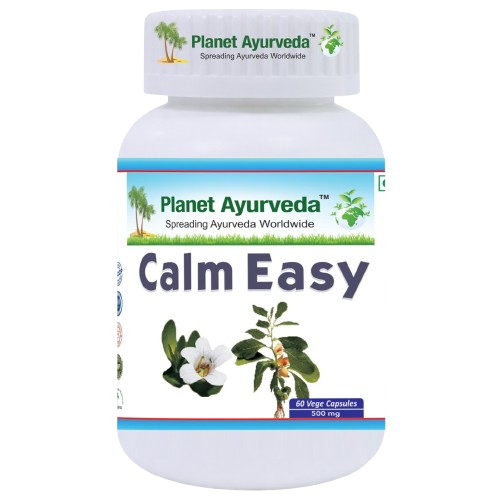

Calm Easy Capsule- Alternative of Clonazepam by Planet Ayurveda!
Calm Easy Capsules are a premium, synergistic phytotherapeutic formulation engineered to stabilize hyper-excitable neural pathways and restore nervous system equilibrium. By harnessing standardized, high-potency extracts of Ashwagandha (Withania somnifera), Brahmi (Bacopa monnieri), and Tagar (Valeriana wallichii), these capsules act as natural central nervous system modulators. Similar to the targeted mechanism of Clonazepam, the bioactive valerenic acids and withanolides in Calm Easy enhance the binding efficiency of endogenous GABA at the receptor complex. This specific cellular action drives a stabilizing chloride ion influx that hyperpolarizes overactive neurons, rapidly dampening paroxysmal nerve firing to abate acute anxiety, panic, and muscle tension without inducing chemical dependence or daytime sedation.
Conclusion
In a nutshell, The intersection of modern psychopharmacology and traditional Ayurvedic wisdom reveals a profound structural alignment in managing neurological hyper-excitability. While conventional medicine relies on synthetic interventions like Clonazepam to achieve immediate chemical damping via targeted GABA-A receptor modulation, Ayurveda offers a holistic parallel. By identifying the root cause of anxiety as an erratic surge in Vata dosha and excess Rajas, traditional medicine utilizes potent Medhya Rasayana botanicals—such as Withania somnifera, Bacopa monnieri, and Valeriana wallichii—to achieve a comparable stabilizing effect on the central nervous system. Ultimately, integrating the rapid, acute symptom control of modern therapeutics with the deep, regenerative, and dependency-free nourishment of Ayurvedic pathways provides a balanced, comprehensive framework for restoring long-term mental clarity, emotional equilibrium, and sustainable neurological health.