Herpes on Foot (Herpetic Whitlow) – Causes, Symptoms, Treatment & Herbal Remedies
Abstract
Throughout human history, viral pathogens have operated as invisible architects of disease, navigating the intricate pathways of our physiology to find hidden entry points. While many viruses exhibit predictable behaviors, settling into familiar anatomical niches, they occasionally break their own rules to manifest in unexpected, enigmatic locations. This erratic behavior challenges clinical conventions, blurring the lines between common dermatological conditions and complex viral dynamics. Understanding these atypical expressions requires a synthesis of modern diagnostic precision and traditional medical insight to modify the host environment and restore systemic equilibrium. Today, we will discuss one such infection, i.e., herpes of the foot. By examining its unique pathology, risk factors, and integrative therapeutic solutions, we can unravel the complexities of this rare manifestation and redefine our approach to localized viral management.
Introduction
Herpes simplex virus (HSV) is a highly contagious infection typically causing oral or genital sores, but it can rarely present on the foot as cutaneous herpes when the virus enters through broken skin. It is structurally distinct from herpetic whitlow, which strictly targets the fingers and thumbs (often via auto-inoculation from oral sores), whereas herpes of the foot appears on the toes or soles and is frequently misdiagnosed as athlete’s foot or a bacterial infection. Early recognition of this atypical presentation is vital, as initiating prompt antiviral therapy significantly reduces severe neural pain, shortens the outbreak duration, and prevents further transmission or secondary complications.
Understanding Herpes on the Foot
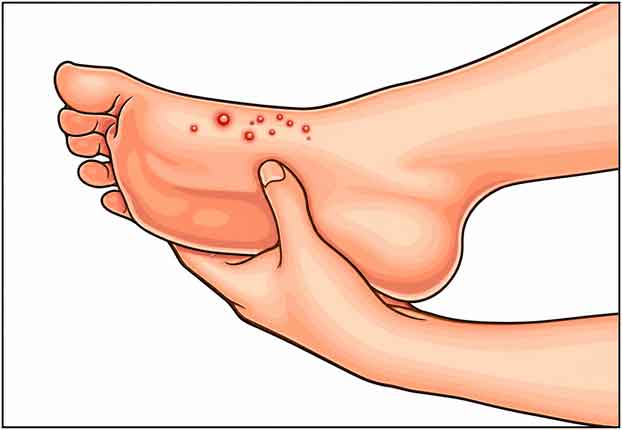
Herpes on the foot, clinically classified as cutaneous herpes simplex, is a localized viral skin infection occurring on the toes, soles, or instep. While herpes simplex virus type 1 (HSV-1) is traditionally associated with oral cold sores and type 2 (HSV-2) with genital infections, either strain can manifest on the foot. HSV-1 is more commonly implicated in upper-body cutaneous infections, but cross-anatomic transmission means HSV-2 can also cause lower-extremity lesions if direct exposure occurs. The virus cannot penetrate intact, healthy skin. Instead, it infects the body through microscopic breaks in the epidermal barrier, such as cuts, scrapes, or friction blisters. Once inside, the virus invades the local epithelial cells, replicates, and subsequently travels up the sensory nerve pathways to establish a lifelong, latent residency in the dorsal root ganglia. Those at the highest risk include athletes involved in close-contact sports like wrestling or rugby, where skin-to-skin friction is constant. Additionally, individuals with compromised skin integrity—such as those suffering from uncontrolled eczema or severe athlete’s foot—and immunocompromised individuals face a significantly higher susceptibility to both initial infection and frequent, severe recurrences.
How Common Is Foot Herpes?
While Herpes Simplex Virus (HSV) affects billions globally, manifestation on the foot is rare. The exact epidemiology is difficult to track due to frequent misdiagnoses as athlete’s foot or bacterial infections, but it represents a tiny fraction of atypical cutaneous cases. Its rarity is due to the foot’s thick, protective stratum corneum (outer keratin layer), which acts as a robust physical barrier. Furthermore, HSV prefers delicate mucosal membranes over thick skin, and the feet rarely encounter active viral sores. Transmission requires a compromised skin barrier, such as a cut, scrape, or friction blister. The primary routes are autoinoculation (accidentally transferring the virus from one’s own oral or genital sore to the foot) and direct skin-to-skin contact, which is most common among athletes in high-friction contact sports like wrestling or rugby.
Causes and Risk Factors
- Direct Skin Contact: Touching or rubbing against an active, fluid-filled herpes lesion provides a direct pathway for the virus to transfer to the foot.
- Autoinoculation: Accidentally spreading the virus to your own foot by touching an active oral cold sore or genital lesion and then touching an open area on your foot.
- Broken Skin: The virus cannot penetrate intact skin; it requires a microscopic or visible break in the skin barrier—such as cuts, scrapes, cracked heels, or blisters—to cause an infection.
- Sports-Related Exposure: Athletes in high-friction, close-contact sports (like wrestling, rugby, or martial arts) face high risk due to frequent skin abrasions combined with direct body contact (herpes gladiatorum).
- Healthcare Workers: Medical and dental professionals who handle bodily fluids or perform procedures without proper personal protective equipment (PPE) are at higher risk of accidental exposure.
- Immunocompromised Individuals: People with weakened immune systems (due to HIV, chemotherapy, or immunosuppressive medications) have a much lower defense against initial infection and experience more frequent, severe outbreaks.
Symptoms and Clinical Features
- Tingling and Burning Sensation: A distinct prodrome phase characterized by tingling, itching, or a burning sensation on the foot before any visible sores appear.
- Painful Grouped Blisters: Small, highly tender blisters clusters localized on the toes, sole, or instep of the foot.
- Redness and Swelling: The skin surrounding the lesion cluster becomes inflamed, erythematous (red), and swollen.
- Fluid-Filled Vesicles: Blisters fill with clear or cloudy, highly infectious fluid that eventually ruptures and oozes.
- Crusting and Healing: After rupturing, the open sores dry out, form yellowish or brown crusts/scabs, and gradually heal without scarring over 1 to 2 weeks.
- Fever (Occasionally): Systematic symptoms like a low-grade fever, body aches, and swollen lymph nodes in the groin may accompany the primary (first) outbreak.
- Recurrent Episodes: The virus remains latent in nerve tissue, occasionally reactivating to cause future, though typically milder, outbreaks in the exact same spot.
Conditions That Can Mimic Foot Herpes
Because herpes on the foot is rare, it is frequently misdiagnosed. Several common dermatological and infectious conditions present with similar fluid-filled blisters, redness, or pain.
- Dyshidrotic Eczema: Causes intensely itchy, deep-seated blisters on the soles and sides of toes. It is non-infectious, often recurring on both feet due to allergies or stress.
- Athlete’s Foot (Tinea Pedis): A fungal infection causing peeling, itching, and occasionally blisters. It typically spreads between the toes rather than appearing in tight, painful clusters.
- Contact Dermatitis: An allergic reaction to shoe materials, dyes, or chemicals that creates weeping blisters. It aligns exactly with where the irritating material touched the skin.
- Bacterial Infections (Impetigo/Cellulitis): Impetigo causes fluid-filled blisters that form honey-colored crusts. Cellulitis causes rapid, painful swelling and redness that requires antibiotics.
- Friction Blisters: Caused by poorly fitting shoes or mechanical rubbing. They are non-infectious, isolated, and lack the preceding tingling or burning sensation characteristic of herpes.
Diagnosis
Diagnosis can be done using a combination of physical examination and advanced laboratory assays to definitively identify cutaneous herpes on the foot and rule out look-alike conditions:
- Clinical Examination: Doctors assess the lesion morphology, checking for the signature presentation of tightly grouped, uniform vesicles on an erythematous (red) base, along with a history of a tingling or burning prodrome.
- PCR (Polymerase Chain Reaction) Test: The gold standard in modern diagnostics. A clinician swabs an active blister to detect the virus’s DNA. PCR is highly sensitive, extremely accurate, and can easily differentiate between HSV-1 and HSV-2 within 24 to 48 hours.
- Viral Culture: A traditional method where fluid from a fresh blister is collected and monitored in a lab to see if the herpes virus grows. While highly specific, it takes several days and has a lower sensitivity if the blister has already begun to crust.
- Tzanck Smear: A rapid, older bedside test where cells scraped from the base of an ulcer are stained and viewed under a microscope. It looks for “multinucleated giant cells,” but because it cannot distinguish between HSV and Shingles (Varicella-Zoster), it has largely been replaced by PCR.
- Serology (Blood Tests): Used primarily to detect HSV antibodies rather than diagnosing an active foot lesion. It confirms past exposure and identifies whether a patient carries HSV-1 or HSV-2, which is helpful for managing recurrent episodes.
Modern Treatment
Modern management of foot herpes relies on oral antiviral medications (like acyclovir or valacyclovir) initiated within 72 hours to suppress viral replication and accelerate recovery. Pain management combines systemic analgesics with cool, damp compresses to soothe local nerve discomfort. Proper wound care focuses on keeping the area clean and dry, allowing blisters to crust naturally without picking. To prevent secondary bacterial infections, topical antiseptics or localized antibacterial ointments are applied to open lesions. Hospitalization is rarely required but becomes necessary if the infection spreads systematically, causes severe neurological complications, or threatens
Ayurveda’s Insight!
In the classical medical literature of Ayurveda—primarily the Charaka Samhita and Sushruta Samhita—acute, spreading, blistering skin conditions that correlate with modern viral presentations like herpes are categorized under Visarpa (derived from the root srityatva, meaning “to spread rapidly”). When presenting on the lower extremities, it represents a deep metabolic crisis where systemic toxicity manifests in peripheral tissue. The manifestation of herpes on the foot is not viewed merely as a localized surface pathogen, but as an internal fiery imbalance finding an exit point through a vulnerable or compromised skin barrier (Khavaigunya).
- The Fire Elements (Pitta-Rakta Symbiosis): The primary driver is an acute aggravation of Pitta Dosha, specifically its Ushna (hot), Tikshna (sharp), and Drava (fluid) attributes. Because Pitta and Rakta Dhatu (blood tissue) share an identical energetic profile, an escalation in Pitta immediately vitiates the blood.
- The Inflammatory Cascade: This heated, toxic blood plasma travels through the Raktavaha Srotas (blood-carrying channels). When it reaches the dense, peripheral network of the feet, the sharp quality of Pitta damages the Tvacha (epidermal layers), leading to the sudden eruption of Sphota (painful, fluid-filled vesicles) that mirror the precise clinical staging of viral vesicle formation.
- The Involvement of Vata: The intense, burning neural pain (Daha) and tingling prodrome associated with herpes indicate that Vata Dosha is also involved, pushing the angry Pitta into the sensory nerve pathways (Majja Dhatu).
- Blood Cleansing (Raktaprasadana): Herbs like Manjistha (Rubia cordifolia) and Sariva (Hemidesmus indicus) act as systemic alteratives. They cool the blood, alter its biochemical environment to make it inhospitable to pathogenic replication, and support the liver in filtering out metabolic waste.
- Immune-Modulation and Cellular Repair: Guduchi (Tinospora cordifolia) is administered as a premier Rasayana (rejuvenative). Modern research confirms its ability to stimulate macrophage activity, while traditionally it acts as a Srotoshodhana agent—clearing obstructions in the microchannels to allow the body’s natural defensive intelligence to reach the extremities.
- Antiviral and Antimicrobial Defense: Neem (Azadirachta indica) is utilized for its potent bitter and dry (Ruksha) qualities, which directly counteract the fluid accumulation (Drava) of the blisters while exhibiting natural anti-infective properties.
Because the local burning sensation (Daha) of a herpes outbreak can be agonizing, external therapies are deployed to instantly pacify the local nerve endings and dry up the active vesicles:
1. Cool Topical Pastes (Lepa)
The classical protocol forbids thick, heating, or oily ointments during the acute phase, as they trap the heat. Instead, fine powders are mixed with cool liquids (like rose water or coconut oil) to form thin, cooling pastes:
- Chandan (Sandalwood): Renowned for its extreme Sheeta (cooling) potency, it instantly relieves burning and curtails localized inflammation.
- Yashtimadhu (Licorice): Contains natural glycyrrhizin, which provides an anti-inflammatory effect comparable to mild hydrocortisone, soothing the raw, ulcerated skin tissue.
2. Therapeutic Bloodletting (Raktamokshana)
In cases of extreme, localized stagnation where the blisters are highly painful, dark, and throbbing, classical surgery texts outline the use of Jalaukavacharana (Leech Therapy). Leeches are selectively drawn to corrupted, stagnant blood. As they feed, their saliva injects a complex cocktail of bioactive enzymes—including hirudin (a potent anticoagulant), anti-inflammatories, and natural local anesthetics. This immediately decompresses tissue pressure, reduces neural pain, clears localized toxic accumulation, and accelerates the healing of the underlying ulcers.
Herbal Remedies for Herpes on the Foot (Herpetic Whitlow) by Planet Ayurveda


Planet Ayurveda is a trusted Ayurvedic brand dedicated to promoting wellness through authentic herbal formulations inspired by the timeless principles of Ayurveda. Our products are prepared using carefully selected herbs, standardized extracts, and traditional manufacturing methods to ensure purity and quality. Manufactured in GMP-certified facilities and tested for quality, every formulation is free from harmful chemicals, artificial colors, and preservatives. With a diverse range of herbal supplements, personal care products, wellness teas, and classical Ayurvedic formulations, Planet Ayurveda focuses on delivering nature-based solutions for everyday wellness. Today, the brand is trusted by customers and healthcare professionals in numerous countries across the globe. For Managing Herpes of food we have numerous formulations out of which some are listed below:-
1. Phyllanthus Niruri Capsules
This is capsule preparation prepared using standardized extract of Phyllanthus niruri (Bhumi Amla). This formulation acts as a potent antiviral and liver protector (Yakrit-pleeha uttejaka). In cases of foot herpes, it inhibits viral attachment and replication of the DNA virus while purging metabolic waste (dusha kapha-pitta) from the blood. It clears deep-seated cellular toxicity within the Raktavaha Srotas, accelerating the drying of fluid-filled vesicles (sphota) and improving systemic host resistance to minimize recurring outbreaks.
Dosage: 1 capsule, twice daily with plain water after meals.
2. Kaishore Guggul
This a classical tablet preparation prepared using Guggulu (Commiphora mukul), Triphala, Guduchi (Tinospora cordifolia) and Zingiber officinale (Ginger). Formulated specifically to cleanse the blood (Raktashodhaka) and settle inflammatory joint or deep-tissue lesions. It addresses the painful stagnation where Pitta and Rakta accumulate in the lower extremities. By clearing microchannel obstructions (Srotoshodhana), it reduces peripheral edema, controls weeping fluid-filled ulcers, removes burning nerve irritation (daha), and prevents secondary deep-tissue bacterial complications.
Dosage: 2 tablets, twice daily (BD), chewed or swallowed with lukewarm water after meals.
3. Curcumin Capsules
These capsules are prepared using Standardized 95% Curcuminoids extracted from Curcuma longa (Turmeric). Curcumin provides massive anti-inflammatory (Shothahara) and broad-spectrum antimicrobial action. For foot herpes, it modulates the immune response and suppresses cellular inflammatory pathways (NF-kB) responsible for agonizing neural pain. It actively accelerates the crusting and healing phases of skin lesions, repairs damaged dermal tissue, and acts as a barrier protection against opportunistic secondary bacterial pathogesis on open foot sores.
Dosage: 1 capsule, twice daily with plain water after meals.
4. Pitta Balance Capsules
This capsule is made using Praval Pishti (Coral), Akik Pishti (Agate), Mukta Pishti (Pearl), and Giloy Satva (extract). This compound acts as a powerful systemic coolant (Sheeta-virya) designed to aggressively pacify aggravated Tikshna (sharp) and Ushna (hot) qualities of Pitta. It immediately targets the severe localized burning, redness, and inflammation in the toes or soles. The mineral pishtis neutralize systemic acid profiles, soothe nerve fire, and regulate localized fluid exudation, arresting vesicle progression.
Dosage: 1 capsule, twice daily (BD), with plain water after meals.
5. Gleaming Skin, Hair, Nails Capsules
This is a Oral polyherbal extract capsule made Manjistha (Rubia cordifolia), Pit Papda (Fumaria officinalis), Sariva (Hemidesmus indicus), and Ghrit Kumari (Aloe barbadensis). A specialized complex focused on blood purification and tissue regeneration (Tvachya). Manjistha and Sariva alter the toxic biochemical environment of Rakta Dhatu, making it inhospitable to the virus. Pit Papda eliminates systemic tissue heat, while Aloe vera provides hydration to raw skin. It prevents post-lesion scarring and accelerates complete cellular replacement of the thick epidermal layers of the foot.
Dosage: 2 capsules, twice daily (BD), with plain water after meals.
6. Vrana Rakshak Tail
It is medicated topical Ayurvedic herbal oil (Taila) Prepared using a soothing, base oil infused with traditional Vranaropana (wound-healing) and antimicrobial botanicals. This topical application is formulated exclusively to clean, disinfect, and close open skin breaches. When applied to the foot, it forms a protective lipid shield over weeping vesicles or ruptured ulcers, eliminating itching, dryness, and severe nerve pain. It dries out active lesions cleanly, prevents the skin from cracking or peeling painfully during the crusting stage, and ensures zero scar tissue retention.
Dosage: Gently apply a few drops over the affected foot lesions 2 to 3 times a day using clean cotton gauze. Do not scrub or rub vigorously.
Conclusion
At last we can say that Herpes simplex infection of the foot is a rare, frequently misdiagnosed manifestation that demands rapid recognition to prevent prolonged nerve pain and secondary complications. Whether approached through advanced modern antivirals or classical Ayurvedic protocols aimed at cooling systemic Pitta-Rakta heat, a timely, comprehensive treatment strategy is paramount. By combining targeted internal therapies with structured local care, clinicians can effectively suppress viral replication, accelerate skin healing, and significantly reduce future recurrences.