How to Eliminate Excess Estrogen from the Female Body Naturally
Abstract
In the architecture of female physiology, estrogen serves as both sculptor and conductor, orchestrating vitality across the life cycle. Yet, when this building force swells into unopposed dominance, the systemic harmony fractures. This abstract explores excess estrogen not as an isolated molecular surplus, but as a multi-system bottleneck where sluggish hepatic clearance meets an altered gut estrobolome. Bridging the cellular precision of modern endocrinology with the energetic wisdom of classical Ayurveda, we trace how metabolic stagnation (Mandagni) traps active hormones within the circulatory channels. True restoration demands more than suppression; it requires an integrative reclamation of the body’s natural elimination pathways. Let’s discuss!
Introduction
Estrogen is the primary orchestrator of a woman’s physiology, far transcending its role in reproduction. Produced mainly by the ovaries, it acts as a master chemical messenger circulating through the bloodstream to regulate bone density, cardiovascular health, brain function, and metabolic stability. Estrogen becomes a problem when its delicate equilibrium is disrupted, shifting into either excess or deficiency. In cases of estrogen dominance—often driven by chronic stress, poor hepatic detoxification, or environmental xenoestrogens (synthetic chemicals mimicking estrogen)—women may experience fibroids, severe PMS, endometriosis, and weight gain. Conversely, a sharp decline in estrogen, typical during the perimenopause-to-menopause transition, can manifest as accelerated bone loss, cognitive fog, metabolic shifts, and increased cardiovascular risk. True hormonal vitality relies entirely on this hormone staying within a tightly controlled, optimal physiological window.

Understanding Estrogen: The Hormone with Two Faces
Estrogen is not a single entity, but a dynamic family of steroid hormones that acts as a primary architect of female physiology. While celebrated for driving secondary sexual characteristics and reproductive cycles, its receptors are ubiquitously distributed throughout the body. Estrogen directly influences neural plasticity in the brain, maintains endothelial health in the cardiovascular system, regulates lipid metabolism in the liver, and preserves the structural integrity of bone by inhibiting osteoplastic resorption (bone breakdown).
The biological impact of estrogen depends entirely on which form dominates the systemic circulation:
- Estradiol: The most potent and prevalent form during a woman’s reproductive years. Generated primarily by the ovarian follicles, it drives the menstrual cycle and provides robust neuroprotective and cardioprotective benefits.
- Estrone : A weaker estrogen predominant after menopause. Synthesized mainly in adipose (fat) tissue through the aromatization of adrenal androgens, higher levels of estrone are frequently associated with metabolic challenges post-menopause.
- Estriol : The weakest circulating form, produced in significant quantities only by the placenta during pregnancy. It offers protective, immunomodulatory effects and acts as a mild agonist to estrogen receptors.
The Concept of Estrogen Dominance
Hormonal health is dictated by harmony, not absolute numbers. Estrogen dominance occurs when the relative ratio of estrogen to progesterone shifts heavily in favor of estrogen. This state can manifest even if absolute estrogen levels are normal or low, provided progesterone levels have plummeted even further (a common occurrence during anovulatory cycles in perimenopause). When estrogen reigns unopposed, its natural proliferative tendencies go unchecked. Cellular pathways that govern tissue growth accelerate, frequently culminating in clinical presentations such as uterine fibroids, fibrocystic breast tissue, severe menorrhagia (heavy menstrual bleeding), and an altered metabolic setpoint that favors fat storage over fat oxidation.
Signs Your Body May Be Struggling with Excess Estrogen
When estrogen levels over-saturate tissue receptors or outpace progesterone, the body manifests this biochemical imbalance through a distinct cluster of physical and neurological signs. Because estrogen is highly proliferative and deeply intertwined with neurotransmitter pathways, excess levels can disrupt multiple physiological systems simultaneously.
Reproductive & Structural Symptoms
- Heavy or Painful Periods: Estrogen drives the proliferation of the endometrium (uterine lining). When unopposed by sufficient progesterone, the lining grows excessively thick, leading to menorrhagia (abnormally heavy bleeding) and painful uterine cramping driven by elevated prostaglandin production.
- Fibroids and Endometriosis: Both uterine fibroids (benign smooth muscle tumors) and endometriosis (the growth of endometrial-like tissue outside the uterus) are classic estrogen-dependent conditions. Hyper-estrogenic environments act as a growth fuel, accelerating cellular proliferation and localized inflammation.
- Breast Tenderness: Estrogen stimulates the growth of breast ductal tissue. Excess levels can cause noticeable fluid retention, vascular engorgement, and cyclic mastalgia (breast pain), often making the breasts feel dense, swollen, or fibrocystic before menstruation.
Metabolic & Physical Shifts
- Weight Gain (Hips, Thighs, Abdomen): Estrogen naturally influences adipose (fat) tissue distribution. Excess estrogen signals the body to deposit fat preferentially around the hips and thighs. Furthermore, a hyper-estrogenic state can impair thyroid hormone signaling and promote insulin resistance, leading to stubborn abdominal fat accumulation and a sluggish metabolic rate.
- Acne and Skin Changes: While androgens are typically blamed for acne, a sharp imbalance in the estrogen-to-progesterone ratio can trigger systemic inflammation and fluid retention within the skin, altering sebum dynamics and leading to cyclical, deep cystic flare-ups along the jawline.
- Fatigue and Headaches: Chronic estrogen dominance burdens hepatic (liver) clearance mechanisms and can trigger histaminergic responses. This often manifests as persistent, sluggish fatigue and debilitating “estrogen dominance headaches” or migraines, frequently triggered by the sharp hormonal fluctuations just prior to menses.
Neurological & Psychological Disruptions
- PMS and Mood Swings: Estrogen heavily modulates key neurotransmitters, including serotonin, dopamine, and GABA. When estrogen levels fluctuate wildly or sit too high relative to calming progesterone, it can dysregulate these mood-stabilizing pathways, inducing irritability, acute anxiety, and emotional volatility.
- Low Libido: Optimal sexual desire requires a delicate synergy between estrogen, progesterone, and testosterone. When estrogen dominates, it can elevate Sex Hormone-Binding Globulin (SHBG)—a protein that binds to free testosterone—effectively lowering the biologically active testosterone needed to drive healthy libido.
- Sleep Disturbances: Progesterone is highly neuroprotective and metabolizes into allopregnanolone, a potent agonist for calming GABA receptors in the brain that promote deep sleep. In an estrogen-dominant state, the lack of relative progesterone compromises sleep architecture, causing frequent nighttime awakenings and insomnia.
Why Does Estrogen Build Up?
The build-up of excess estrogen is driven by four primary multi-system bottlenecks:
- Sluggish Liver Detoxification: If the liver lacks crucial nutrients (like magnesium and B-vitamins), it cannot properly break down or package active estrogen for elimination, causing it to recirculate.
- Gut Dysbiosis (The Estrobolome): An unbalanced gut microbiome overproduces an enzyme called beta-glucuronidase. This enzyme uncouples the packaged estrogen in the colon, allowing it to be reabsorbed back into the bloodstream rather than excreted.
- Environmental Xenoestrogens: Daily exposure to endocrine-disrupting chemicals found in plastics (BPA), pesticides, and synthetic fragrances mimics natural estrogen, overloading cellular receptors.
- The Adipose-Aromatase Loop: Fat tissue contains the enzyme aromatase, which converts adrenal hormones into estrogen ($E_1$). This creates a vicious cycle: more fat creates more estrogen, which signals the body to store more fat.
The Liver-Gut Connection: Your Body’s Natural Estrogen Detox System
The liver and gut work as a coordinated relay team to safely deactivate and eliminate estrogen from the body. If this system breaks down, estrogen backs up and causes hormonal imbalance.
1. The Liver’s Job: Deactivate & Tag
- Phase I (Breakdown): The liver breaks down active estrogen into weaker metabolites. It can route them down a clean, protective pathway ($2\text{-OH}$) or a highly inflammatory, reactive pathway ($16\alpha\text{-OH}$).
- Phase II (Tagging): The liver snaps a molecular “tag” onto these metabolites (via methylation and glucuronidation). This renders the estrogen completely inactive and water-soluble, allowing it to be safely dumped into the bile and sent to the intestines.
2. The Gut’s Job: Excrete vs. Recycle
- Healthy Elimination: In a balanced gut, this tagged, inactive estrogen travels smoothly through the intestines and is permanently excreted in the stool.
- The Gut Hijack: If you have gut dysbiosis (unbalanced bacteria) or constipation, certain microbes secrete an enzyme called beta-glucuronidase. This enzyme acts like scissors, snipping off the liver’s protective tag. The estrogen instantly reactivates, breaches the gut wall, and recirculates right back into your bloodstream.
Ayurveda’s Insight!
In Ayurveda, hormonal health is not viewed through the lens of isolated chemical molecules, but rather as the harmonious dance of Doshas (metabolic forces), Dhatus (tissue layers), and Agni (digestive and metabolic fire). Estrogen—with its fluid, building, and structural nature—shares a profound kinship with Kapha Dosha and Rasa Dhatu (the primary plasma tissue). When estrogen accumulates excessively, Ayurveda identifies it as a state of Agnumandya (sluggish metabolic fire) leading to the accumulation of Ama (metabolic toxins) and tissue overgrowth. While estrogen itself is largely Kapha-dominant in its tissue-building qualities, its clinical complications manifest as an imbalance across all three Doshas:
- Kapha Vriddhi (Excess Kapha): Drives the structural overgrowths. Because Kapha governs lubrication, stability, and growth, its aggravation mirrors the hyper-proliferative nature of estrogen dominance—leading to fluid retention, weight gain around the hips, fibrocystic breasts, and uterine fibroids (Granthi).
- Pitta Dusti (Vitiated Pitta): Estrogen heavily influences vascularity and heat. When out of balance, it inflames Pitta, leading to heavy, bright red menstrual bleeding (Raktapitta), painful cyclic inflammation, cystic acne along the jawline, and sudden mood volatility or irritability.
- Vata Vyana (Misdirected Vata): Vyana Vayu governs circulation and movement throughout the channels (Srotas). If Vata becomes dry or erratic, it disrupts the downstream flow of menstruation (Apana Vayu), resulting in severe, spasmodic cramping, hormonal migraines, and erratic sleep patterns.
Ayurveda asserts that all physical imbalances originate in the digestive tract. The liver-gut bottleneck found in modern medicine perfectly aligns with classical Ayurvedic pathophysiology:
- Mandagni (Weak Digestion) & Ama: When the digestive fire (Jatharagni) is weak, food is not cleanly metabolized. Instead, it creates Ama—a sticky, toxic, undigested byproduct.
- Yakrit (Liver) Dysfunction: In Ayurveda, the liver is the seat of Ranjaka Pitta, which governs the quality of the blood and plasma. If the liver is burdened by Ama, it cannot filter toxins or process the circulating essences cleanly, directly mirroring a sluggish hepatic Phase I/II detoxification.
- Sroto-Avarodha (Channel Blockage): This Ama enters the circulatory channels and specifically settles in the Artava Vaha Srotas (the channels governing the female reproductive system). The sticky toxins block the natural flow, trapping excess Kapha and Pitta in the pelvic cavity, culminating in conditions like endometriosis and painful, heavy periods.
Foods That Help Remove Excess Estrogen Naturally?
To clear excess estrogen naturally, your diet must actively support hepatic (liver) detoxification pathways, stimulate healthy bowel motility to prevent reabsorption, and inhibit the aromatase enzyme that creates excess estrogen. Focusing on the following targeted food groups optimizes these elimination pathways:
- Cruciferous Vegetables: Broccoli, kale, Brussels sprouts, cabbage, and cauliflower are dense in Indole-3-Carbinol (I3C) and Diindolylmethane (DIM). These compounds selectively guide the liver’s Phase I pathway toward creating the protective, weak $2\text{-OH}$ estrogen metabolite instead of the proliferative $16\alpha\text{-OH}$ pathway.
- Allium Vegetables (Garlic & Onions): Rich in sulfur compounds and quercetin, onions, garlic, leeks, and shallots boost the production of glutathione—the liver’s master antioxidant needed for Phase II conjugation.
- High-Soluble Fiber Foods: Chia seeds, flaxseeds, psyllium husk, and oats absorb excess water and bile in the intestinal lumen. This bulk shortens bowel transit time, minimizing the window that gut bacteria have to de-conjugate and recycle estrogen.
- Ground Flaxseeds (Lignans): Flaxseeds are uniquely rich in lignans, a type of phytoestrogen. Lignans safely bind to estrogen receptors, blocking stronger, endogenous estrogens ($E_2$) from over-stimulating tissue. Additionally, they help elevate Sex Hormone-Binding Globulin (SHBG), which binds free circulating hormones.
- Sprouted Broccolini & Sulforaphane Sources: Broccoli sprouts contain up to 100 times more glucoraphanin (the precursor to sulforaphane) than mature broccoli. Sulforaphane strongly upregulates Phase II liver detoxification, particularly the glucuronidation pathway that prepares estrogen for biliary excretion.
- Calcium D-Glucarate Rich Foods: Found naturally in apples, grapefruit, oranges, and alfalfa sprouts, Calcium D-Glucarate directly inhibits beta-glucuronidase—the troublesome gut enzyme that cuts the protective tags off deactivated estrogen and causes it to recirculate.
- Bitter Greens: Dandelion greens, arugula, radicchio, and mustard greens stimulate bile synthesis and flow from the liver and gallbladder. Since tagged estrogen is excreted via the bile, promoting robust bile secretion accelerates hormonal clearance.
What Foods to Avoid?
To prevent estrogen from building up, it is equally important to reduce or eliminate foods that burden the liver, feed inflammatory gut bacteria, or introduce external hormones. Limit or avoid the following items:
- Conventional Dairy and Meat: Non-organic, factory-farmed meats and dairy products frequently contain trace amounts of synthetic growth hormones and environmental toxins that mimic estrogen in the body.
- Alcohol: Even moderate alcohol consumption slows down the liver’s detoxification capacity. When the liver is busy processing alcohol, hormone clearance stalls, directly raising circulating estrogen levels.
- Highly Processed Soy Products: While fermented, whole soy (like tempeh or miso) can be beneficial, isolated soy proteins found in processed meat alternatives and protein powders contain highly concentrated phytoestrogens that can overload sensitive receptors.
- Refined Carbohydrates and Sugar: High-sugar foods, white flour, and processed snacks trigger insulin spikes. Elevated insulin lowers Sex Hormone-Binding Globulin (SHBG), leaving more free, active estrogen circulating in your bloodstream.
- Ultra-Processed Vegetable Oils: Oils high in omega-6 fatty acids (such as corn, cottonseed, and soybean oil) promote systemic inflammation, which can aggravate estrogen-driven conditions like endometriosis and painful periods.
- Caffeine (In Excess): High intakes of caffeine have been shown to shift metabolic pathways in the liver toward the more proliferative, inflammatory forms of estrogen ($16\alpha\text{-OH}$), potentially worsening cyclic breast tenderness and anxiety.
- Foods Packaged in Soft Plastics: While not a food group itself, microwaving food in plastic containers or consuming fatty foods wrapped in soft plastics allows xenoestrogens (like BPA and phthalates) to leach directly into your meal.
Ayurvedic herbs that support elimination of Excess Estrogen!
1. Bhumi Amlaki (Phyllanthus niruri
Highly valued as a potent Yakrit-Uttejaka (liver stimulant) and Pitta-Samana (Pitta pacifier). It directly cleanses Ranjaka Pitta, clearing toxic Ama from the liver and blood, which purifies the Artava Vaha Srotas (female reproductive channels). Modern studies demonstrate strong hepatoprotective properties. It upregulates Phase I and Phase II liver detoxification pathways, accelerating the structural clearance of circulating steroid hormones. Furthermore, it exhibits anti-proliferative actions that inhibit the cellular overgrowth characteristic of hyper-estrogenic environments.
2. Shatavari (Asparagus racemosus)
Celebrated as the ultimate Rasayana (rejuvenative) for the female reproductive system. It directly balances Vata and Pitta, acts as a cooling tonic, and deeply nourishes Rasa Dhatu (plasma) and Artava (menstrual fluid), ensuring a smooth downstream flow of Apana Vayu. Classified as a true adaptogen containing steroidal saponins (shatavarins). It acts as a selective estrogen receptor modulator (SERM); its gentle phytoestrogens bind to saturated tissue receptors, effectively blocking stronger, aggressive endogenous estrogens ($E_2$) from over-stimulating the uterus and breasts.
3. Triphala (Three-Fruit Formula)
A classical combination of Amalaki, Bibhitaki, and Haritaki. It is the premier formula for Anulomana—correcting the downward movement of Apana Vayu. By scraping away systemic Ama and balancing all three Doshas, it clears intestinal stagnancy. It acts as a gentle, non-habit-forming colon prokinetic that eliminates chronic constipation, significantly reducing intestinal transit time. Rich in polyphenols, it optimizes the estrobolome (gut microbiome) and reduces the production of beta-glucuronidase, preventing the reactivation and reabsorption of excreted estrogen.
4. Kumari (Aloe vera)
A potent Bhedana (accumulation-breaking) herb with a specific affinity for the pelvic cavity. It cools irritated Pitta, breaks down dense Kapha accumulations like cysts or tumors (Granthi), and regulates Artava Pravritti (the healthy initiation of menstrual flow). Aloe contains active anthraquinones that stimulate biliary secretions from the gallbladder. Because the liver bundles deactivated estrogen into the bile for excretion, this robust boost in bile flow directly accelerates the physical elimination of processed hormones out of the body.
Planet Ayurveda Products for elimination of Excess Estrogen
Planet Ayurveda is a globally recognized Ayurvedic company dedicated to providing authentic herbal formulations based on the principles of classical Ayurveda. Its products are manufactured in GMP-certified facilities using carefully selected, high-quality herbs that undergo rigorous quality testing for purity, identity, and safety. The company follows stringent manufacturing standards and emphasizes the use of natural ingredients without harmful chemicals, artificial colors, or preservatives. Planet Ayurveda is committed to quality, transparency, and consistency throughout the production process. With internationally recognized certifications and a strong focus on research, sustainable sourcing, and customer satisfaction, Planet Ayurveda delivers trusted herbal products to customers worldwide. For eliminating excess estrogen, Planet Ayurveda has the following formulations.
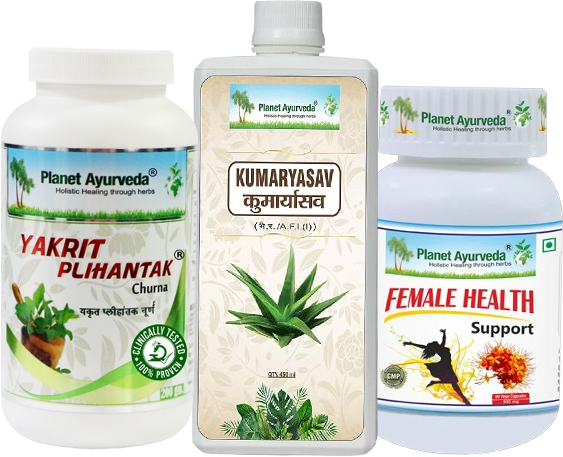
- Yakrit Plihanatak Churna
- Kumariasav
- Female health Support

Product description
1. Yakrit Plihantak Churna
A coarse herbal powder (Churna) combining potent protective ingredients such as Bhumi Amlaki (Phyllantahu niruri), Katuki (Picrorhiza kurroa), Kalmegh (Andrographis paniculata).This formulation targets the liver (Yakrit) and spleen (Pliha) to stoke Ranjaka Pitta and eliminate Ama. Scientifically, its bitter iridoid glycosides (like kutkin from Katuki) and flavonoids stimulate Phase I and Phase II glucuronidation pathways. By dramatically upgrading hepatic clearance, it ensures active estrone and estradiol are tagged and bundled into the bile rather than building up in the blood.
Dosage: 1/2 to 1 teaspoon twice daily, taken with warm water after meals.
2. Kumariasava
A naturally fermented liquid biometabolite (Asava). Its primary ingredient is fresh Aloe vera juice (Kumari), synergized with Haritaki, Bibhitaki, Amalaki (Three myrobalans)etc. This formula acts as an Anulomana agent, redirecting downward Apana Vayu and clearing intestinal Sroto-Avarodha (channel blockages). Biochemically, the anthraquinones in Aloe stimulate robust bile flow, flushing packaged estrogen into the digestive tract. Simultaneously, the fermented herbs regulate the estrobolome, reducing the beta-glucuronidase enzyme to stop the gut from snipping off estrogen’s tags and recycling it.
Dosage: 15 to 30 ml mixed with an equal quantity of water, taken twice daily immediately after meals.
3. Female Health Support
This formulation features a standardized clinical blend of elite female Rasayana herbs: Ashok (Saraca asoca), Lodhra (Symplocos racemosa), Shatavari (Asparagus racemosus). It directly pacifies Kapha and Pitta within the Artava Vaha Srotas (reproductive tract) to halt tissue overgrowth (Granthi). Modern science identifies Ashok and Lodhra as rich in uterine-tonic tannins and uterine-selective phytoestrogens. These compounds bind competitively to tissue receptors, safely blocking aggressive, high-potency circulating estrogens from hyper-stimulating the endometrium and breast tissue.
Dosage: 1 to 2 capsules twice daily with warm water or milk, preferably after meals.
Conclusion
In a nutshell we can say that True estrogen balance is a multi-system relay race dependent on a pristine liver-gut connection. As both modern endocrinology and classical Ayurveda demonstrate, addressing estrogen dominance requires shifting the focus from suppressing hormone production to optimizing systemic elimination. By bridging targeted nutrition—like sulforaphane-dense cruciferous vegetables—with time-tested formulations like Yakrit Plihantak Churna and Kumariasava, we can successfully stoke Agni, clear metabolic Ama, and optimize the estrobolome. Supporting these natural clearance pathways allows the body to safely deactivate, tag, and permanently excrete excess hormones, paving a sustainable path toward long-term physical, metabolic, and reproductive vitality.