Top 5 Ayurvedic Herbs with Powerful Anti-Cancerous Properties
Abstract
Medicinal plants have been used for centuries in traditional systems of medicine for promoting general health and well-being. Ayurveda and other traditional medicinal systems describe numerous herbs that are traditionally valued for their diverse therapeutic properties. Modern scientific studies have identified various bioactive compounds in medicinal plants, including alkaloids, flavonoids, polyphenols, and essential oils, which have been investigated for their biological activities in laboratory and experimental settings. These studies have encouraged growing interest in understanding the potential role of medicinal herbs in health-related research. This article highlights some important medicinal herbs, including Davna (Artemisia annua), Haridra (Curcuma longa), Arlu (Ailanthus excelsa), Thuner (Taxus baccata), and Tulsi (Ocimum basilicum), for their promising anticancer potential. Further research continues to explore the biological properties and broader applications of these medicinal plants.
Introduction
Cancer is one of the most challenging and life-threatening diseases worldwide, affecting millions of people each year. Unhealthy lifestyle habits, chronic stress, weakened immunity, environmental pollution, and poor dietary patterns are considered factors associated with the increasing prevalence of cancer. It is a complex disease characterized by the uncontrolled growth and spread of abnormal cells in the body. Oxidative stress, genetic factors, chronic inflammation, exposure to environmental toxins, and unhealthy dietary practices have been widely studied in relation to the development and progression of cancer. Despite remarkable advancements in modern cancer therapies, including chemotherapy, radiation therapy, and targeted treatments, these approaches are often associated with various adverse effects and complications. Therefore, there is increasing scientific interest in exploring complementary areas of research, including medicinal plants and traditional systems of medicine. Medicinal plants have been used in Ayurveda for centuries to support general health and wellness. Modern scientific studies have identified several bioactive compounds, such as alkaloids, flavonoids, polyphenols, and essential oils, which have been investigated for their antioxidant, anti-inflammatory, cytotoxic, and immunomodulatory activities in experimental settings. Let’s discuss the top 5 herbs among them.
Top 5 Herbs in Ayurveda with Best Anti-cancerous Properties
1. Davna (Artemisia annua)
This is a highly aromatic herb widely used in herbal and Chinese medicine. It is widely known for containing artemisinin, a compound used for malaria treatment.
Botanical description of the plant
Artemisia annua is an annual plant belonging to the family Asteraceae. The plant grows 30 to 100 cm tall with erect stems brownish to violet brown. The leaves are 3-5 cm long with 2- 3 deep cuts or leaflets and have characteristic intensive aromatic smell. The flowers are small, greenish yellow, arranged in loose panicles. The artemisinin content in dried leaves is up to 1.5%.
Ayurveda uses of Davana
Davan is Kapha-pitta shamaka, in Ayurveda it is used for Vrana Ropana (wound healing), Kushtha (skin disorders), and Krimiroga (Antimicrobial) actions.
Anti-cancerous properties
Artemisia annua and its active phytochemicals possess antimalarial, antioxidant, cytotoxic, anti-inflammatory, and antimicrobial properties. Scientific research and published studies suggest that artemisinin and its derivatives, quercetin, and polyphenols exhibit anti-cancer activities by inhibiting cancer cell proliferation, invasion, and metastasis, inducing apoptosis through the regulation of cellular pathways, modulating the immune system and tumor microenvironment, and enhancing the efficacy of chemotherapy drugs. Experimental studies have shown activity against colorectal, prostate, pancreatic, breast, and leukemia cancer cells.
2. Haridra (Curcuma longa)
One of the most important Ayurvedic herbs called Haridra, having multiple health benefits, commonly used in every household. The rhizome of the plant contains a bioactive compound called curcumin, due to which this herb holds a number of benefits.
Botanical description of the plant
Turmeric (Curcuma longa) is a herbaceous perennial plant belonging to the ginger family (Zingiberaceae). It is widely cultivated for its aromatic underground rhizomes, which are used to produce the yellow spice valued for its culinary and medicinal properties. The plant typically grows up to 1 meter in height and possesses a dense pseudostem formed by overlapping elongated leaf sheaths. It bears 8–10 alternate leaves that are large, oblong to lance-shaped, dark green on the upper surface, and pale green on the lower surface. The flowers emerge on a central spike enclosed by green bracts. The underground rhizomes are thick, tuberous, cylindrical, and segmented, with a characteristic yellow-orange color internally and a distinctive aromatic odor.
Ayurvedic uses of Haridra
Haridra (Curcuma longa is having Shothahara (anti-inflammatory), Rasayana (rejuvenate) and Rakta shodhaka (blood purifier) properties. These actions maintain tissue health and support immunity, considered important factors for preventing disease progression.
Anti-cancerous properties
Curcumin is a polyphenol derived from Curcuma longa and possesses a variety of therapeutic properties, including antioxidant, analgesic, anti-inflammatory, and antiseptic activities. Research suggests that curcumin exhibits anti-cancerous effects through its influence on biological pathways involved in metastasis, oncogene expression, cell cycle regulation, apoptosis, tumorigenesis, and metastasis. Curcumin has demonstrated anti-proliferative effects in multiple cancers, including gastrointestinal and colorectal cancers, breast and lung cancers, head and neck squamous cell carcinoma, and brain tumors.
3. Aralu (Ailanthus excelsa)
Ailanthus excelsa, known as Aralu in Ayurveda, is commonly referred to as the “Tree of Heaven.” In Ayurveda, this plant is primarily used for managing gastrointestinal and respiratory disorders
Botanical Description
It is a fast-growing deciduous tree belonging to the family Simaroubaceae. It typically attains a height of 18–25 meters and possesses a straight, cylindrical trunk that may reach up to 80 cm in diameter. The bark is dark greyish-brown, rough, and granular in texture, with prominent leaf scars. The leaves are large, pinnately compound, and clustered near the ends of the branches. The leaflets are ovate-lanceolate with a distinctly unequal and oblique base. The flowers are small, greenish-yellow, and borne in large drooping panicles arising from the leaf axils. The tree is characterized by its rapid growth and broad crown, making it easily recognizable in its natural habitat.
Ayurveda Description
Aralu (Ailanthus excelsa) possesses Tikta (bitter) and Kashaya (astringent) rasa, Laghu (light) and Ruksha (dry) guna, Sheeta (cold) veerya, and Katu (pungent) vipaka. Owing to these attributes, it is traditionally used in Ayurveda to support Kapha and Pitta balance, maintain healthy tissues, and promote overall physiological well-being. Its bitter and astringent nature contributes to its traditional use in maintaining normal metabolic functions and supporting the body’s natural cleansing processes.
Anti-cancerous properties
Ailanthus excelsa contains various bioactive secondary metabolites, including alkaloids (ailanthionine), quassinoids, triterpenoids, and specific phenolic compounds that have been isolated from its stem bark, root bark, and leaves. These phytochemicals have attracted scientific interest and have been investigated in laboratory studies for their biological activities. Research has explored their effects on cellular growth and proliferation, interactions with cell viability and survival pathways, and various cellular response mechanisms. Although the research is still at a preliminary stage, further studies are required to validate and better understand these findings. Experimental investigations have been conducted on various cell-based models, including breast, lung, liver, and melanoma cancer cell lines.
Sthauneya (Taxus baccata)
In Ayurveda, Taxus baccata (Himalayan Yew), commonly known as Sthauneya (Thuner), is traditionally mentioned for its use in conditions associated with Kapha imbalance and respiratory discomfort. Modern scientific research has identified taxanes and other bioactive compounds in yew species, which have attracted significant interest for their pharmacological applications. Due to the presence of potent bioactive constituents, Taxus baccata is considered a highly toxic plant and should only be used under the guidance of a qualified healthcare professional.
Botanical Descriptio
Taxus baccata is a slow-growing, long-lived evergreen conifer belonging to the family Taxaceae. It grows as a dense tree or large shrub, typically reaching a height of 10–20 meters. The plant possesses a stout trunk with reddish-brown bark that becomes scaly with age and peels off in thin flakes. Its leaves are flat, linear, needle-like, dark green in color, and arranged spirally along the branches, giving the tree a dense and attractive appearance. The species is known for its longevity, shade tolerance, and characteristic evergreen foliage
Ayurveda Description
Taxus baccata possesses Katu (pungent), Tikta (bitter), and Madhura (sweet) rasa (taste); Snigdha (unctuous) and Guru (heavy) guna (qualities); Sheeta (cooling) virya (potency); and Madhura (sweet) vipaka (post-digestive effect).
Ant-cancerous properties
Taxus baccata contains paclitaxel (Taxol), a well-known bioactive compound belonging to the taxane group. Paclitaxel has been extensively studied for its effects on microtubule dynamics and cellular division. Research has shown that it interacts with microtubules and influences cell-cycle regulation, making it an important subject of investigation in modern biomedical science. Various studies have explored the pharmacological properties of paclitaxel and related taxanes, including their role in cancer research. Scientific investigations have included breast, ovarian, and lung cancer models. Due to the presence of potent bioactive constituents, Taxus baccata continues to be an important plant of pharmaceutical and research interest.
5. Basil
(Ocimum basilicum): It is commonly known as Sweet Basil and is a highly aromatic herb used in culinary preparations. It is valued for its characteristic fragrance, flavor, and wide range of traditional andculinary applications.
Botanical Description
Ocimum basilicum is an aromatic, herbaceous, tender perennial plant belonging to the family Lamiaceae (mint family). It is erect and highly branched, growing up to 20–120 cm in height. The stem is green or purplish, square in cross-section, and often becomes woody at the base. The leaves are simple, opposite, and ovate to elliptic in shape, and may be green or purple in color. The leaf lamina is glossy and dotted with numerous oil glands. The flowers are small, white, pink, or purple, and are arranged in terminal elongated racemes. The fruit consists of four small, dark-brown, elliptic seeds that become mucilaginous when exposed to moisture.
Ayurveda Description
Tulsi possesses Katu (pungent) and Tikta (bitter) rasa, Laghu (light), Rooksha (dry), and Teekshna (sharp) guna, Ushna (hot) veerya, and Katu (pungent) vipaka. According to Ayurveda, these properties contribute to its Deepana (supports digestive fire), Pachana (supports digestion and metabolism), Kushtahara (traditionally used in skin disorders), and Shwasahara (traditionally used in respiratory conditions) actions. Its Teekshna guna is described as enabling deep penetration into the body’s channels and tissues. Tulsi is also traditionally valued for helping maintain the balance of the doshas and supporting overall physiological well-being.
Anti-cancerous Properties
Research indicates that Ocimum basilicum contains various bioactive compounds, including polyphenols and flavonoids such as rosmarinic acid, as well as essential oils like eugenol and linalool. These constituents have been investigated in laboratory studies involving various human cell lines, including liver and breast cancer models. Research has explored their effects on cellular viability, proliferation, apoptosis-related pathways, cell-cycle regulation, and antioxidant activity. Experimental studies in animal models have also examined their influence on tumor growth and progression. However, most of the available evidence is derived from preclinical and experimental studies, and further research is required to better understand the significance of these findings in humans.
Role of Herbal Medicine in Cancer Support
Nature has long been a source of medicinal plants and bioactive compounds that continue to be explored in healthcare and scientific research. The primary role of herbal medicine in cancer support is to serve as a complementary approach alongside conventional medical treatments. Herbal medicine is not intended to replace primary oncology treatments such as chemotherapy, surgery, or radiation therapy. Instead, it is often incorporated as part of an integrative care approach aimed at supporting overall well-being during treatment. Research on herbal medicines has explored areas such as immune function, inflammatory pathways, antioxidant activity, metabolic processes, and quality-of-life outcomes. However, the evidence varies depending on the herb and clinical context, and further research is needed in many areas. Herbal medicines should always be used under the supervision of qualified healthcare professionals to help avoid potential interactions with chemotherapy or other medications.
Planet Ayurveda Herbal Products for Cancer Supportive Care
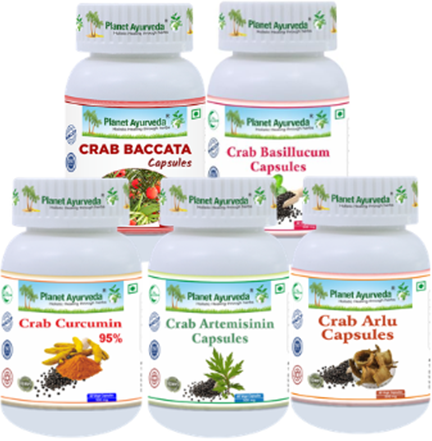

Planet Ayurveda is dedicated to promoting holistic wellness through herbal formulations based on the principles of classical Ayurveda. The company offers a wide range of herbal supplements and Ayurvedic consultations aligned with traditional healthcare approaches. Utilizing carefully selected herbs and standardized extracts, Planet Ayurveda focuses on maintaining quality, purity, and authenticity in its formulations. The products are prepared under the guidance of experienced Ayurvedic professionals and are designed to support overall health and well-being. Committed to the Ayurvedic philosophy of natural living, Planet Ayurveda provides vegetarian, preservative-free herbal products and wellness solutions to individuals across the globe. Planet Ayurveda also offers herbal formulations that are commonly included in integrative wellness approaches for individuals seeking nutritional and herbal support during cancer care, alongside conventional medical treatment and professional healthcare guidance.
1. Crab Artemisin Capsules
Planet Ayurveda’s Crab Artemisin Capsules are pure vegetarian capsules prepared using standardized extracts of Davna (Artemisia annua) leaves and Marich (Piper nigrum) fruits. Artemisia annua contains artemisinin, a bioactive sesquiterpene lactone that has been extensively investigated in cancer-related research. Experimental studies have explored its effects on cellular pathways and cancer cell models, making it a compound of significant scientific interest in integrative cancer research.
Dosage: 1 capsule twice daily with plain water after meals.
2. Crab Curcumin 95% Capsules
Planet Ayurveda’s Crab Curcumin 95% Capsules are pure vegetarian capsules prepared using a standardized extract of Curcumin 95% derived from Curcuma longa. Curcumin is the principal bioactive constituent of turmeric and has been widely studied for its interactions with inflammatory pathways, oxidative stress, and cellular signaling mechanisms. It continues to be one of the most extensively researched plant-derived compounds in cancer-related scientific investigations.
Dosage: 1 capsule twice daily with plain water after meals.
3. Crab Arlu Capsules
Planet Ayurveda’s Crab Aralu Capsules are pure vegetarian capsules prepared using standardized extracts of Aralu (Ailanthus excelsa) along with other herbal ingredients. Ailanthus excelsa contains bioactive compounds such as ailanthionine, quassinoids, triterpenoids, and phenolic constituents that have been investigated in laboratory studies involving various cancer cell models. These phytochemicals have attracted scientific interest for their biological activities and cellular interactions.
Dosage: 1 capsule twice daily with plain water after meals.
4. Crab Baccata Capsules
Planet Ayurveda’s Crab Baccata Capsules are pure vegetarian capsules prepared using a standardized extract of Thuner (Taxus baccata). The plant is a natural source of taxane compounds, including paclitaxel (Taxol), which has been extensively studied in modern pharmaceutical research. Taxanes have been investigated for their effects on microtubule dynamics and cell-cycle regulation and continue to be important compounds in cancer-related research.
Dosage: 1 capsule twice daily with plain water after meals.
5. Crab Basillicum Capsules
Planet Ayurveda’s Crab Basillicum Capsules are pure vegetarian capsules prepared using a standardized extract of Krishna Tulasi (Ocimum basilicum). The herb contains bioactive compounds such as rosmarinic acid, eugenol, linalool, and various flavonoids that have been investigated in experimental studies involving cancer cell lines. These phytochemicals are of considerable interest in ongoing research exploring the biological activities of medicinal plants.
Dosage: 1 capsule twice daily with plain water after meals.
Conclusion
Herbs such as Artemisia annua, Curcuma longa, Ailanthus excelsa, Taxus baccata, and Ocimum basilicum contain a variety of phytochemicals that have attracted considerable scientific interest. Numerous experimental and laboratory studies have investigated these plants and their bioactive constituents for their interactions with cellular pathways, cell-cycle regulation, oxidative stress, and other biological processes. Research involving various cancer cell models has contributed to the growing body of knowledge regarding their pharmacological potential. However, much of the available evidence is derived from preclinical studies, and further research is required to better understand the significance of these findings in humans. These herbs continue to serve as valuable resources for scientific investigation, drug discovery, and integrative healthcare research.