What Is IV Drip Therapy For Weightloss? -How Ayurveda Can Help To Maintain Results
Abstract
Weight loss has become one of the most sought-after health goals worldwide, leading to the popularity of numerous rapid weight-loss methods. One such trend is Intravenous (IV) drip therapy for weight loss, which involves delivering vitamins, minerals, amino acids, and other nutrients directly into the bloodstream. Proponents claim that these drips boost metabolism, increase energy, and support fat loss. However, while IV therapy may temporarily improve hydration or correct certain nutrient deficiencies, scientific evidence supporting its effectiveness as a standalone weight-loss treatment remains limited. Sustainable weight management depends on long-term dietary habits, physical activity, hormonal balance, and metabolic health rather than quick fixes. Ayurveda, the ancient science of holistic medicine, approaches obesity (Sthoulya) from a completely different perspective. Instead of merely targeting body weight, Ayurveda identifies and corrects the root causes, including impaired digestion (Mandagni), accumulation of toxins (Ama), imbalance of Kapha Dosha, and unhealthy lifestyle practices. This article explains IV drip therapy for weight loss, its potential benefits and limitations, and explores how Ayurvedic principles help individuals achieve and maintain a healthy body weight naturally and sustainably.
Introduction
Modern lifestyles have contributed significantly to rising rates of overweight and obesity. Sedentary behaviour, processed foods, chronic stress, inadequate sleep, and hormonal imbalances all play important roles in unwanted weight gain. As a result, many people seek therapies that promise rapid weight reduction with minimal effort. Among these emerging approaches, IV drip therapy has gained attention through wellness clinics and social media. These intravenous infusions often contain combinations of B vitamins, vitamin C, magnesium, amino acids such as L-carnitine, and antioxidants. Some clinics advertise them as metabolism boosters capable of accelerating fat burning. Although correcting nutritional deficiencies may improve overall well-being in selected individuals, no IV infusion can replace healthy eating, regular physical activity, and sustainable lifestyle modifications. Lasting weight management requires improving the body’s metabolic efficiency rather than relying solely on external interventions. Ayurveda emphasises exactly this principle by strengthening digestive fire (Agni), balancing the doshas, improving metabolism, and promoting disciplined daily habits.
What is IV Drip Therapy for Weight Loss?
IV drip therapy for weight loss involves the intravenous infusion of a customised cocktail of saline, vitamins, minerals, and amino acids directly into the bloodstream. Unlike oral supplements, which must survive the acidic environment of the stomach and the selective absorption of the intestines, IV fluids enter circulation immediately.
The “weight loss” formulations typically rely on a few key active ingredients
- Lipotropic Injections / Compounds (MIC): A combination of Methionine, Inositol, and Choline. These compounds help the liver process fat efficiently and prevent cholesterol buildup.
- L-Carnitine: An amino acid that plays a crucial role in energy production by transporting fatty acids into the mitochondria (the powerhouses of your cells) to be burned for energy.
- B-Complex Vitamins (especially B12): Essential for converting dietary carbohydrates and fats into usable cellular energy, thereby reducing fatigue and supporting a healthy metabolism.
- Vitamin C and Glutathione: Powerful antioxidants that combat the oxidative stress generated during fat breakdown, protecting cells and supporting liver detoxification.
By flooding the body with these cofactors, IV therapy aims to optimize the cellular machinery responsible for fat metabolism, giving the patient an energetic edge to support their diet and exercise regimens.
How Does IV Drip Therapy Claim to Promote Weight Loss?
Several mechanisms are commonly proposed
- Supporting Cellular Metabolism: B-complex vitamins participate in carbohydrate, fat, and protein metabolism. Correcting deficiencies may improve energy production in individuals with inadequate vitamin levels.
- Enhancing Fat Transport: Some IV formulations include L-carnitine, an amino acid derivative involved in transporting fatty acids into mitochondria where they are used for energy production. However, current evidence does not consistently demonstrate significant weight reduction in healthy individuals receiving IV L-carnitine.
- Improving Hydration: Proper hydration supports normal metabolism, exercise performance, and overall health. Individuals who are dehydrated may temporarily feel more energetic after IV fluid administration.
- Reducing Fatigue: Correcting vitamin deficiencies may reduce tiredness and improve physical performance, indirectly helping some individuals become more active.
Does IV Drip Therapy Really Help You Lose Weight?
Scientific evidence remains limited. IV nutrient therapy should not be considered a primary treatment for obesity. While correcting nutritional deficiencies is beneficial, excess body fat develops due to complex interactions involving:
- Calorie imbalance
- Hormonal regulation
- Genetics
- Physical inactivity
- Sleep quality
- Stress
- Gut microbiota
No IV infusion alone addresses all these factors. Meaningful and lasting weight reduction still depends on sustained lifestyle changes.
Potential Benefits of IV Therapy
Selected individuals may experience:
- Improved hydration
- Temporary increase in energy
- Correction of nutrient deficiencies
- Better recovery after intense exercise
- General feeling of wellness
These effects may indirectly support healthy habits but do not guarantee fat loss.
Possible Risks of IV Therapy
Although generally safe when administered by trained healthcare professionals, IV therapy carries certain risks. Possible complications include:
- Bruising
- Pain at the injection site
- Infection
- Vein inflammation
- Allergic reactions
- Electrolyte imbalance
- Fluid overload in susceptible individuals
Unnecessary IV therapy may also expose individuals to avoidable medical risks and financial costs.
The Limitations of IV Therapy -Why It Is Not a Standalone Solution
Despite its benefits, IV therapy is a supportive catalyst, not a magic cure. It is physiologically impossible for micronutrients alone to cause significant, lasting fat loss without a caloric deficit. Furthermore, IV therapy is inherently temporary. Once the infused vitamins are utilised or excreted by the kidneys, the cellular boost fades. If an individual returns to a sedentary lifestyle, poor sleep, and a diet high in processed foods, the metabolic rate will quickly plummet back to its baseline. Relying solely on IV therapy can also create a psychological dependency on external, passive treatments rather than fostering internal, active habits. For weight loss to be permanent, the underlying metabolic baseline must be permanently recalibrated.
Who Should Avoid Unsupervised IV Weight-Loss Therapy?
Extra caution is required in individuals with:
- Kidney disease
- Heart failure
- Liver disease
- Pregnancy
- Severe electrolyte disorders
- Certain metabolic conditions
Professional medical evaluation is essential before undergoing IV infusions.
The Ayurvedic Perspective on Weight and Metabolism
Ayurveda approaches weight through the lens of individual constitution (Prakriti) and metabolic fire (Agni). In Ayurveda, excess weight (obesity or Sthula) is primarily associated with an imbalance in the Kapha Dosha (the elements of water and earth) and a dysfunction in the Medas Dhatu (fat tissue). When Agni (the digestive and metabolic fire) is weak or sluggish, the body cannot digest food efficiently. This leads to the creation of Ama—a sticky, toxic byproduct of incomplete digestion. Ama clogs the bodily channels (Srotas), preventing nutrients from reaching the deeper tissues and causing the body to store unprocessed energy as excess, stagnant fat (Medas). While Western science focuses on the direct delivery of nutrients via IV, Ayurveda emphasises the body’s capacity to digest, assimilate, and eliminate. From an Ayurvedic standpoint, flooding a body that has weak Agni (Digestive fire) and high Ama (toxins) with high-dose intravenous nutrients is akin to throwing heavy wood onto a dying campfire; without a strong flame, the wood cannot be fully transformed into clean energy.
How Ayurveda Helps to Maintain and Stabilise IV Drip Results
To preserve the metabolic momentum generated by an IV drip, one must transition from passive nutrient absorption to active digestive transformation. Ayurveda provides a highly structured, personalised approach to sustain these results through four key pillars.
1. Rekindling the Agni (Metabolic Fire)
An active metabolism relies entirely on a strong digestive fire. Once the IV therapy has provided the initial cellular spark, Ayurveda focuses on keeping that spark alive naturally:
- Sip Warm Water: Drinking warm or hot water throughout the day stimulates circulation and gently cleanses the digestive tract.
- Incorporate Igniting Herbs: Consuming digestive spices like ginger, black pepper, cumin, and fennel before or during meals enhances enzymatic secretion, ensuring food is converted into energy rather than Ama (Toxins).
2. Pacifying the Kapha Dosha
Since excess weight is fundamentally a Kapha imbalance, maintaining results requires lifestyle and dietary adjustments that counteract Kapha’s heavy, cold, and stagnant qualities:
- Favour Light, Warm, and Spicy Foods: Minimise heavy, cold, sweet, and oily foods (like dairy, refined sugars, and deep-fried items), which damp the metabolic fire. Focus instead on bitter leafy greens, astringent legumes, and warming grains like quinoa or millet.
- Embrace Dryness and Warmth: Avoid sleeping during the day, which heavily increases Kapha and slows metabolism.
3. Implementing Dinacharya (Daily Circadian Routines
Aligning daily habits with natural circadian rhythms stabilises hormonal fluctuations that govern hunger, stress, and fat storage:
- Rise with the Sun: Waking up during the Vata period (before 6:00 AM) infuses the mind and body with lightness and clarity.
- Make Lunch the Largest Meal: The solar transit is strongest between 12:00 PM and 1:30 PM, making this the optimal time for the body to digest a heavier meal. Keep breakfast and dinner light and easily digestible.
- Prioritise Early Sleep: Sleeping by 10:00 PM allows the body to enter its natural detoxification phase (governed by Pitta) during the night, processing metabolic waste efficiently.
4. Gentle Detoxification and Channel Cleansing
If Srotas (microchannels) are blocked by Ama (Toxins), even the best nutrients cannot circulate effectively. Gentle home detoxification methods help maintain clean pathways:
- Triphala: A traditional three-fruit Ayurvedic formulation taken at night to support colon health, regular elimination, and gentle systemic detoxification.
- Garshana (Dry Lymphatic Brushing): Silk or raw cotton glove brushing stimulates the lymphatic system, breaking up stagnant Kapha and promoting fluid circulation, mimicking the circulatory benefits of IV hydration.
The Importance of Agni in Weight Management
Agni (Digestive fire) represents the body’s digestive and metabolic capacity.
When Agni (Digestive fire) functions efficiently:
- Food is properly digested.
- Nutrients are correctly assimilated.
- Waste products are eliminated efficiently.
- Healthy tissues develop.
When Agni (Digestive fire) becomes weak:
- Digestion slows.
- Ama (Toxins) accumulates.
- Fat metabolism declines.
- Weight gradually increases.
Strengthening Agni (Digestive fire) forms the foundation of Ayurvedic weight management.
- Ama: The Hidden Obstacle
- Ama (Toxins) refers to incompletely digested metabolic waste
According to Ayurveda, Ama (Toxins):
- Blocks body channels (Srotas)
- Slows metabolism
- Promotes inflammation
- Disturbs hormonal balance
- Contributes to sluggishness
Reducing Ama (Toxins) improves metabolic efficiency and supports healthy body composition.
Balancing Kapha Dosha
Kapha governs stability, lubrication, and nourishment. Excess Kapha contributes to:
- Weight gain
- Water retention
- Lethargy
- Slow digestion
- Reduced physical activity
Ayurvedic therapies focus on restoring Kapha balance through appropriate diet, exercise, herbs, and daily routines.
Diet According to Ayurveda
Ayurveda recommends meals that are:
- Freshly prepared
- Warm
- Light
- Easily digestible
- Rich in seasonal vegetables
- Moderate in whole grains
- Balanced in protein
- Add Bitter, pungent and astringent taste to the diet
Heavy fried foods, excessive sugar, refined carbohydrates, and overeating are discouraged. Mindful eating also plays an important role.
Lifestyle Practices for Maintaining Weight
Ayurveda emphasises daily discipline (Dinacharya). Helpful practices include:
- Regular meal timings
- Daily physical activity
- Adequate sleep
- Stress management
- Yoga
- Meditation
- Avoiding late-night eating
Consistency matters far more than extreme dietary restrictions.
The Role of Exercise
Ayurveda recommends exercise appropriate to an individual’s strength
Regular activity
- Improves circulation
- Enhances metabolism
- Supports fat utilisation
- Reduces Kapha accumulation
- Improves mood
Walking, yoga, cycling, swimming, and resistance training all contribute to sustainable weight management.
Herbal Remedies for Weight Loss by Planet Ayurveda
Planet Ayurveda is a globally trusted Ayurvedic healthcare company founded by Dr Vikram Chauhan, dedicated to promoting holistic wellness through authentic herbal formulations. The company combines the timeless wisdom of classical Ayurveda with modern quality standards to develop herbal supplements made from standardised extracts and premium-quality medicinal herbs. Its products are free from chemicals, preservatives, artificial colours, and additives, ensuring purity, safety, and effectiveness. Along with personalised Ayurvedic consultations by experienced physicians, Planet Ayurveda emphasises identifying and addressing the root cause of disease while encouraging a healthy lifestyle for long-term well-being. Here we will discuss herbal formulations for the management of weight. Let’s start!
- Trim Support
- Stholyantaka Churna
- Garcinia Capsules
- Guggul Capsules
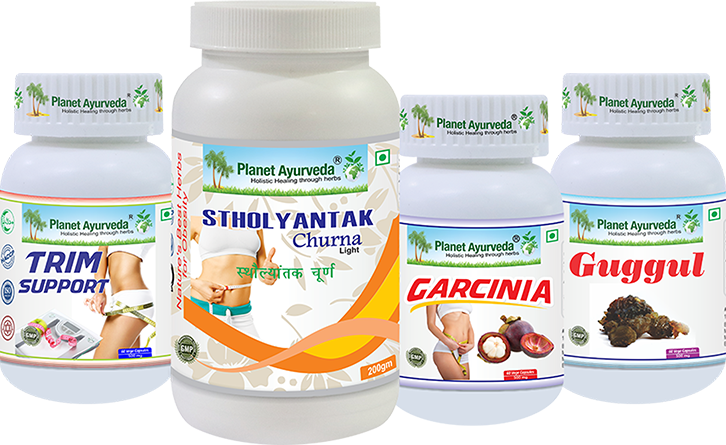

Product Description
1. Trim Support Capsules
Trim Support Capsules by Planet Ayurveda contain Vrikshamal (Garcinia cambogia), Musta (Cyperus rotundus), and Triphala, a combination that supports healthy weight management by naturally improving metabolism and digestion. Garcinia cambogia is a source of hydroxycitric acid (HCA), which helps regulate fat synthesis and promotes satiety by influencing appetite-related pathways. Musta enhances digestive fire (Agni), supports lipid metabolism, and helps reduce the accumulation of excess Kapha and Meda Dhatu (adipose tissue). Triphala, rich in polyphenols and antioxidants, promotes gentle detoxification, supports gut microbiota, and improves bowel regularity, all of which contribute to better metabolic health. Unlike IV therapy, which mainly provides temporary hydration and nutrients, Trim Support Capsules work by addressing the underlying factors responsible for weight gain, helping maintain healthy digestion, efficient fat metabolism, and sustainable weight management as part of a balanced diet and active lifestyle.
Dosage: 1 capsule twice daily with warm water after a meal.
2. Stholyantaka Churna
Stholyantaka Churna by Planet Ayurveda is a classical herbal formulation containing Musta (Cyperus rotundus), Babool (Acacia nilotica), Triphala (Emblica officinalis, Terminalia chebula, and Terminalia bellirica), Arjuna (Terminalia arjuna), Jamun (Syzygium cumini), Vidanga (Embelia ribes), and Dalchini (Cinnamomum verum). This blend supports healthy weight management by enhancing Agni (digestive fire), improving digestion, and promoting efficient fat metabolism. Vidanga and Musta help reduce the accumulation of Ama (metabolic toxins), while Dalchini supports healthy glucose metabolism and insulin sensitivity. Triphala encourages gentle detoxification and maintains bowel regularity, whereas Arjuna supports cardiovascular health during weight management. Unlike IV therapy, which primarily offers temporary nutritional support, Stholyantaka Churna works on the root causes of obesity by improving digestion, correcting metabolism, and supporting the healthy metabolism of Meda Dhatu (adipose tissue), making it a valuable Ayurvedic approach for sustainable weight management.
Dosage: Take 1 teaspoon twice daily with warm water after meals. Alternatively, prepare a decoction by adding 1 teaspoon of the churna to 1 glass of water, boiling it until it reduces to one-fourth of its original volume, then strain and consume.
3. Garcinia Capsules
These Capsules by Planet Ayurveda, containing Garcinia cambogia, provide natural support for healthy weight management through the herb’s active constituent, hydroxycitric acid (HCA). HCA helps regulate the enzyme ATP-citrate lyase, which is involved in converting excess carbohydrates into fat, thereby supporting healthy fat metabolism. It also promotes satiety by influencing serotonin activity, which may help reduce unnecessary snacking and overeating. In Ayurveda, Garcinia is valued for balancing Kapha Dosha and supporting the healthy metabolism of Meda Dhatu (adipose tissue) while improving digestive efficiency. Unlike IV therapy, which mainly delivers nutrients temporarily, Garcinia Capsules support the body’s own metabolic processes, helping maintain long-term weight management when combined with a balanced diet, regular physical activity, and healthy lifestyle practices.
Dosage: 2 capsules twice daily with warm water after a meal.
4. Guggul Capsules
Guggul Capsules by Planet Ayurveda, containing Shuddha Guggul (Commiphora mukul), offer natural support for healthy weight management by enhancing metabolic activity and promoting the proper utilisation of stored fat. The herb contains guggulsterones, bioactive compounds that help regulate lipid metabolism, support healthy cholesterol levels, and encourage efficient energy expenditure. In Ayurveda, Guggul is renowned for its Lekhana (scraping) and Medohara (fat-reducing) properties, helping to reduce excess Meda Dhatu (adipose tissue) and clear blocked Srotas (body channels). It also stimulates Agni (digestive fire), improving digestion and reducing the accumulation of Ama (metabolic toxins) that contribute to weight gain. Unlike IV therapy, which mainly provides temporary nutritional support, Guggul Capsules work by naturally improving metabolic function and supporting sustainable weight management when combined with a healthy diet and regular physical activity.
Dosage: 1 capsule twice daily with warm water after a meal.
Conclusion
IV drip therapy for weight loss has gained popularity because it promises convenience and rapid results. While intravenous nutrients may improve hydration or correct vitamin deficiencies in selected individuals, current scientific evidence does not support IV drips as a reliable standalone treatment for obesity or long-term fat loss. Sustainable weight management depends on consistent lifestyle modifications, balanced nutrition, regular physical activity, adequate sleep, and addressing underlying metabolic health. From an Ayurvedic perspective, obesity is not merely the accumulation of excess fat but a manifestation of impaired digestion (Mandagni), accumulated Ama (toxins), aggravated Kapha Dosha, and disturbed metabolism. By strengthening digestive fire, balancing the doshas, promoting healthy dietary habits, encouraging regular exercise, and fostering disciplined daily routines, Ayurveda