How Ayurveda Supports Muscle Strengthening and Muscle Repair Naturally
Abstract
Muscles are essential for movement, posture, strength, and overall physical performance. They play a vital role in carrying out both voluntary and involuntary functions of the body. Skeletal muscles enable locomotion and support the skeletal framework, while smooth and cardiac muscles regulate the functioning of internal organs and the heart. In Ayurveda, muscle tissue is correlated with Mamsa Dhatu, one of the seven fundamental body tissues responsible for providing strength, stability, and protection to vital organs. Factors such as poor nutrition, lack of physical activity, excessive stress, aging, and chronic illness can lead to muscle weakness, fatigue, and impaired recovery. Ayurveda emphasizes maintaining balanced digestion, proper nourishment, and a healthy lifestyle to support muscle health. Various herbs and natural supplements are traditionally used to enhance muscle strength, support tissue repair, improve endurance, and promote overall physical well-being. This article explores the Ayurvedic perspective on muscle health and highlights natural approaches for muscle strengthening and recovery.
Introduction
Muscles form an important component of the human body and are responsible for movement, stability, and physical function. The primary function of muscles is contraction and relaxation, enabling voluntary movements such as walking, lifting, and exercise, as well as involuntary functions including circulation, digestion, and respiration. Muscles attached to bones facilitate body movement, while those present in internal organs and blood vessels regulate essential physiological processes. In addition to movement, muscles provide structural support, maintain posture, generate heat, and protect internal organs from injury. According to Ayurveda, healthy muscles are governed by Mamsa Dhatu, which contributes to physical strength, endurance, and body composition. Proper nourishment of Mamsa Dhatu depends on balanced Agni (digestive fire), adequate nutrition, and a healthy lifestyle. When muscle tissue is weakened or depleted, individuals may experience fatigue, reduced strength, and poor physical performance. Therefore, maintaining muscle health is essential for overall vitality and long-term wellness.

What is Muscle Health?
Muscle health refers to the strength, function, endurance, flexibility, and overall condition of the muscles in the body. Healthy muscles enable smooth movement, maintain posture, support joints, and help perform daily activities efficiently. Muscles play a crucial role in generating force, maintaining balance, and protecting internal organs. Good muscle health depends on adequate nutrition, regular physical activity, proper hydration, sufficient rest, and effective recovery. Strong and healthy muscles contribute to improved physical performance, metabolic health, and overall well-being. Conversely, poor muscle health can lead to weakness, fatigue, reduced mobility, and an increased risk of injuries and age-related muscle loss.
Types of Muscles in the Human Body
The human body contains three main types of muscles: skeletal muscles, smooth muscles, and cardiac muscles. Skeletal muscles are attached to bones and are responsible for voluntary movements such as walking, running, lifting, and maintaining posture. Smooth muscles are found in the walls of internal organs, blood vessels, and the digestive tract, where they control involuntary functions such as digestion, circulation, and respiration. Cardiac muscle is found exclusively in the heart and functions continuously throughout life to pump blood throughout the body. Together, these muscle types support movement, organ function, and overall physiological health.
Importance of Muscles in Overall Health
Muscles are essential for maintaining overall health, mobility, and physical performance. They contribute to various physiological functions that support daily activities and overall well-being.
- Enable voluntary movements such as walking, running, lifting, and exercising.
- Help maintain proper posture and body alignment.
- Support and stabilize joints during movement.
- Protect internal organs from physical injury.
- Assist in maintaining balance and coordination.
- Generate heat during physical activity, helping regulate body temperature.
- Support breathing by assisting respiratory movements.
- Contribute to healthy metabolism and energy utilization.
- Help maintain healthy blood sugar levels by utilizing glucose.
- Improve physical strength, endurance, and exercise performance.
- Reduce the risk of falls and injuries, especially in older adults.
- Enhance mobility, independence, and quality of life.
- Support healthy aging by preventing age-related muscle loss.
- Contribute to overall physical fitness and functional capacity.
What Ayurveda Says About Muscle Health?
In Ayurveda, muscle tissue is correlated with Mamsa Dhatu, one of the Sapta Dhatus (seven fundamental body tissues) that support the structure and function of the body.
Ashtang Hridya Sutra Sthana Chapter No 1 Verse No. 13
The body is nourished and sustained by seven dhatus:
- Rasa (Plasma)
- Rakta (Blood)
- Mamsa (Muscle tissue)
- Meda (Adipose tissue)
- Asthi (Bones)
- Majja (Bone marrow and nervous tissue)
- Shukra (Reproductive tissue)
Mamsa Dhatu Utpatti (Formation of Muscle Tissue)
Mamsa Dhatu is formed from the Sara Bhaga (essence) of Rakta Dhatu. The primary function of Mamsa Dhatu is Lepana, which means providing proper covering, shape, firmness, and compactness to the body. It is predominantly composed of the Prithvi Mahabhuta (Earth element), which imparts stability and strength.
Upadhatu of Mamsa Dhatu
The Upadhatus (secondary tissues) of Mamsa Dhatu are:
- Vasa (muscle fat)
- Twak (skin)
These tissues are formed as secondary products during the formation and nourishment of Mamsa Dhatu.
Formation of Healthy Muscle Tissue According to Ayurveda
- Healthy Mamsa Dhatu is formed through proper nourishment obtained from foods rich in the Prithvi Mahabhuta, such as grains, legumes, nuts, meat, eggs, and other nourishing foods. However, merely consuming protein-rich foods is not sufficient for healthy muscle formation. Proper digestion and absorption are equally important.
- The nourishment of Mamsa Dhatu depends upon a healthy Jatharagni (primary digestive fire) and Mamsagni (the metabolic fire of Mamsa Dhatu). When digestion and tissue metabolism function optimally, healthy muscle tissue is produced.
- Manda Jatharagni (Weak Digestive Fire): When digestion is weak, the nourishment reaching Mamsa Dhatu becomes inadequate. As a result, muscles may become weak, thin, poorly developed, and more susceptible to injury. Such individuals may also experience reduced confidence and emotional instability.
- Tikshna Jatharagni (Strong Digestive Fire): Strong digestion may promote greater formation of Mamsa Dhatu, resulting in well-developed muscles. However, excessive metabolic activity may increase susceptibility to inflammatory conditions.
- Madhyama Jatharagni (Balanced Digestive Fire): Balanced digestion supports optimal nourishment of Mamsa Dhatu, resulting in healthy, strong, and well-functioning muscles. Such individuals generally possess good confidence, stamina, and willpower.
- According to Ayurveda, Udana Vayu plays an important role in stimulating muscular activity and facilitating movement.
Muscle Health Varies According to Prakriti
The quantity and quality of muscle tissue differ according to an individual’s constitutional type (Prakriti).
- Vata Prakriti: Individuals with Vata Prakriti generally possess a relatively lower muscle mass, thinner skin, and delicate ligaments. Despite having a lean physique, they may remain healthy when their doshas are balanced.
- Pitta Prakriti: Individuals with Pitta Prakriti usually have moderate muscular development, with average thickness of the skin and connective tissues.
- Kapha Prakriti: Individuals with Kapha Prakriti generally possess a larger muscle mass, stronger body build, and thicker skin and ligaments.
Mamsa Vriddhi Lakshana (Signs of Increased Mamsa Dhatu)
Excessive accumulation of Mamsa Dhatu may occur due to Kapha aggravation and obstruction of Mamsavaha Srotas (Channels carrying muscle tissue).
Ashtang Hridya Sutra Sthana Chapter No 11 Verse No. 10
Excessive Mamsa Dhatu may manifest as
- Arbuda (tumor-like growths)
- Granthi (cystic or glandular swellings)
- Gandamala (goitre or cervical gland enlargement)
- Excess muscular growth around the neck, cheeks, and hip region
Mamsa Kshaya Lakshana (Signs of Depletion of Mamsa Dhatu)
When aggravated Vata affects the Mamsavaha Srotas (Channels carrying muscle tissue), inadequate formation and nourishment of Mamsa Dhatu may occur.
मांसक्षये विशेषेण स्फिग्ग्रीवोदरशुष्कता||
Features of Mamsa Kshaya include
- Muscle wasting
- Generalized weakness
- Easy fatigability
- Dryness and emaciation of the neck, buttocks, and abdominal region
- Reduced physical strength and endurance
Mamsa Pradoshaja Vikara (Diseases Associated with Vitiated Mamsa Dhatu)
The following disorders are described as Mamsa Pradoshaja Vikaras:
- Adhimamsa (Granulomatous growth)
- Arbuda (Tumor)
- Keela (Piles-like fleshy growth)
- Galashaluka (Uvulitis)
- Galashundika (Tonsillitis)
- Alaji (Boils)
- Gandamala (Goitre/Cervical gland enlargement)
- Upajivika (Inflammation around the epiglottic region)
Ayurvedic Treatment and Natural Supplements for Muscle Strengthening and Repair
The management of disorders related to Mamsa Dhatu depends upon the underlying cause, dosha involvement, and severity of the condition. Ayurveda describes the following therapeutic approaches:
- Panchakarma (Detoxification and Purification Therapies): Panchakarma helps remove accumulated Doshas from the body and restore the normal functioning of Mamsavaha Srotas (channels carrying muscle tissue nutrients). Procedures such as Virechana and Basti may be employed to balance aggravated Doshas, improve tissue nourishment, and support healthy muscle metabolism.
- Shalya Karma (Surgical Procedures): Shalya Karma is indicated in conditions involving abnormal growths arising from Mamsa Dhatu, such as Arbuda (tumors), Granthi (cysts), Adhimamsa (excess fleshy growths), and certain chronic swellings. Surgical removal may be necessary when these growths cause functional impairment or do not respond to conservative treatment.
- Kshara Karma (Application of Alkaline Preparations): Kshara Karma is used for localized Mamsa Dhatu disorders involving unwanted tissue growths. It helps exercise, scrape, or shrink abnormal tissues and is commonly described for conditions such as Arsha (piles), Granthi, and certain fleshy proliferations.
- Agni Karma (Therapeutic Cauterization): Agni Karma utilizes controlled therapeutic heat to manage selected disorders involving muscles, tendons, ligaments, and joints. It is traditionally employed to relieve pain, reduce stiffness, improve local circulation, and prevent recurrence of certain musculoskeletal conditions.
Best Natural Supplements for Muscle Strengthening and Repair
Mamsa Rasa (Meat Soup): According to Ayurveda, Mamsa Rasa is considered one of the most nourishing dietary preparations for supporting Mamsa Dhatu. It is prepared by boiling meat in water to obtain a nutritious soup or broth. Mamsa Rasa is described as Preenana (highly nourishing) and Hridya (beneficial for the heart). It is traditionally recommended for individuals who are emaciated, debilitated, recovering from chronic illnesses, or experiencing tissue depletion. It helps promote strength, nourishment, healthy complexion, and overall vitality. It may also support healthy sleep and enhance recovery
- Krita Mamsa Rasa – Plain meat soup prepared without seasoning.
- Akrita Mamsa Rasa – Meat soup prepared with seasonings such as salt, mustard, cumin, and other spices.
Ghrita (Ghee): Among the four classical unctuous substances (Chatur Sneha)—Ghrita (ghee), Taila (oil), Vasa (muscle fat), and Majja (bone marrow)—Ghrita is considered the most beneficial.
Benefits
- Helps nourish Mamsa Dhatu and support tissue regeneration.
- Assists in balancing Vata and Pitta Dosha.
- Provides essential fatty acids and fat-soluble vitamins.
- Supports strength, stamina, and overall tissue nourishment.
- Promotes healthy digestion and absorption, which are essential for proper tissue formation.
Ayurvedic Herbs for Muscle Strengthening
The following herbs are traditionally used in Ayurveda to support muscle strength, endurance, and recovery.
1. Ashwagandha (Withania somnifera)
Ashwagandha is one of the most renowned Ayurvedic herbs for promoting strength, vitality, and endurance. Its name signifies imparting the strength and vigor of a horse. Ayurveda classifies Ashwagandha as a powerful Rasayana (rejuvenative) herb that nourishes Mamsa Dhatu and supports overall physical performance. It is particularly beneficial in conditions associated with weakness, fatigue, debility, and muscle wasting. Modern research has also highlighted its adaptogenic properties, which help the body cope with physical and mental stress. Regular use of Ashwagandha may support muscle strength, endurance, recovery, and healthy sleep.
2. Gokshura (Tribulus terrestris)
Gokshura is a well-known Ayurvedic herb valued for its ability to promote strength, stamina, and physical fitness. It is traditionally used to support muscle development and enhance overall vitality. The herb contains various bioactive compounds, including steroidal saponins, which contribute to its rejuvenating properties. Gokshura is considered beneficial for maintaining muscular health, improving endurance, and supporting recovery following physical exertion. It is also known for its positive effects on urinary and reproductive health. Due to its nourishing nature, Gokshura is commonly included in formulations intended to promote strength and overall well-being.
3. Shatavari (Asparagus racemosus)
Shatavari is a highly respected Rasayana herb in Ayurveda that promotes nourishment, rejuvenation, and tissue strength. Although it is primarily known for supporting female reproductive health, it also contributes significantly to overall vitality and muscle nourishment. Shatavari contains various phytochemicals that support healthy energy levels and tissue regeneration. It helps maintain strength and stamina while supporting recovery from physical exhaustion. Due to its nourishing and restorative properties, Shatavari is often recommended for individuals experiencing weakness, fatigue, or tissue depletion. Regular use may help support healthy muscle tissue and enhance overall physical well-being.
Mamsa Rohini (Soymida febrifuga)
Mamsa Rohini is traditionally recognized in Ayurveda for its beneficial action on muscle tissue and wound healing. The herb has been described as supportive for tissue repair and regeneration and is often associated with strengthening properties. It helps maintain healthy muscle tissue and supports the body’s natural healing processes. Due to its traditional use in promoting tissue recovery and physical strength, Mamsa Rohini is considered beneficial in conditions involving muscle weakness and degeneration. Its restorative qualities make it a valuable herb for supporting the health and integrity of Mamsa Dhatu.
5. Musli (Chlorophytum borivilianum):
Musli is regarded as both a Vrishya (aphrodisiac) and Rasayana (rejuvenative) herb in Ayurveda. It is widely valued for promoting strength, stamina, vitality, and physical performance. Musali possesses nourishing properties that help support muscle tissue, musculoskeletal health, and overall endurance. Traditionally, it has been used to combat fatigue, weakness, and reduced physical capacity. Its rejuvenating nature helps nourish various body tissues and promotes recovery following exertion. Due to these benefits, Musali is frequently included in Ayurvedic formulations designed to enhance strength, vitality, and overall physical wellness.
Muscle-strengthening pack by Planet Ayurveda
Planet Ayurveda is a well-known Ayurvedic healthcare company dedicated to promoting natural wellness through authentic herbal formulations and classical Ayurvedic principles. Founded by Dr. Vikram Chauhan, the company offers a wide range of herbal products prepared from high-quality medicinal plants while maintaining strict quality standards. Its formulations are designed to support various aspects of health, including immunity, digestion, cardiovascular wellness, musculoskeletal health, and overall rejuvenation. According to Ayurveda, healthy muscles are governed by Mamsa Dhatu, which provides strength, stability, and physical endurance. To support muscle health naturally, Planet Ayurveda offers a specially formulated Muscle Strengthening Pack containing carefully selected Ayurvedic herbs known for their nourishing and rejuvenating properties. These herbs help support muscle strength, stamina, recovery, and overall musculoskeletal wellness. In the following section, we will discuss the ingredients and benefits of the Muscle Strengthening Pack by Planet Ayurveda in detail.
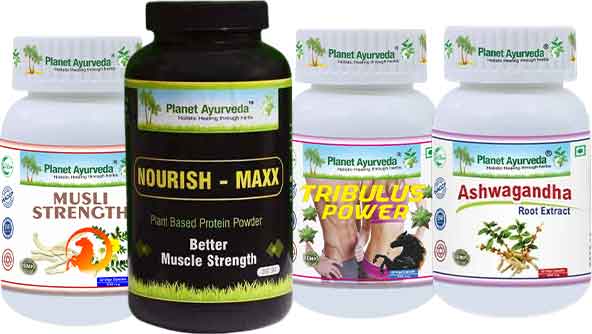

Muscle Strengthening Pack
- Musli Strength
- Ashwagandha Capsules
- Tribulus Power
- Nourish-Maxx Powder
Product Description
1. Musli Strength
Musli Strength by Planet Ayurveda is a herbal formulation containing Safed Musli (Chlorophytum borivilianum), a renowned Ayurvedic Rasayana known for its nourishing and rejuvenating properties. It helps support physical strength, stamina, endurance, and overall vitality. Safed Musli is traditionally used to nourish body tissues, including Mamsa Dhatu (muscle tissue), and promote healthy musculoskeletal function. Regular use may help improve energy levels, reduce fatigue, and support muscle recovery following physical exertion.
Dosage: 1 capsule twice daily with warm water, after meal.
2. Ashwagandha Capsules
Ashwagandha Capsules by Planet Ayurveda are prepared using standardized extracts of Ashwagandha (Withania somnifera), one of the most respected herbs in Ayurveda for promoting strength and vitality. Ashwagandha helps support muscle strength, endurance, and recovery while assisting the body in adapting to physical and mental stress. It is also known for its rejuvenating properties and may help reduce fatigue, improve stamina, and support healthy sleep, which is essential for muscle repair and growth.
Dosage: 1 capsule twice daily with warm water, after meal.
3. Tribulus Power
Tribulus Power by Planet Ayurveda contains standardized extracts of Gokshura (Tribulus terrestris). This herb is traditionally used to support physical performance, stamina, and muscular strength. Gokshura helps nourish body tissues and promotes healthy energy levels and endurance. It is widely used in Ayurvedic practice to support overall vitality and physical fitness. Regular supplementation may help maintain muscle function and enhance exercise performance.
Dosage: 1 capsule twice daily with warm water, after meal.
4. Nourish-Maxx Powder
Nourish-Maxx Powder by Planet Ayurveda is a herbal formulation designed to support muscle strength, stamina, and overall vitality. It contains Shatavari (Asparagus racemosus), Safed Musli (Chlorophytum borivilianum), Ashwagandha (Withania somnifera), and Gokshura (Tribulus terrestris), which are renowned Ayurvedic herbs known for their nourishing and rejuvenating properties. These herbs help support the healthy development of Mamsa Dhatu (muscle tissue), improve endurance, and promote recovery from weakness and fatigue. The formulation also supports healthy weight gain, energy levels, and overall musculoskeletal wellness, making it beneficial for individuals seeking natural support for strength, vitality, and physical performance.
Dosage: 1 teaspoonful twice daily with warm milk or water, after a meal.
Yoga Asanas for Muscle Strengthening
- Navasana (Boat Pose)
- Virabhadrasana (Warrior Pose)
- Bhujangasana (Cobra Pose)
- Parvatasana (Mountain Pose)
- Paschimottanasana (Seated Forward Bend Pose)
- Padahastasana (Hand-to-Foot Pose / Standing Forward Bend)
- Pawanmuktasana (Wind-Relieving Pose)
- Surya Namaskar (Sun Salutation)
Tips for Maintaining Healthy Muscles
Maintaining healthy muscles requires a combination of proper nutrition, regular physical activity, and healthy lifestyle practices. Ayurveda emphasizes nourishing Mamsa Dhatu through a balanced diet and daily routines that support strength and vitality.
- Consume a protein-rich and nourishing diet including milk, nuts, dry fruits, sprouted grains, legumes, and pulses to support muscle growth and repair.
- Engage in regular physical activity such as exercise, jogging, walking, cycling, skipping, or swimming to maintain muscle strength, endurance, and flexibility.
- Practice yoga regularly to improve muscle tone, balance, and overall physical fitness.
- Ensure adequate rest and sleep to support muscle recovery and regeneration.
- Stay properly hydrated throughout the day.
Abhyanga (Ayurvedic Oil Massage) for Maintaining Healthy Muscles
Ayurveda recommends Abhyanga (oil massage) as a part of Dinacharya (daily regimen). It involves massaging the body from head to toe with warm oil before bathing. Regular Abhyanga nourishes Mamsa Dhatu, supports muscle strength, and promotes overall physical well-being.
Benefits of Abhyanga
- Helps strengthen muscles and nourish body tissues.
- Improves lubrication of bones and joints.
- Enhances blood circulation.
- Moisturizes the skin and improves complexion.
- Relieves fatigue and promotes relaxation.
- Supports sound sleep and overall health.
Commonly used oils for muscle nourishment and strengthening include:
- Balashwagandha Taila
- Ksheerbala Taila
- Murivenna Taila
- Sesame Oil
- Mustard Oil
These oils are traditionally used to support muscle strength, reduce stiffness, promote recovery, and maintain musculoskeletal health.
Conclusion
Muscle health is essential for maintaining strength, mobility, endurance, posture, and overall quality of life. According to Ayurveda, healthy muscles are governed by Mamsa Dhatu, which depends upon proper nutrition, balanced digestion, and a healthy lifestyle. Regular consumption of nourishing foods, adequate physical activity, yoga, and practices such as Abhyanga help support muscle strength and recovery. Ayurvedic herbs such as Ashwagandha (Withania somnifera), Gokshura (Tribulus terrestris), Shatavari (Asparagus racemosus), Safed Musli (Chlorophytum borivilianum), and Mamsa Rohini (Soymida febrifuga) are traditionally valued for their rejuvenating and strengthening properties. Maintaining healthy digestion and following a balanced daily routine are equally important for proper tissue nourishment. By integrating Ayurvedic principles with wholesome nutrition and regular exercise, individuals can support healthy muscle function, enhance physical performance, promote recovery, and maintain long-term musculoskeletal wellness and vitality.