Sarcoidosis Cure in Ayurveda – Ayurvedic Treatment & Natural Care
Introduction
Sarcoidosis is a disease in which small groups of immune cells called granulomas form in different parts of the body. It mostly often begins in the lung, skin or lymph nodes, but it can affect almost any organ, including the eyes, liver, heart and brain The symptoms of sarcoidosis depend on which organs are affected. Some people have no symptoms or only mind symptoms, while others may have a persistent cough, difficulty breathing, chest pain, tiredness, skin rashes or eye problems. Some people develop a condition called Lofgren syndrome, which causes fever, painful and swollen joints(especially the ankles) and a red painful skin rash. The exact causes of sarcoidosis is still unknown. However, experts believe it may happen when the body’s immune system reacts abnormally to certain infection or environmental factors in people who are genetically more likely to develop the disease. Although sarcoidosis can sometimes become serious, most people recover completely or have only mild disease. The risk of death is low (about 1- 7 %) and in people who recover, the disease rarely comes back (less than 5 % of cases). Early diagnosis, proper treatment and regular follow up can help prevent complications and may improve quality of life.

Causes
The exact cause of sarcoidosis is still unknown. Doctors believe it develops when the body’s immune system reacts too strongly to certain triggers in people who are genetically more likely to develop the disease. This abnormal immune response leads to the formation of granulomas ( small clusters of inflammatory cells) in different organs. The possible causes and risk factors includes:
1. Genetic Factors
Some people inherit genes that make them more likely to develop sarcoidosis. Having a close family member with the disease slightly increases the risk.
2. Abnormal Immune Response
In sarcoidosis, the immune system becomes overactive and attacks healthy tissues instead of protecting the body from harmful gems. This causes inflammation and the formation of granulomas.
3. Environmental Triggers
Exposure to certain substances in the environment may trigger sarcoidosis in susceptible people.
- These may include: Dust
- Mold
- Pollen
- Smoke
- Chemicals
- Metal particles
4. Infection
Some researchers believe that certain bacteria or viruses may trigger the disease in people who are genetically predisposed. However, no specific infection has been proven to directly cause sarcoidosis.
5. Occupational Exposure
People who work in certain occupations may have a higher risk because of repeated exposure to dust, chemical or other airborne particles. These occupations includes: Firefighters
- Farmers
- Construction workers
- Metal workers
- Healthcare workers
6. Age
Sarcoidosis is mostly commonly developed between 20-50 yr of age, although it can occur at any age.
7. Sex
The disease can affect both men and women, but it is slightly more common in women.
Types
Sarcoidosis can be categorized as different types based on which organs are involved and how it presents clinically. Here a breakdown of the main type:
- Pulmonary Sarcoidosis: This is the most common type, where Sarcoidosis affects the lung. It may cause symptoms like persistent cough, shortness of breath, wheezing and chest discomfort over time, it can cause scarring of lung tissue.
- Cutaneous Sarcoidosis: When the disease affects the skin, it may cause resheses, bumps or lesions. One common skin symptom is erythema nodosum, which results in red, painful bumps, usually on the legs.
- Lymphatic Sarcoidosis: This form affects the lymph nodes, especially around the chest(hilar lymphadenopathy) but it can also cause swelling in other areas like the neck or armpits.
- Ocular Sarcoidosis: Sarcoidosis can impact the eyes, leading to conditions such as uveitis( inflammation inside the eye). Symptoms might include eye pain, redness, blurred vision and sensitivity to light. If untreated, it can cause lasting damage to vision.
- Cardiac Sarcoidosis: When the heart is involved, Sarcoidosis can cause irregular heartbeats(arrhythmias) , heart failure and other heart issues. This type can sometimes go unnoticed until it causes severe complications.
- Neurosarcoidosis: This type affects the brain and spinal cord. Symptoms can include headache, seizures, weakness and vision problems. It’s more difficult to diagnose and treat compared to other types.
- Gastrointestinal Sarcoidosis: Although less common, sarcoidosis can impact the liver, spleen and intestinal, leading to symptoms such as abdominal pain, nausea and jaundice.
- Lofgren syndrome: A specific form of sarcoidosis, this syndrome is marked by joint pain , swollen lymph nodes in the chest and a characteristic skin rash called Erythema Nodosum. It is more commonly seen in people of European descent.
Symptoms
The symptoms of sarcoidosis depend on which organs are affected. Some people have no symptoms, while others develop mild or severe symptoms. The disease most commonly affects the lungs, lymph nodes, skin and eye
1. General symptoms
- Fatigue(feeling very tired)
- Fever
- Weight loss
- Night sweats
- Loss of appetite
- General weakness
2. Lung Symptoms
- Persistent dry cough
- Shortness of breath
- Chest pain or tightness
- Wheezing
- Difficulty breathing during physical activity
3. Skin Symptoms
- Red,painful bumps on the legs
- Skin rashes
- Small bumps or nodules
- Thick or raised skin patches
- Skin discoloration
- Swelling around old scars or tattoos
4. Eye Symptoms
- Red eyes
- Eye pain
- Blurred vision
- Sensitivity to light
- Excessive tearing or dry eyes
- Floaters
- Vision loss if left untreated
5. Lymph Node Symptoms
- Swollen lymph nodes in the chest
- Swollen lymph nodes in the neck, armpits or groin
- Usually painless swelling
6. Heart Symptoms
- Irregular heartbeat
- Palpitations
- Chest pain
- Dizziness
- Fainting
- Shortness of breath
- Swelling of the legs due to heart failure
7. Nervous System Symptoms
- Headache
- Facial weakness or facial paralysis
- Seizures
- Weakness in the arms or legs
- Numbness or tingling
- Balance problem
- Memory or concentration problem
8. Joint and Muscle Symptoms
- Joint pain
- Swollen joints
- Muscles pain
- Morning Stiffness
9. Liver and Digestive Symptoms
- Abdominal pain
- Nauses
- Loss of appetite
- Enlarged liver
- Jaundice
10. Kidney Symptoms
- Kidney stone
- Frequent urination
- Excessive Thirst
- Kidney problem due to high calcium levels
Diagnosis
Diagnosing sarcoidosis can be difficult because its symptoms are similar to those of many other diseases. Doctors usually use a combination of medical history, physical examination, laboratory tests, imaging tests and sometimes a biopsy to confirm the diagnosis.
Medical History and Physical Examination
- Your symptoms and when they started
- About our medical and family history
- Your work and environmental exposures
- Any previous illness
Blood Test
- Angiotensin- Converting Enzyme (ACE) : ACE levels may be higher in some people with sarcoidosis, but this test alone cannot confirm the disease.
- Calcium Level: High level of calcium in the blood or urine can occur in sarcoidosis.
- Other blood test may also be done to check liver function, kidney function and inflammation
Imaging Test
- Chest X-ray : Enlarged lymph nodes in the chest
- Changes in the lungs
- Signs of lung inflammation or scarring
CT Scan
It provides more detailed images of the lungs and chest – Granulomas
- Lung inflammation
- Scarring
- Enlarged lymph nodes
Biopsy
A Biopsy is the most reliable way to confirm sarcoidosis
Pulmonary Function Test (PFTs
These breathing tests measure how well the lungs are working. They help doctors determine: Lung capacity
- Airflow
- Whether sarcoidosis has affected lung function
Eye Examination
It sarcoidosis is suspected to involve the eye, an eye specialist will perform a detailed eye examination to check for: Inflammation
- Damage to the eye
- Vision problem
Ruling out other Diseases
Many diseases have symptoms similar to sarcoidosis. Therefore, doctors may perform additional test to rule out other conditions , such as
- Tuberculosis
- Fungal infection
- Lymphoma
- Other inflammatory disease
Modern Treatment
1. Observation
- Monitor symptoms regularly
- Perform chest X-ray or CT scans
- Check lung function with pulmonary function test
- Conduct routine blood test and eye examin
2. Corticosteroids
Corticosteroids are the first line treatment for sarcoidosis because they reduce inflammation and help shrink granulomas Common medicine – Prednisone
- Immunosuppressive Medicine: Methotrexate, Azathioprine, Mycophenolate mofetil, Leflunomide
- Biologic Therapy: Infiximab, Adalimumab
- Treatment for Lung Sarcoidosis : Corticosteroids, Immunosuppressive medicine if needed, Oxygen therapy for patients with low oxygen levels , Pulmonary rehabilitation to improve breathing and exercise capacity
Ayurvedic Overview
In Ayurveda sarcoidosis is considered a Sannipataja Vyadhi, meaning it is linked to an imbalance of all three doshas– Vata, Pitta, Kapha. This imbalance leads to the buildup of Ama( undigested or toxin waste) which can collect in the body and form Granthi or small nodules/granulomas. When sarcoidosis mainly affects the lungs and breathing passages, Ayurvedic treatment approaches it as a type of Vataja Kasa(dry cough) or a disorder of the Pranavaha Srotas ( the body respiratory system). Sarcoidosis is not described as a distinct disease in the classical Ayurvedic texts; however, its clinical features can be understood through the concepts of Tridosha imbalance, particularly Kapha and Vata, along with the accumulation of Ama (metabolic toxins). Impaired Agni (digestive fire) leads to the formation of Ama, which circulates through the body and obstructs the Srotas (body channels), resulting in chronic inflammation and tissue dysfunction. Depending on the organs involved, the condition may affect the Pranavaha Srotas (respiratory channels), Rasavaha Srotas (nutritive channels), and Raktavaha Srotas (blood channels). Ayurvedic management focuses on restoring Agni, eliminating Ama, balancing the doshas, supporting healthy immune function, and promoting normal tissue nourishment through individualized herbal formulations, dietary modifications, and lifestyle practices.
Herbal Remedies for Sarcoidosis by Planet Ayurveda!
Planet Ayurveda is a leading Ayurvedic herbal manufacturing company established by Dr. Vikram Chauhan, an experienced Ayurvedic physician dedicated to promoting authentic Ayurveda worldwide. Headquartered in Chandigarh, India, the company manufactures a wide range of herbal supplements and classical Ayurvedic formulations using standardized extracts and premium-quality herbs. All products are prepared in GMP-certified facilities and undergo rigorous quality testing to ensure purity, safety, and consistency. Free from artificial colors, preservatives, additives, and chemicals, Planet Ayurveda’s formulations are trusted by customers in over 100 countries. The company is committed to delivering natural, evidence-informed Ayurvedic solutions while preserving the traditional wisdom of Ayurveda.
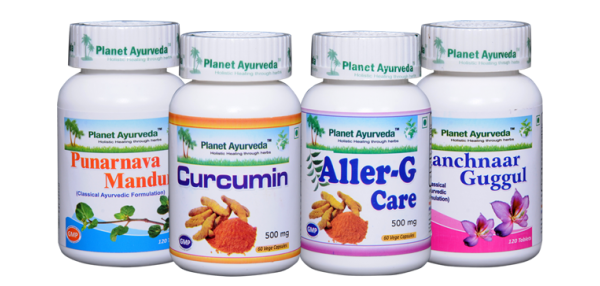

Products Description
1. Curcumin Capsules
Curcumin Capsules are a single-herb formulation prepared from the standardized extract of Turmeric (Curcuma longa), rich in the active constituent curcumin. Curcumin possesses potent antioxidant and anti-inflammatory properties that help support a balanced inflammatory response. According to Ayurveda, turmeric pacifies Pitta and Kapha doshas, purifies the blood, and supports healthy tissue function. In the supportive management of sarcoidosis, Curcumin Capsules help reduce oxidative stress, support immune balance, protect tissues from inflammatory damage, and promote overall respiratory and systemic wellness. They may also help maintain healthy lung tissue and support normal cellular function.
Dose: 2 capsules twice daily with warm water.
2. Kanchnaar Guggul
Kanchnaar Guggul is a classical Ayurvedic tablet formulation containing Kanchnaar (Bauhinia variegata), Shuddha Guggul (Commiphora mukul), Triphala (Amalaki, Haritaki, Bibhitaki), Varuna (Crataeva nurvala), Trikatu (Black Pepper, Long Pepper, Ginger), and Ela (Elettaria cardamomum). According to Ayurveda, it helps balance Kapha and Vata doshas, supports healthy lymphatic circulation, and assists in reducing the accumulation of Ama (metabolic toxins). In sarcoidosis, it helps support healthy glandular and lymphatic function, promotes immune balance, and supports normal tissue metabolism while contributing to overall respiratory health.
Dose: 2 tablets twice daily with warm water.
3. Aller-G Care Capsules
Aller-G Care Capsules are a polyherbal formulation containing Haridra (Curcuma longa), Neem (Azadirachta indica), Shirish (Albizia lebbeck), and Ashwagandha (Withania somnifera). These herbs are traditionally valued for their antioxidant, immunomodulatory, and anti-inflammatory properties. According to Ayurveda, they help balance Kapha and Pitta doshas while supporting a healthy immune response. In the supportive management of sarcoidosis, Aller-G Care helps maintain immune balance, supports respiratory health, reduces oxidative stress, and promotes overall tissue wellness. It also helps maintain healthy respiratory passages and supports the body’s natural defense mechanisms.
Dose: 2 capsules twice daily with warm water.
4. Punarnava Mandur
Punarnava Mandur is a classical Ayurvedic tablet formulation prepared from Punarnava (Boerhavia diffusa), Mandur Bhasma (processed iron oxide), Triphala, Trikatu, Chitraka (Plumbago zeylanica), Vidanga (Embelia ribes), and other traditional herbs. According to Ayurveda, it balances Kapha and Pitta doshas, supports healthy blood formation, and promotes proper fluid metabolism. In sarcoidosis, Punarnava Mandur helps maintain healthy circulation, supports liver and spleen function, reduces fluid accumulation, and promotes overall metabolic balance while contributing to improved tissue nourishment.
Dose: 2 tablets twice daily with warm water.
5. Chitrak Haritaki
Chitrak Haritaki is a classical Ayurvedic herbal formulation containing Chitraka (Plumbago zeylanica), Haritaki (Terminalia chebula), Amalaki (Emblica officinalis), Guduchi (Tinospora cordifolia), Dashmool, Pippali (Piper longum), and other beneficial herbs. It is traditionally used to support respiratory health and improve digestion. According to Ayurveda, it balances Kapha and Vata doshas, kindles Agni (digestive fire), and helps eliminate Ama. In sarcoidosis, it supports respiratory function, promotes healthy mucus clearance, enhances digestion and metabolism, and contributes to balanced immune function.
Dose: 1–2 teaspoons or as directed by an Ayurvedic physician, twice daily after meals with warm water.
6. Vasasav
Vasasav is a classical Ayurvedic liquid formulation prepared from Vasa (Adhatoda vasica) along with herbs such as Pippali (Piper longum), Dalchini (Cinnamomum zeylanicum), Ela (Elettaria cardamomum), and other traditional ingredients. It is prepared through a natural fermentation process that enhances herbal bioavailability. According to Ayurveda, Vasasav helps pacify Kapha and Pitta doshas and supports healthy respiratory function. In the supportive management of sarcoidosis, it helps maintain bronchial health, promotes clear airways, supports comfortable breathing, and contributes to a balanced inflammatory response in the respiratory system.
Dose: 2 teaspoons twice daily after meals with an equal quantity of water.
Conclusion
At last, Sarcoidosis is a complex inflammatory condition that can affect multiple organs, particularly the lungs and lymph nodes. Early diagnosis, regular monitoring, and appropriate medical care are essential for effective management. Along with conventional treatment, Ayurveda emphasizes balancing the doshas, improving digestion, eliminating Ama (metabolic toxins), and supporting a healthy immune response. Herbal formulations, a wholesome diet and a healthy lifestyle may help promote overall well-being and support the body’s natural healing processes when used under the guidance of a qualified Ayurvedic physician.