Ticks in Dogs – Causes, Symptoms, Management & Ayurvedic Approach
Abstract
Dogs share a close bond with humans and are an important part of many families. Like humans, they can be affected by various infectious diseases and parasitic infestations that influence their health and well-being. Among external parasites, ticks are a common concern in dogs, particularly those that spend time outdoors or come into contact with infested animals and environments. Ticks are blood-feeding external parasites belonging to the arachnid group. They attach firmly to the dog’s skin and feed on blood. Apart from causing local irritation and discomfort, ticks can transmit infectious organisms responsible for diseases such as ehrlichiosis, anaplasmosis, babesiosis, and Lyme disease. Heavy infestations can also contribute to blood loss, anemia, weakness, and other health complications. This article discusses ticks in dogs, including their causes, clinical signs, investigations, management, and the Ayurvedic perspective. The traditional veterinary knowledge of Pashu Ayurveda provides a holistic approach to animal health that emphasizes cleanliness, skin care, nutrition, digestion, and overall wellness.
Introduction
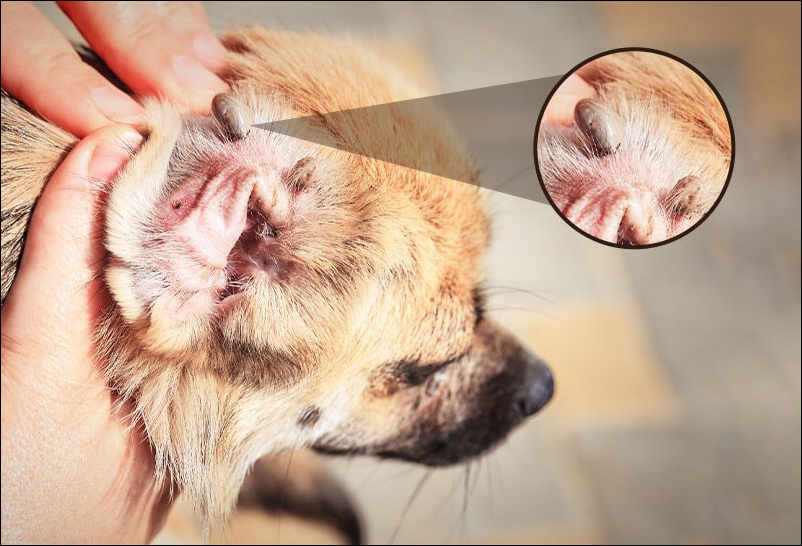
Ticks are among the important external parasites affecting dogs. They are commonly encountered in gardens, fields, grasslands, farms, wooded areas, and other outdoor environments. Dogs can acquire ticks while walking through vegetation or through contact with other animals carrying these parasites. Once a tick reaches a suitable host, it attaches to the skin and feeds on blood. Ticks are often found around the ears, neck, under the collar, between the toes, groin, armpits, and around the tail. Their small size and ability to hide within the coat can make early detection difficult. The primary concern associated with ticks is not only the irritation caused by their bites but also their ability to transmit disease-causing organisms. Depending on the tick species and geographical location, dogs can be exposed to infections such as ehrlichiosis, anaplasmosis, babesiosis, and Lyme disease. Heavy infestations can cause considerable blood loss, particularly in puppies, older dogs, and animals with poor general health. Regular inspection, timely tick removal, consistent preventive care, and environmental control are therefore essential components of canine tick management.
Causes
Tick infestation occurs when dogs come into contact with ticks or tick-infested environments.
1. Outdoor Exposure
Dogs visiting gardens, parks, farms, forests, grasslands, and areas with dense vegetation have increased exposure to ticks.
2. Contact with Other Animals
Ticks can spread through contact with infested dogs and other animals, including livestock and wildlife.
3. Infested Environment
Ticks can survive in outdoor surroundings and, in some situations, around kennels, bedding, and resting areas.
4. Inadequate Prevention
Irregular parasite prevention increases the risk of infestation, especially in dogs that frequently spend time outdoors.
5. Thick Coat
Ticks can remain hidden in dense fur, allowing them to stay unnoticed for longer periods.
Signs and Symptoms
The signs depend on the number of ticks, duration of infestation, and whether a tick-borne infection has developed.
Common Signs
- Visible ticks attached to the skin
- Excessive scratching or licking
- Skin redness and irritation
- Small bumps or swelling
- Crusting around bite sites
- Hair loss
- Restlessness
- Excessive grooming
Signs of Heavy Infestation
- Weakness
- Reduced activity
- Poor appetite
- Weight loss
- Pale gums
- Anemia
- General debility
Possible Signs of Tick-Borne Disease
- Fever
- Lethargy
- Loss of appetite
- Swollen lymph nodes
- Joint stiffness
- Muscle discomfort
- Pale mucous membranes
- Unusual bleeding or bruising
- Nosebleeds
- Vomiting or diarrhea
The appearance of these symptoms requires veterinary evaluation because they can occur with several diseases and are not specific to tick infestation alone.
Investigations
Diagnosis begins with a complete physical examination and careful inspection of the dog’s skin and coat.
1. Complete Blood Count
A CBC helps assess anemia, platelet changes, and alterations in white blood cells, which can provide clues about infection or systemic illness.
2. Blood Biochemistry
Biochemical testing evaluates general health and helps assess organs such as the liver and kidneys.
2. Tick-Borne Disease Testing
Depending on clinical signs and regional disease prevalence, veterinarians recommend antibody tests, antigen tests, blood smears, or PCR testing for specific tick-borne infections.
3. Skin Examination
Dogs with persistent itching, wounds, or skin lesions can require additional dermatological evaluation to identify secondary infections or other skin conditions.
Management
Effective tick management involves both the dog and its environment.
- Remove attached ticks carefully using an appropriate tick-removal tool.
- Use veterinarian-recommended tick-control products suitable for the dog’s age and weight.
- Wash bedding and clean the dog’s resting areas regularly.
- Maintain outdoor areas and reduce excessive vegetation where ticks thrive.
- Check the dog regularly, especially after outdoor activity.
- Monitor for fever, weakness, pale gums, bleeding, or changes in appetite and behavior.
Ayurvedic View and Management
The Ayurvedic approach to animal health is associated with Pashu Ayurveda, which emphasizes appropriate diet, hygiene, disease prevention, skin health, and maintenance of overall strength. Although modern tick infestation does not have a direct one-to-one equivalent in classical Ayurvedic terminology, its clinical features can be considered through broader concepts involving Krimi (parasite infestations) causing skin disorders, itching, and irritation. External cleanliness is an important part of Ayurvedic animal care. Regular grooming and appropriate bathing help maintain skin hygiene and remove external contaminants. Neem (Azadirachta indica) is valued for skin care and anti-microbial properties used in Ayurvedic preparations for skin-related concerns. Furthermore, Gandhak (purified sulfur), and herbs such as Manjishtha (Rubia cordifolia), Sariva (Hemidesmus indicus), Khadir (Acacia catechu), Haridra (Curcuma longa), and Guduchi (Tinospora cordifolia) are valued in Ayurveda for their roles in maintaining healthy skin, and managing inflammatory tendencies. Moreover, regular grooming, environmental cleanliness, appropriate external care, balanced nutrition, attention to digestive health, and carefully selected herbal support. However, severe infestation, anemia, fever, bleeding, or suspected tick-borne disease requires prompt veterinary diagnosis and treatment.
Herbal Remedies by Planet Ayurveda for Ticks in Dogs
Planet Ayurveda is an Ayurveda-focused wellness brand dedicated to promoting the timeless principles of Ayurveda through a diverse range of herbal and traditional Ayurvedic formulations. The brand incorporates traditionally valued herbs and natural ingredients into products designed to support various aspects of health and overall well-being. By connecting classical Ayurvedic knowledge with contemporary quality practices, Planet Ayurveda aims to make holistic wellness more accessible to mankind. Its philosophy emphasizes balanced living, natural wellness, and a deeper understanding of Ayurveda as a traditional approach to maintaining health and vitality. Planet Ayurveda is pleased to present selected Ayurvedic products that can be considered as part of a comprehensive approach to maintaining healthy skin and supporting overall wellness in dogs.
Product List
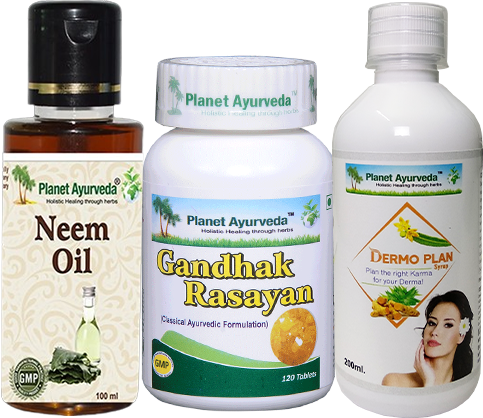
- Neem Oil
- Gandhak Rasayan
- Dermo Plan Syrup

Product Descriptions
1. Neem Oil
Planet Ayurveda’s Neem oil, obtained from neem (Azadirachta indica). Neem contains naturally occurring compounds such as azadirachtin, nimbin, nimbidin, and salannin, which have been studied for their antimicrobial, and anti-inflammatory properties. Neem oil is valued for helping maintain skin cleanliness and supporting healthy skin. Its characteristic compounds are also associated with insect-repellent activity, making neem-based external care relevant to an overall approach toward managing external parasites. For dogs, neem oil should be used externally and appropriately diluted. A small amount of diluted neem oil can be applied to the coat and skin, avoiding the eyes, nose, mouth, and other sensitive areas. It is advisable to perform a small patch test before broader application, particularly in dogs with sensitive skin.
Dosage/Application: Dilute neem oil appropriately before external application and apply a small quantity to the dog’s coat and skin as directed by a veterinarian or qualified veterinary Ayurvedic practitioner. Do not allow the dog to ingest the oil.
2. Gandhak Rasayan
Planet Ayurveda’s Gandhak Rasayan contains Shuddha Gandhak (Purified Sulfur), an important ingredient in Ayurvedic skin disorder management. Gandhak helps in relieving itching, irritation, and unhealthy skin. Sulfur has long been recognized in dermatological practices for its cleansing and skin-supportive properties. For dogs affected by tick infestation, Gandhak Rasayan can be considered as part of an Ayurvedic approach focused on supporting skin health, particularly when itching and irritation accompany the external parasite problem.
Dosage: 1 tablet twice daily with feed.
3. Dermo Plan Syrup
Planet Ayurveda’s Dermo Plan Syrup is a combination of Ayurvedic herbs that is good for skin health and internal balance. The formulation contains Manjishtha (Rubia cordifolia), Giloy (Tinospora cordifolia), Chopchini (Smilax china), Sariva (Hemidesmus indicus), Neem (Azadirachta indica), Haridra (Curcuma longa), Khadir (Acacia catechu) etc. Manjishtha is regarded as a Raktashodhaka, or blood-purifying herb that contains anthraquinones, including alizarin and purpurin,known for its antimicrobial and antiinflammatory properties. Giloy contains alkaloids, diterpenoid compounds, known for boosting immunity. Sariva is a cooling and skin-supportive herb that relieves heat and irritation. Neem is one of the most widely recognized Ayurvedic herbs for skin care. Its naturally occurring compounds, including azadirachtin and nimbin, are known for antimicrobial activity. Neem is valued for maintaining skin cleanliness and supporting healthy skin. Haridra contains curcuminoids, particularly curcumin, which exhibits antioxidant and anti-inflammatory properties. Khadir is valued for its anti-pruritic property.. The combination of these herbs gives Dermo Plan Syrup a broad Ayurvedic profile focused on maintaining healthy skin and supporting internal balance.
Dosage: 1 tablespoon twice daily.
Neem Leaf Bath
A neem leaf bath is a simple traditional Ayurvedic-inspired practice for maintaining external skin hygiene. Neem leaves can be boiled in clean water, and the cooled and strained decoction can be used as a bathing rinse. Neem contains naturally occurring compounds such as azadirachtin, nimbin, nimbidin, and salannin, which have been studied for their antimicrobial and anti-inflammatory properties. A neem leaf bath can be incorporated into the grooming routine of dogs experiencing skin irritation associated with external parasites. It can help keep the coat and skin clean while providing a soothing external bathing practice.
Conclusion
Ticks are common external parasites that can affect the skin and overall health of dogs. In addition to causing irritation and itching, significant infestations can contribute to blood loss and may expose dogs to tick-borne infections. Early identification, prompt removal of attached ticks, regular parasite prevention, and environmental hygiene are therefore important components of effective management. The principles of Pashu Ayurveda offer a holistic perspective on animal health, emphasizing cleanliness, healthy skin, proper nutrition, digestion, and overall balance. Ayurvedic ingredients such as Neem (Azadirachta indica), Gandhak (sulphur), Manjishtha (Rubia cordifolia), Haridra (Curcuma longa), Sariva (Hemidesmus indicus), and Giloy (Tinospora cordifolia) have established importance in skin-focused Ayurvedic care. Above mentioned products of Planet Ayurveda can be incorporated into an approach to maintaining canine skin health. These measures are best selected according to the individual animal’s needs and used alongside appropriate veterinary tick-control practices. A well-rounded approach that combines regular tick checks, effective parasite prevention, environmental cleanliness, veterinary assessment, and appropriate Ayurvedic care provides a practical way to support healthy skin and the overall well-being of dogs.