Natural Ways to Balance High Estrogen Levels in Females
Abstract
Estrogen is one of the primary female sex hormones responsible for regulating the menstrual cycle, reproductive health, bone metabolism, cardiovascular function, skin integrity, and emotional well-being. While adequate estrogen is essential for optimal health, persistently elevated estrogen levels or impaired estrogen metabolism—often referred to as estrogen dominance—can contribute to a variety of health concerns, including irregular menstrual cycles, breast tenderness, weight gain, mood fluctuations, uterine fibroids, endometriosis, polycystic ovarian syndrome (PCOS), and an increased risk of certain hormone-sensitive conditions. Excess estrogen may result from increased production, reduced detoxification by the liver, impaired gut elimination, obesity, chronic stress, environmental endocrine disruptors, or hormonal medications. The body’s ability to metabolise and eliminate estrogen depends largely on healthy liver function, an efficient digestive system, balanced intestinal microbiota, and regular bowel movements. Furthermore, it integrates classical Ayurvedic principles, mapping estrogen dominance to imbalances in Pitta and Kapha doshas, impaired Agni (metabolic fire), and Srotodushti (channel obstruction) within the Artava Dhatu (female reproductive tissue) and Rasa Dhatu (primary nourishing body fluid/plasma). By bridging modern endocrinology with Ayurvedic therapeutics—such as Deepana-Pachana (enhancing digestive fire and metabolising toxins), hepatoprotective botanicals, and Virechana (therapeutic purgation)—we outline a clinically cohesive framework for restoring hormonal equilibrium.
Introduction
Estrogen is vital for female secondary sexual characteristics, menstrual regulation, bone density, and cardiovascular health. However, its utility depends entirely on strict homeostatic control. When production surpasses physiological requirements, or when clearance pathways fail, a state of hyperestrogenism occurs. In clinical settings, excess estrogen rarely stems from simple ovarian overproduction. More commonly, it arises from compromised hepatic detoxification, poor gastrointestinal elimination, chronic stress, and exposure to exogenous endocrine-disrupting chemicals (EDCs) known as xenoestrogens. Resolving this imbalance requires optimising the organ systems responsible for processing and purging hormones. To achieve a holistic understanding of hormonal clearance, we can synthesise these modern physiological pathways with Ayurveda. While classical texts do not isolate chemical hormones, their functional expressions are understood through the movement of Doshas, Dhatus (tissues), and Srotamsi (channels). Hyperestrogenism aligns with an exacerbation of the Ushna (hot) and Drava (liquid) attributes of Pitta, alongside the proliferative qualities of Kapha. Evaluating both medical paradigms allows clinicians to construct effective strategies to optimise estrogen clearance.
Understanding Estrogen Metabolism
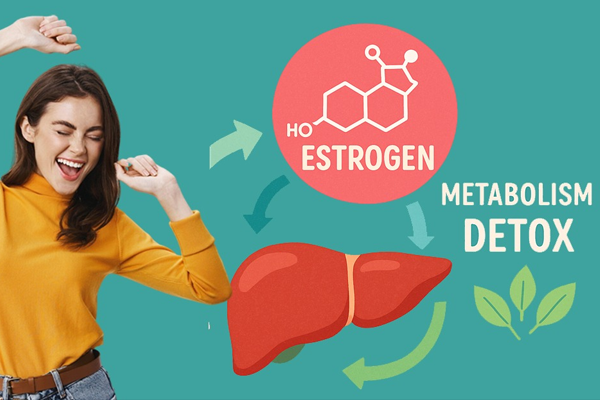
Estrogen is primarily produced by the ovaries during the reproductive years. Smaller amounts are also synthesised by adipose tissue, the adrenal glands, and, during pregnancy, the placenta. The liver serves as the principal organ responsible for estrogen metabolism. Through specialised enzymatic pathways, estrogen is converted into metabolites that are then excreted through bile into the intestines. Ideally, these metabolites leave the body through regular bowel movements. However, if intestinal health is compromised, certain gut bacteria possessing the enzyme beta-glucuronidase may reactivate estrogen, allowing it to be reabsorbed into the bloodstream instead of being eliminated. Consequently, maintaining liver and gut health becomes essential for efficient estrogen clearance.
Common Causes of Excess Estrogen
Several factors may contribute to elevated estrogen levels or impaired estrogen elimination.
- Impaired Liver Detoxification: The liver metabolises hormones, medications, toxins, and metabolic waste. Fatty liver disease, excessive alcohol consumption, poor dietary habits, or chronic inflammation can reduce the liver’s efficiency in processing estrogen.
- Constipation: Delayed bowel movements increase the likelihood of estrogen reabsorption from the intestines. Chronic constipation is therefore considered an important contributor to hormonal imbalance.
- Obesity: Fat tissue contains the enzyme aromatase, which converts androgens into estrogen. Women with excessive body fat often have higher circulating estrogen levels.
- Chronic Stress: Persistent stress elevates cortisol levels, disrupting the normal balance between estrogen and progesterone. Hormonal imbalance frequently follows prolonged psychological stress.
- Environmental Xenoestrogens: Synthetic chemicals such as BPA, phthalates, pesticides, and certain cosmetics may mimic estrogen within the body, increasing the overall estrogenic burden.
- Hormonal Medications: Oral contraceptives and hormone replacement therapy may influence estrogen levels in susceptible individuals.
Signs That May Suggest Excess Estrogen
Women experiencing estrogen imbalance may notice
- Heavy or painful menstrual periods
- Premenstrual syndrome (PMS)
- Breast tenderness
- Weight gain around the hips and thighs
- Mood swings and irritability
- Water retention
- Uterine fibroids
- Endometriosis
- Ovarian cysts
- Headaches
- Fatigue
- Reduced libido
These symptoms are not diagnostic and require proper medical evaluation.
Supporting Natural Estrogen Elimination
- Prioritise Liver Health: Since the liver performs the primary detoxification of estrogen, protecting hepatic function is essential. A balanced diet rich in vegetables, adequate hydration, avoidance of alcohol intake, and avoidance of processed foods can support normal liver function. Cruciferous vegetables such as broccoli, cauliflower, cabbage, kale, and Brussels sprouts contain compounds that support healthy estrogen metabolism.
- Improve Gut Health: Healthy intestinal bacteria assist in proper hormone elimination. Consuming fiber-rich foods, fermented foods when appropriate, adequate fluids, and maintaining regular bowel movements help minimise estrogen reabsorption. Individuals with persistent digestive symptoms should seek evaluation for underlying gastrointestinal disorders.
- Increase Dietary Fiber: Dietary fiber binds estrogen metabolites in the intestine and facilitates their removal through faeces. Whole grains, fruits, vegetables, legumes, flaxseeds, and psyllium contribute significantly to daily fiber intake.
- Exercise Regularly: Regular physical activity helps maintain healthy body weight, improves insulin sensitivity, supports liver function, and promotes hormonal balance. Both aerobic exercise and resistance training offer cardiovascular and metabolic benefits.
- Maintain Healthy Body Weight: Reducing excess body fat decreases peripheral estrogen production. Even modest weight loss may improve hormonal regulation in overweight individuals.
- Manage Stress Effectively: Yoga, meditation, mindfulness practices, deep breathing, and adequate sleep contribute to healthier endocrine function by reducing chronic cortisol elevation.
- Reduce Exposure to Endocrine Disruptors: Choosing glass or stainless-steel food containers, minimising plastic use, selecting natural personal care products, and washing fruits and vegetables thoroughly may reduce exposure to estrogen-mimicking chemicals.
The Ayurvedic Insight – Dosha, Agni, and Srotas
In the classical Ayurvedic tradition, excess estrogen can be understood through a framework of bio-energetic and structural imbalances, contextualised within Tridosha, Agni (metabolic fire), and Srotamsi (circulatory and metabolic channels).
Pathophysiology of Estrogen Excess in Ayurveda
Estrogen, in its healthy state, coordinates the growth, nourishment, and preparation of the endometrial lining—functions that share qualities with Kapha (stability, growth) and Rasa dhatu (plasma). However, its cyclic, transformative expressions are governed by Pitta (heat, transformation). When estrogen becomes excessive and pathogenic, it represents a dual aggravation of Pitta and Kapha:
- Impairment of Agni (Mandagni): Improper dietary habits (Mithya Ahara) and stress weaken the central digestive fire (Jatharagni). This leads to a systemic slowdown of tissue metabolism (Dhatu Agni), particularly within the liver (Yakrit), the primary seat of Ranjaka Pitta (the subtype responsible for blood formation and metabolic filtration).
- Formation of Ama: Sluggish metabolism leads to the accumulation of Ama—metabolic toxins resulting from undigested food. Ama mixes with circulating Rasa (plasma) and Rakta (blood), coating cellular receptors and distorting tissue communication.
- Srotodushti (Sanga): The combination of fluid-heavy Pitta, dense Kapha, and sticky Ama leads to Sanga (obstruction) within the Artava Vaha Srotas (the channel system governing female reproductive tissue). Because the channels are blocked, the normal downward flow of energy (Apana Vata) becomes obstructed. This stagnation manifests physically as fluid retention, heavy menstrual bleeding (Raktapradara), and abnormal tissue growths like fibroids (Granthi), mirroring modern estrogen dominance.
Ayurvedic Protocols for Estrogen Clearance
Ayurvedic therapeutics focus on rekindling Agni (digestive fire), digesting Ama (toxins), protecting the liver, and clearing obstructions from the reproductive channels to restore balance.
1. Deepana-Pachana (Kindling Fire and Digesting Toxins)
Before attempting to expel excess humours, metabolic toxins (Ama) must be cleared. This is achieved through Deepana (herbal stimulants for Agni) and Pachana (carminatives that digest Ama). Administering formulations containing Trikatu (ginger, black pepper, and long pepper) or Shunthi (dry ginger) stimulates both Jatharagni and Bhuta Agni (hepatic pathways), ensuring the liver is prepared to process metabolic wastes.
2. Yakrit Rakshana (Hepatoprotective and Bile-Stimulating Botanicals)
Because the liver (Yakrit) is the home of Ranjaka Pitta (provide red colour to blood), specific bitter, alterative herbs are utilised to cleanse hepatic tissue and stimulate bile flow (Pitta Saraka), mirroring the modern goal of clearing conjugated estrogens through the biliary tract.
- Katuki (Picrorhiza kurroa): A bitter herb that stimulates hepatic regeneration, enhances bile synthesis, and clears deep-seated Pitta stagnation from the liver.
- Bhumyamalaki (Phyllanthus niruri): Renowned for its hepatoprotective qualities, it modulates liver enzymes, supports cellular detoxification, and pacifies both aggravated Pitta and Kapha.
- Kumari (Aloe vera): The pure juice of Aloe vera acts as a cooling liver tonic that simultaneously regulates Artava Vaha Srotas, ensuring smooth menstrual flow and downward movement of Apana Vata.
Herbal Remedies for Excess Estrogen by Planet Ayurveda
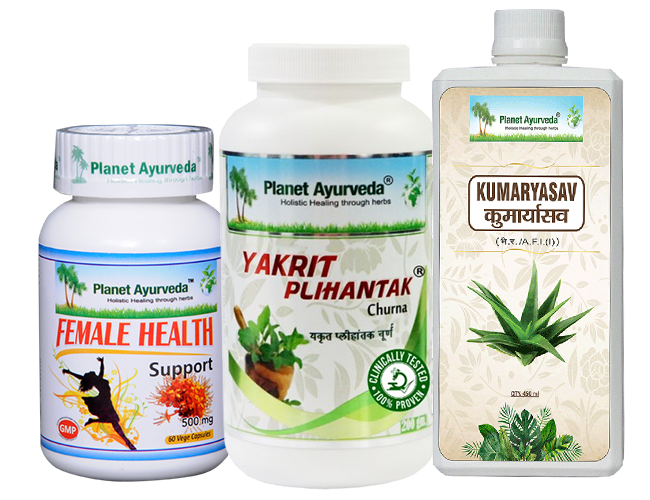

Planet Ayurveda is a renowned Ayurvedic healthcare company founded by Dr Vikram Chauhan, committed to promoting authentic Ayurveda through classical herbal formulations and holistic healthcare. The company manufactures herbal products using standardised extracts and high-quality natural ingredients without artificial additives or preservatives. In addition to its extensive range of herbal supplements, Planet Ayurveda offers expert online and offline consultations and actively spreads awareness about Ayurveda through educational articles, webinars, research, and health programs worldwide. Here we will discuss some effective formulation of Planet Ayurveda that helps in the management of excess estrogen levels in females.
1. Yakrit Plihantak Churna
Yakrit Plihantak Churna supports the management of excess estrogen by promoting optimal liver function, which is central to estrogen metabolism and elimination. Herbs such as Bhumi Amla (Phyllanthus niruri), Kalmegh (Andrographis paniculata), Katuki (Picrorhiza kurroa), and Sharpunkha (Tephrosia purpurea) are traditionally valued in Ayurveda for supporting hepatic detoxification and maintaining healthy Ranjaka Pitta (the Pitta subtype responsible for liver function and biochemical transformation). By improving liver efficiency, these herbs facilitate the conversion and excretion of estrogen metabolites, thereby reducing their recirculation within the body. Punarnava (Boerhavia diffusa) helps maintain healthy fluid balance and supports natural elimination pathways, while Bhringraj (Eclipta alba), Kaasni (Cichorium intybus), and Makoy (Solanum indicum) contribute to healthy liver and metabolic function. Collectively, the formulation strengthens Agni (digestive and metabolic fire), reduces the accumulation of Ama (metabolic toxins), and supports the body’s physiological mechanisms for maintaining hormonal balance.
Dosage: 1 tsp twice daily after a meal with warm water
2. Female Health Support Capsules
Female Health Support, containing Ashoka (Saraca asoca), Lodhra (Symplocos racemosa), and Shatavari (Asparagus racemosus), supports female reproductive health by promoting hormonal homeostasis rather than directly suppressing estrogen production. In Ayurveda, these herbs help maintain the health of the Artava Dhatu (female reproductive tissue) and Artavavaha Srotas (channels of the female reproductive system), ensuring proper tissue nourishment and physiological function. Ashoka is traditionally valued for supporting normal uterine function and menstrual regularity, while Lodhra helps maintain healthy endometrial tissue and balanced reproductive secretions. Shatavari, a renowned Rasayana (rejuvenative therapy), nourishes the reproductive system and supports the body’s adaptive endocrine responses during hormonal fluctuations. Together, these herbs help restore the balance of Pitta (the bio-energy governing metabolism and transformation) and Kapha (the bio-energy responsible for structure and nourishment), thereby supporting healthy menstrual physiology and complementing the body’s natural mechanisms for maintaining hormonal equilibrium.
Dosage: 1 Capsule twice daily after a meal with Plain water
3. Kumaryasav
Kumaryasav, a classical Ayurvedic fermented formulation with Kumari (Aloe vera, Aloe barbadensis) as its principal ingredient, supports hormonal balance by enhancing digestive efficiency and promoting healthy liver metabolism, both of which are essential for the proper clearance of excess estrogen. In Ayurveda, it stimulates Agni (digestive and metabolic fire), helping prevent the formation of Ama (metabolic toxins) that can obstruct the Artavavaha Srotas (channels of the female reproductive system). Kumaryasava also supports Apana Vata (the downward-moving bio-energy responsible for menstruation and elimination), encouraging healthy menstrual flow and physiological elimination processes. Its mild Deepana-Pachana (digestive and toxin-metabolising) actions improve nutrient assimilation while supporting the liver’s role in hormone biotransformation. By promoting coordinated digestive, hepatic, and reproductive functions, Kumaryasava helps create an internal environment that supports healthy estrogen metabolism and overall female reproductive wellness.
Dosage: 2 tsp twice daily after a meal with plain water
Panchakarma And Apana Vata Anulomana (Normalisation Of The Downward-Moving Vata Energy)
For systemic, deeply rooted estrogen dominance, classical purification (Panchakarma) is indicated. Specifically, Virechana (therapeutic purgation) is the gold-standard treatment for eliminating excess Pitta and clearing hepatic congestion. By inducing controlled purgation, Virechana (therapeutic purgation) flushes the biliary tree and the gastrointestinal tract, removing accumulated toxins and preventing reabsorption through the bowel wall. Following Virechana (therapeutic purgation), the administration of Basti (medicated enemas), particularly utilising oils infused with Dashamula (ten roots), helps stabilise Apana Vata (downward-moving vata), anchoring the nervous system and ensuring the rhythmic elimination of menstrual blood and intestinal waste.
Environmental and Lifestyle Considerations
Eliminating excess estrogen cannot be accomplished solely through internal clearance mechanisms; one must also systematically reduce the influx of exogenous estrogens into the body.
1. Minimising Xenoestrogen Exposure
Modern industrial practices introduce synthetic compounds that possess a high affinity for human estrogen receptors. These xenoestrogens—including Bisphenol A (BPA) in plastics, phthalates in synthetic fragrances, and organochlorine pesticides in conventional agriculture—mimic or amplify hormonal signals. To lower this burden, individuals should transition away from plastic food containers, filter their drinking water, and prioritise organic produce to avoid chemical pesticides.
2. Managing the Cortisol-Progesterone Steel
Chronic stress acts as an indirect catalyst for estrogen dominance through a phenomenon known as the “progesterone steal.” Cortisol, the primary stress hormone, shares the same foundational precursor—cholesterol—as progesterone. Under prolonged stress, the adrenal glands prioritise the production of cortisol at the expense of progesterone. As progesterone production drops, the relative ratio skews heavily in favour of estrogen, creating a state of functional estrogen dominance. Incorporating stress-reduction practices—such as classical Pranayama (breath regulation like Nadi Shodhana) and adaptogens like Ashwagandha—quiets the HPA axis, preserving progesterone synthesis.
Conclusion
The elimination of excess estrogen requires the seamless coordination of hepatic detoxification, optimal gastrointestinal clearance, and a minimised toxic exposure footprint. Modern endocrinology provides a blueprint of these pathways, highlighting the nature of CYP1A1 activation, COMT methylation, and the suppression of bacterial beta-glucuronidase within the estrobolome. When these biochemical pathways are integrated with the wisdom of Ayurveda, a complete clinical paradigm emerges. Evaluating the patient through the lens of Agni (digestive and metabolic fire), Ranjaka Pitta (the Pitta subtype responsible for liver function, blood formation, and biochemical transformation), and Srotamsi (body channels or physiological pathways) allows for protocols that go beyond symptom management. Utilising hepatoprotective botanicals like Katuki (Picrorhiza kurroa) and Bhumyamalaki (Phyllanthus niruri), implementing Deepana-Pachana (therapies that stimulate digestion and metabolise toxins), and utilising Virechana (therapeutic purgation) to clear Pitta (the bio-energy governing metabolism and transformation) congestion provide an effective, natural path toward lasting hormonal harmony.