Lavanbhaskar Churna – Ayurvedic Digestive Churna for Gut Health
Abstract
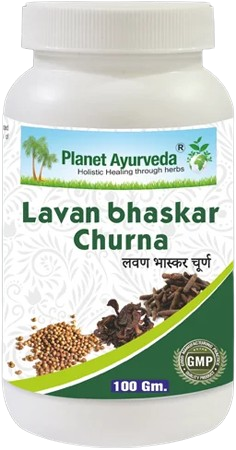
Lavanbhaskar Churna is a prominent, salt-based Ayurvedic formulation primarily indicated for digestive disorders like indigestion, bloating, constipation, piles, and low digestive fire. This is composed of various salts, herbs, and spices, its preparation can be modified with Nausadar for an intensified effect. In clinical practice, it is often paired with adjuncts like Panchsakar Churna, purified Kuchila, or baking soda to address complex symptoms such as abdominal colic, chronic flatulence, and internal tumors (Gulma). However, strict contraindications apply: it must be avoided in patients with high gastric acidity, heartburn, mouth ulcers, or gastrointestinal ulcers, as ingredients like Nausadar can aggravate mucosal inflammation. Proper storage in tight glass bottles is crucial to prevent degradation during the rainy season. Let’s discuss in detail!
Ingredients
- Samudra Namak (Sea salt) – 8 Tolas
- Kala Namak (Black salt) – 5 Tolas
- Kanch Lavan
- Saindha Namak (Rock salt)
- Dhaniya (Coriander)
- Peepal (Long pepper)
- Peepalamool (Long pepper root)
- Kalajira (Black cumin)
- Tejpat (Indian bay leaf)
- Nagkeshar
- Talispatra
- Amlavet – 2 Tolas each
- Kalimirch (Black pepper)
- Jeera (Cumin)
- Sonth (Dry ginger) – 1 Tola each
- Anardana (Pomegranate seeds) – 4 Tolas
- Ilayachi (Cardamom)
- Dalchini (Cinnamon) – ½ Tola each
Mix all ingredients together, pound/grind them, and make a fine powder (Churna).
Note– Many physicians substitute Nausadar (Ammonium chloride) in place of Kanch Lavan. The effect of Churna mixed with Nausadar is intense. Its dosage should be halved.

Description of ingredients
Samudra Namak (Sea Salt)- It is considered heating (Ushna) and digestive. It softens hard stools, balances Vata, and stimulates appetite, but can aggravate Pitta if overused. It is Composed primarily of sodium chloride, it maintains electrolyte balance and fluid regulation, while stimulating salivary and gastric juices crucial for initiating the digestive process.
1. Kala Namak (Black Salt / Himalayan Black Salt)
Known as Deepana (appetizer) and Pachana (digestive). It treats bloating, intestinal gas, and abdominal pain without aggravating body heat or Pitta. It is Rich in sulfur compounds (giving its distinct aroma), it acts as a natural antacid and carminative, effectively reducing flatulence and lowering intestinal gas formation.
2. Kanch Lavan (Black Salt variant / Silica-rich salt)
Highly penetrative (Teekshna), it cuts through heavy, accumulated Kapha toxins (Ama), clearing channels and relieving deep-seated bloating or abdominal tumors (Gulma). This trace-mineral-dense salt enhances gastrointestinal motility and aids enzymatic breakdown, assisting in the rapid disintegration of dense food particles in the gut.
3. Saindha Namak (Rock Salt / Pink Himalayan Salt)
The highest-rated salt in Ayurveda; cooling (Sheeta), cardiotonic, and Tridosha-hara (balances all three doshas). It improves vision and enhances digestive fire gently. Contains lower sodium than commercial salt and is packed with 84 trace minerals (like potassium, magnesium). It supports cellular metabolism and prevents muscle cramping.
4. Dhaniya (Coriander / Coriandrum sativum)
Uniquely balances both digestive fire (Agni) and excess heat, clearing Ama toxins without aggravating Pitta, making it excellent for burning sensations. It contains active compounds like linalool, which exert antispasmodic effects on intestinal muscles, thereby reducing cramps, bloating, and symptoms of irritable bowel syndrome.
5. Peepal (Long Pepper / Piper longum
A powerful Rasayana (rejuvenator) for both the digestive and respiratory systems. It liquefies Kapha, kindles low metabolic fire, and enhances medicine absorption. Rich in the alkaloid piperine, it drastically increases the bioavailability of other nutrients. It acts as an immunomodulator and exhibits potent thermogenic properties.
6. Peepalamool (Long Pepper Root)
Possesses strong carminative (Vatanulomana) actions. It specifically targets the lower abdomen to eliminate trapped downward gases (Apana Vayu) and induce sleep. Contains piperine and volatile oils that stimulate pancreatic enzymes, improve liver function, and exert central nervous system-depressant effects to relieve stress-induced gut issues.
7. Kalajira (Black Cumin / Elsholtzia cristata or Carum carvi)
Bitter and pungent, it pacifies Kapha and Vata, removes bad breath, cleanses the uterus, and relieves acute abdominal colic and worm infestations. Abundant in carvone and limonene, it displays powerful antimicrobial and carminative activities, effectively inhibiting gut pathogens while soothing spasms in the gastrointestinal tract.
8. Tejpat (Indian Bay Leaf / Cinnamomum tamala)
It stimulates the tongue and stomach, pacifies Kapha and Vata, helps regulate metabolic secretions, and clears toxins from the cardiovascular channels. Packed with monoterpenes and antioxidants, it lowers blood glucose levels, improves insulin sensitivity, and enhances the enzymatic breakdown of complex carbohydrates and fats.
9. Nagkeshar (Mesua ferrea)
A potent astringent (Grahi) and blood purifier. It treats bleeding disorders (like bleeding piles), reduces inflammation, and balances aggravated Kapha and Pitta. It contains xanthones and coumarins that exhibit significant anti-inflammatory, anti-ulcer, and hemostatic (blood-clotting) properties, shielding the stomach lining from excessive acid damage.
10. Talispatra (Indian Silver Fir / Abies webbiana)
Light and heating; it clears congestion in both the respiratory pathways and the stomach, enhancing taste perception and melting chronic, sticky Kapha mucus. Rich in essential oils like alpha-pinene, it functions as a natural bronchodilator and expectorant, while simultaneously stimulating mucosal secretions to boost sluggish digestion.
11. Amlavet (Garcinia pedunculata)
Extremely sour; it acts as a premier cardiac tonic and a sharp digestive stimulant, highly effective in relieving constipation and heavy abdominal bloating. High in hydroxycitric acid (HCA), it modulates lipid metabolism, accelerates fat breakdown, and significantly stimulates gastric acid production to treat severe indigestion.
12. Kalimirch (Black Pepper / Piper nigrum)
Sharp, drying, and hot. It acts as a toxic-cleansing herb that destroys worms, alleviates Vata-Kapha disorders, and scrapes away cellular fat blocks. Its primary alkaloid, piperine, stimulates the secretion of hydrochloric acid in the stomach, promoting protein digestion and protecting against intestinal bacterial overgrowth.
12. Jeera (Cumin / Cuminum cyminum)
Acclaimed for its Deepana-Pachana (appetizing-digestive) nature. It cleanses the uterus, reduces bloating, enhances taste, and pacifies irritated Vata dosha. Contains cuminaldehyde, which triggers the release of bile and pancreatic enzymes, accelerating overall digestion and mitigating bloating by suppressing gas-producing bacteria.
13. Sonth (Dry Ginger / Zingiber officinale)
Known as “universal medicine” (Vishwa-bheshaja). Unlike fresh ginger, it is sweet after digestion (Vipaka), making it safe for long-term gut rejuvenation. Loaded with gingerols and shogaols, it accelerates gastric emptying, acts as a powerful antiemetic (prevents nausea), and suppresses pro-inflammatory pathways in the gut.
14. Anardana (Pomegranate Seeds / Punica granatum)
Splendidly sour-sweet, it stimulates the salivary glands, balances all three doshas, stabilizes erratic bowel movements, and nourishes the cardiovascular system. Extremely high in polyphenols and ellagic acid, it exerts massive antioxidant and anti-inflammatory activity, repairing damaged intestinal linings and improving gut microflora.
15. Ilayachi (Cardamom / Elettaria cardamomum)
Highly aromatic, cooling, and tridoshic. It relieves burning sensations, counters nausea, removes bad breath, and pacifies the upward movement of Vata. Volatile oils like cineole provide strong antispasmodic and carminative actions, relaxing the gastric sphincter to relieve gas and protecting against stomach ulcers.
16. Dalchini (Cinnamon / Cinnamomum verum)
Intensely warming and sweet-pungent. It improves blood circulation to the gut, enhances metabolic rate, kills intestinal parasites, and strengthens the colon. Rich in cinnamaldehyde, it shows broad-spectrum antimicrobial activity, mimics insulin to enhance glucose metabolism, and reduces bloating by relaxing intestinal smooth muscles.
Indications
- Abdominal diseases (Udarroga)
- Gulma disease caused by Vata and Kapha
- Enlargement of the spleen (Pliha Vriddhi)
- Piles (Bawaseer)
- Malabsorption syndrome (Sangrahani)
- Indigestion (Ajeerna)
- Low digestive fire (Mandagni)
- Constipation (Kabja)
- Colic pain (Shool),
- Swelling (Shoth) Rheumatoid arthritis (Amavaat)
- Ignites the digestive fire (Agni)
Clinical Use
- In case of severe digestive weakness (Agmimandya) and debility, mixing 1 Ratti of purified Kuchila powder (Strychnos nux-vomica) and 1 Masha of Sodabicarbonate (Baking soda) with Lavanbhaskar provides exceptional benefits.
- When constipation is present along with these, administering a combination of Lavanbhaskar and Panchsakar Churna cures constipation, abdominal pain, poor digestion, etc. If there is flatulence/gas along with indigestion, purified Kuchila, Lahsunadi Vati, and Sodabicarbonate should be mixed. Adding Lahsunadi Vati easily resolves flatulence.
- Sometimes due to chronic constipation, the Apana Vayu (downward-moving air) becomes vitiated. Consequently, it does not pass out easily. This results in flatulence/bloating (Afara) and, in some people, cardiac pain (Hridaya-shool). This powder provides great relief in such cases. It should be given 3 times a day—in the morning with lukewarm water, and in the afternoon and night, follow it up with lukewarm water after giving it with ghee. Managing it this way eliminates weak digestion, bloating, colic pain, etc. If necessary, massage the abdomen with castor oil (Erand Tail) and warm it with a compress of black salt powder.
- When gastric juices (Amasahay Ras) decrease, the stomach feels heavy after eating, and digestion does not function properly. Acid reflux or burps from the consumed food keep coming back repeatedly. In such a condition, Lavanbhaskar Churna should be administered half an hour before meals and immediately after meals. If taken before meals, it should be consumed with water; if taken after meals, it should be consumed with buttermilk.
- The onset of piles (Arsha) can also happen due to weak digestive fire followed by gas accumulation in the abdomen, and in all types of piles, the digestive fire remains weak and constipation is usually present. Therefore, to ignite the digestive fire in piles, Lavanbhaskar Churna should be consumed with buttermilk.
- In Grahani (malabsorption/IBS), the digestive fire is usually weak, and because the intestines become weak, many patients experience constipation when treated with formulations like Panchamrit Parpati. For such patients, administering Lavanbhaskar Churna with fresh buttermilk twice a day ignites the digestive fire and prevents constipation.
- Due to the weakness of the abdominal nerves, gas forms in the stomach or intestines 3 to 4 hours after a meal. When gas forms in the stomach, it tries to escape upward as burps, and when it forms in the intestines, it passes out downward as Apana Vayu. To prevent the formation of this gas and to strengthen the nerves, administering 1–1 Ratti of purified Kuchila powder along with Lavanbhaskar Churna continuously has been found highly beneficial. If indigestion is present and vitiated acid juice is also in the stomach, 1 Masha of Sodabicarbonate should be mixed in as well.
- When a patient with weak digestion experiences constipation, it triggers abdominal colic pain (Udarshool). This pain occurs due to an obstruction in the forward movement of stool; it usually happens when hard lumps of stool are formed. In such a condition, mixing Panchsakar Churna with Lavanbhaskar Churna relieves the pain. The dosage has to be kept even less than half. We have prepared and utilized a mixture of both in this manner, and it provides significant benefit.
- Nausadar is processed into a sublimated form (Pushpa) before use. This formulation has proven highly effective in dissolving Gulma (abdominal tumors/lumps) in men and women, uterine Gulma, and Gulma formed inside the liver/spleen membranes. Mixing equal parts of Lavanbhaskar and Sodabicarbonate and administering it 3 times a day with water mixed with lemon juice yields excellent results. Gradually, the Gulma gets eradicated. This trial was previously conducted by several Vaidyas (Ayurvedic physicians) in Bombay. Around 200–400 patients have benefited from this. No harm was caused to anyone.

Contraindications
- If the hydrochloric acid (Lavanamla) in the gastric juice becomes highly elevated/potent, causing the digestive system to fail, resulting in indigestion, heartburn (Chhati mein jalan), and symptoms like ulcers or blisters on the tongue or mouth, then medicines that increase acid levels, such as Lavanbhaskar Churna, should not be given.
- If there are ulcers (Kshat) in the stomach or intestines, causing abdominal pain, then Lavanbhaskar Churna cannot provide relief. Furthermore, if Nausadar has been mixed into the Lavanbhaskar Churna, it will cause harm to the ulcerated area or increase the severity in the mucous membrane, creating new ulcers.
- Keep this powder in a glass bottle with a tight-fitting cork. Storing it in a poor-quality cork bottle or a tin box causes it to spoil during the rainy season.
Dosage: 2 to 3 Mashe, 2 times a day. Take with buttermilk (Mattha) or water.
Conclusion
In conclusion, Lavanbhaskar Churna serves as a versatile and potent therapeutic agent in Ayurvedic gastroenterology, specifically designed to rekindle the digestive fire and rectify imbalances in the stomach and intestines. Its formulation allows for flexible clinical adaptations, enabling practitioners to address complex conditions like chronic flatulence, malabsorption, and internal masses (Gulma) by carefully selecting specific adjuncts and modifying dosages. However, its therapeutic efficacy is strictly bounded by its distinct contraindications. Because of its heating, salt-heavy, and potentially caustic nature—especially when formulated with Nausadar—it can severely aggravate conditions characterized by hyperacidity, mucosal inflammation, or gastrointestinal ulcerations. Ultimately, the clinical success of this traditional powder relies on precise patient screening, a deep understanding of its contraindications, and proper storage safeguards to preserve its medicinal integrity.