Plasmacytoma Treatment & Management in Ayurveda
Abstract
Rare neoplastic disorders comprise a diverse group of uncommon tumors that arise from various tissues and often present with atypical symptoms, delayed diagnosis, and limited standardized treatment protocols. Their biological behavior can range from indolent to highly aggressive, requiring individualized, multidisciplinary management. Advances in imaging, pathology, and molecular diagnostics have improved understanding and outcomes, yet challenges remain due to scarcity of data. Plasmacytoma is such a rare plasma cell neoplasm that occurs as a solitary lesion in bone or soft tissues. We shall discuss more about it in the text below and its management in the modern as well as ayurvedic medicinal system,
Introduction
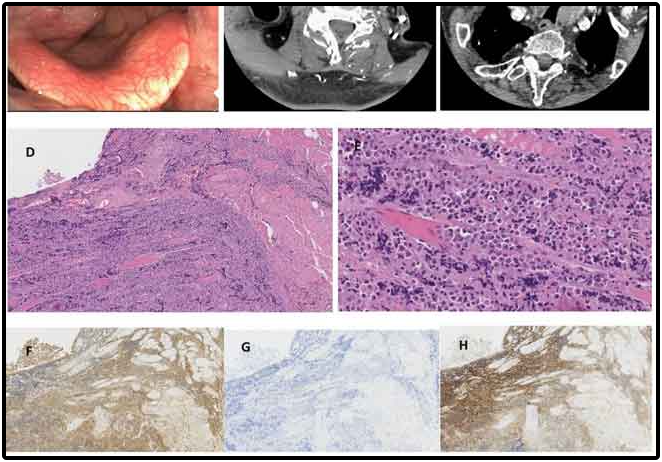
Plasmacytoma is a rare neoplastic disorder characterized by a localized proliferation of monoclonal plasma cells, the antibody‑producing white blood cells that normally reside in the bone marrow. Unlike multiple myeloma, which involves widespread bone marrow infiltration and systemic disease, plasmacytoma presents as a discrete mass with minimal or absent systemic involvement. It is part of the spectrum of plasma cell dyscrasias, representing an early or localized phase of plasma cell malignancy.
Definition and Classification
According to the International Myeloma Working Group and World Health Organization (WHO), plasmacytomas are divided into the following types:
- Solitary Plasmacytoma of Bone (SPB): A single lytic lesion composed of monoclonal plasma cells arising within the bone marrow.
- Extramedullary Plasmacytoma (EMP): A plasmacytoma developing within soft tissues outside the bone marrow, most commonly in the upper respiratory tract (e.g., nasal cavity, sinuses, oropharynx).
- Multiple Solitary Plasmacytomas (MSP): Rare presentations where multiple distinct plasmacytoma lesions are present without diffuse systemic disease.
SPB is the most common form and accounts for a small percentage (~3–5%) of plasma cell neoplasms. EMP accounts for a smaller fraction and may occur in unusual locations, including the gastrointestinal tract, lungs, or other organs.
Epidemiology
- Plasmacytomas are uncommon tumors, typically affecting middle‑aged to older adults, with peak incidence between 50 and 60 years of age.
- Males are more frequently affected than females.
- The exact incidence varies globally, but the condition remains rare compared with multiple myeloma.
Pathophysiology
Plasmacytoma arises from clonal expansion of plasma cells that produce a single type of immunoglobulin (monoclonal protein, or “M protein”). In solitary cases, plasma cells accumulate at a localized site, forming a discrete tumor. When the bone marrow and other organs are not widely infiltrated and diagnostic criteria for multiple myeloma are not met the condition is classified as plasmacytoma.
The biological triggers that initiate clonal plasma cell proliferation remain unclear. Environmental exposures, genetic predisposition, and preceding plasma cell disorders such as monoclonal gammopathy of undetermined significance (MGUS) have been hypothesized but not definitively established.
- Clinical Presentation
- Solitary Plasmacytoma of Bone
Patients with SPB often present with
- Localized bone pain due to lytic destruction, particularly in axial skeleton sites such as vertebrae, ribs, pelvis, and long bones.
- Pathologic fractures caused by structural weakening of affected bones.
- Neurologic symptoms if the lesion compresses adjacent neural structures, e.g., spinal cord or nerve roots.
Extramedullary Plasmacytoma
EMP often arises in soft tissues and may cause symptoms based on tumor location:
- Upper respiratory tract involvement: nasal obstruction, epistaxis (nosebleeds), dysphagia (difficulty swallowing), and sore throat.
- Other organ involvement: symptoms variable according to organ dysfunction — e.g., gastrointestinal bleeding with stomach involvement.
Systemic features typical of multiple myeloma such as widespread bone pain, anemia, hypercalcemia, or renal dysfunction may be absent at initial presentation.
Diagnosis
Diagnosis of plasmacytoma requires careful integration of clinical, laboratory, imaging, and histopathologic data
Laboratory Investigations
- Serum protein electrophoresis and immunofixation may demonstrate a monoclonal protein spike (M protein).
- Urine analysis may reveal Bence Jones proteins (free light chains).
- Complete blood count and metabolic panels evaluate for anemia or end‑organ damage.
Imaging Studies
- Plain radiographs
- MRI
- PET/CT
Tissue Diagnosis
- Biopsy of the lesion
- Bone marrow biopsy
Management
Treatment depends on tumor type, location, and patient factors:
Radiotherapy
Radiation therapy is the primary modality for both SPB and EMP due to high radiosensitivity. Standard doses typically range from 40–50 Gy delivered over several weeks to achieve local control.
Surgery
- Considered for EMP when complete resection is feasible — particularly in anatomically accessible soft tissue sites.
Chemotherapy and Advanced Therapies
- Chemotherapy and immunotherapy may be used when disease is refractory, recurrent, or progressing toward systemic involvement.
- In cases progressing to multiple myeloma or in multiple solitary plasmacytomas, systemic treatments including proteasome inhibitors, immunomodulatory drugs, corticosteroids, and stem cell transplantation may be considered.
Ayurvedic Aspect and Management
Plasmacytoma is not mentioned as a distinct disease entity in classical Ayurvedic texts, yet its clinical presentation can be clearly understood through fundamental Ayurvedic concepts. The condition closely resembles Arbuda described in Ayurveda, particularly when these pathological growths involve deeper tissues such as Asthi Dhatu (bone tissue) and Majja Dhatu (bone marrow). Since plasmacytoma represents localized abnormal plasma cell proliferation, Ayurveda interprets it as a deep-seated Dhatu-pradoshaja Vikara (diseases that arise from dhatu deformity). In this case rakta, mamasaja, asthi and majja dhatu are involved.
…शृणु मांसप्रदोषजान्||१३||
The disease predominantly involves Kapha Dosha, which governs growth, stability, and accumulation, leading to mass formation. Vata Dosha contributes to degeneration, pain, and disease spread, especially when bones and marrow are involved. Pitta Dosha, though secondary, plays a role in inflammatory changes, metabolic disturbance, and tissue destruction. Thus, plasmacytoma is best understood as a Kapha-Vata Pradhana Vyadhi with Pitta Anubandha.
Dosha, Dhatu, and Srotas Involvement
The pathological process mainly affects Asthi and Majja Dhatu, correlating with bone lesions and marrow infiltration seen in plasmacytoma. Rakta Dhatu (blood tissue) is also involved due to altered plasma protein production and marrow dysfunction. The affected srotas (channels) include Asthivaha Srotas, Majjavaha Srotas, and Raktavaha Srotas. A state of Mandagni (low digestion fire) at both Jatharagni (digestion) and Dhatvagni (tissue level digestive fire) levels leads to Ama (endotoxins) formation, which becomes the central pathological factor sustaining the disease.
Samprapti (Ayurvedic Pathogenesis)
Due to improper diet, lifestyle, chronic metabolic imbalance, and weakened Agni (digestion), Ama (endotoxins) accumulates and vitiates Kapha Dosha. This vitiated Kapha lodges in Asthi (bone) and Majja (bone marrow) Dhatu (tissues), causing localized Dhatu Vriddhi, manifesting as Arbuda-like growths. Obstructed Vata Dosha results in pain, degeneration, and structural weakness of bones. Over time, if untreated, deeper Dhatu involvement occurs, increasing the risk of disease progression and systemic manifestations.
Principles of Ayurvedic Management
Ayurvedic management of plasmacytoma focuses on addressing the root cause rather than only the localized lesion. The primary objectives include Agnideepana (digestion improvement), Amapachana (endotoxins digested), Kapha-Vata Shamana (reduction), Rakta-Majja Shodhana (purify), and Dhatu Poshana (tissue nourishment). Strengthening immunity and preventing disease progression through Rasayana (rejuvenation) therapy is an essential component of long-term management.
Panchakarma Approach
When the patient’s strength and disease stage permit, Panchakarma therapies may be applied under expert supervision. Virechana helps in eliminating Pitta-Kapha toxins and purifying Rakta and Majja Dhatu. Basti therapy, especially Tikta-based and Ksheera Basti, is highly beneficial for Asthi and Majja disorders, as Basti is the prime therapy for Vata, which governs bone health. Panchakarma is supportive in nature and must be carefully individualized, particularly in oncology patients.
Herbal Management
Ayurvedic herbal therapy is selected based on Granthi-Arbuda Hara, Rakta Shodhaka, Asthi-Majja Poshaka, and Rasayana properties. Herbs such as Kanchanar (Bauhinia variegata), Guggulu (Commiphora mukul), Haridra (Curcuma longa), and Daruharidra (Berberis aristata) help in reducing abnormal tissue proliferation and Kapha accumulation. Guduchi (Tinospora cordifolia), Ashwagandha (Withania somnifera), and Shatavari (Asparagus racemosus) nourish Majja Dhatu (bone marrow tissue), improve immunity, and enhance tissue strength. Manjishtha (Rubia cordifolia), Neem (Azadirachta indica), and Sariva (Hemidesmus indicus) assist in blood purification and Ama (endotoxins) elimination, supporting metabolic correction at the cellular level.
These herbs collectively help slow disease progression, reduce pain and fatigue, improve marrow function, and enhance the body’s natural defense mechanisms.
Rasayana Therapy
Rasayana therapy plays a crucial role in plasmacytoma by improving Ojas (vital essence/immunity), enhancing immune surveillance, and preventing degeneration of deeper tissues. Long-term Rasayana support is especially valuable in maintaining stability of the disease and reducing the risk of transformation into systemic plasma cell disorders. Rasayana also improves tolerance to conventional treatments such as radiotherapy.
Dietary and Lifestyle Management
A Pathya-based (wholesome) diet is essential for maintaining Agni (digestion) and preventing Ama (endotoxins) formation. Light, warm, freshly prepared foods with predominance of Tikta (Bitter) and Kashaya (Astringent) Rasa are recommended. Green vegetables, barley, millets, and adequate warm water intake support detoxification and metabolism. Heavy, oily, cold, processed foods, excessive dairy, sugar, alcohol, and smoking should be strictly avoided as they aggravate Kapha dosha and Ama buildup.
A balanced lifestyle with adequate rest, stress management, and gentle physical activity supports immune health and tissue repair.
Yoga and Mind–Body Support
Gentle Yoga practices, Pranayama, and meditation help in reducing stress, improving circulation, and enhancing immune balance. Practices such as Anulom-Vilom and Bhramari Pranayama support oxygenation and mental calmness, which is particularly important in chronic disorders like plasmacytoma.
Herbal Remedies by Planet Ayurveda for Plasmacytoma
Planet Ayurveda is a globally recognized Ayurvedic healthcare company dedicated to promoting natural wellness through authentic herbal products. The organization focuses on creating high-quality, plant-based formulations derived from classical Ayurvedic principles to support overall health. Their wide range of products includes supplements, care packs, and specialized herbal remedies for conditions such as liver disorders, kidney problems, digestive issues, diabetes, and hair or skin concerns. Emphasizing purity, safety, and efficacy, Planet Ayurveda sources herbs from trusted suppliers and follows stringent manufacturing standards. By combining traditional Ayurvedic wisdom with modern quality control, Planet Ayurveda offers reliable and natural solutions for maintaining optimal health and well-being. Planet Ayurveda is pleased to inform you about its list of products that are effective in the management of Plasmacytoma.
Product list
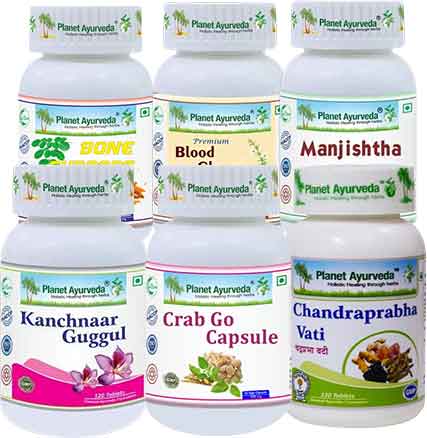
- Kanchnaar Guggul
- Manjishtha Capsules
- Crab Go Capsule
- Chandraprabha Vati
- Bone Support
- Premium Blood Cleanse Capsules

Product description
1. Kanchnaar Guggul
Kanchnaar Guggul is a classical ayurvedic formulation that aids in managing plasmacytoma by targeting deep-seated tissue imbalances and abnormal cell proliferation. It helps reduce unwanted growths, balances Kapha and Vata Dosha, and purifies Rakta (blood) and Majja Dhatu (bone marrow tissue). The formulation enhances Agni (digestive fire) to eliminate Ama (toxins), supports lymphatic circulation, and provides anti-inflammatory, antioxidant, and immune-modulating effects. The medicine promotes tissue nourishment, metabolic correction, and helps in management of Plasmacytoma.
Dosage : Two tablets twice a day.
2. Manjishtha Capsules
Manjishtha Capsules are a product of Planet Ayurveda that contains herbal extract of manjistha (Rubia cordifolia) that support the management of plasmacytoma by purifying blood (Rakta Shodhana) and removing Ama (toxins) from deep tissues. They help balance Kapha and Pitta Dosha, reduce inflammation, and improve lymphatic circulation, supporting tissue detoxification. The herb’s antioxidant and anti-inflammatory properties protect bone marrow and Asthi-Majja (bone and bone marrow) Dhatu (tissue), enhancing cellular resilience. Additionally, Manjishtha strengthens immunity (Ojas) and promotes overall systemic health, complementing conventional therapies while aiding in the management of localized plasma cell proliferative disorders.
Dosage : One capsule twice a day.
3. Crab Go Capsule
Crab Go Capsules are prepared by Planet Ayurveda to check the growth of benign and malignant tumors. The capsules contain the goodness of ashwagandha (Withania somnifera), shatavari (Asparaggus racemosus), harad (Terminalia chebula), giloy (Tinospora cordifolia), gokshur (Tribulus terrestris), tulsi (Ocimum sanctum), adrak (Zingiber officinale) and haridra (Curcuma longa). All these herbs are effective anti inflammatory, analgesic and antitumor activities. Moreover they support normal functioning of the body organs. These herbs provide strength and also promote mental well being. The capsules intend to balance the vitiated doshas and promote normalcy in the tissues and their integrity. Hence, Crab Go Capsules are indeed a best adjunct in the management of Plasmacytoma.
Dosage : Two capsules twice a day.
4. Chandraprabha Vati
Chandraprabha Vati is a classical Ayurvedic tablet formulation with broad Rasayana (rejuvenating) and Shodhana (detoxifying) properties that support overall systemic health. It aids in detoxification and elimination of metabolic toxins (Ama). This assists in clearing stagnant metabolic waste and reducing burden on deeper tissues such as Rakta (blood), Asthi (bone), and Majja Dhatu (bone marrow tissue) that are affected in plasmacytoma. Chandraprabha Vati also supports Agni (digestive fire) and metabolism, which helps minimize Ama formation and improve nutrient assimilation. Its herbs exhibit anti-inflammatory, antioxidant, and balancing effects on Kapha and Vata Dosha, contributing to reduced inflammation and enhanced circulatory and lymphatic function, which bolster tissue resilience and support immune balance in chronic proliferative conditions. Hence, Chandraprabha Vati is an essential medicine in the management of Plasmacytoma.
Dosage : Two tablets twice a day.
5. Bone Support
Bone Support Capsules are prepared by Planet Ayurveda for better bone health. In Plasmacytoma, where bone lesions, structural weakening, and marrow involvement are part of the clinical picture, Bone Support Capsules aid in maintaining bone health and mineral balance, which supports physical strength and quality of life with ingredients namely shudh laksha (Laccifer lacca), suhanjan beej (Moringa oliefera), hadjod (Cissus quadrangularis), arjun (Terminalia arjuna), mukta (Pearl calcium) and praval pishti (Coral calcium). Additionally, better calcium metabolism and enhanced nutritional support help reduce complications related to bone weakening and promote overall skeletal integrity. Bone Support helps in the management by correcting the bone complications resulting from Plasmacytoma.
Dosage : One capsule twice a day.
6. Premium Blood Cleanse Capsules
Premium Blood Cleanse Capsules by Planet Ayurveda are best for blood cleansing. The blood cleansing properties of its ingredients namely neem (Azadirachta indica) and haridra (Curcuma longa) provide the basic management criteria for the management of Plasmacytoma. By promoting blood purification and healthy circulation, they aid in cleansing the Rakta Dhatu and supporting metabolic balance, which aligns with reducing toxin accumulation in deeper tissues such as Asthi and Majja Dhatu (bone and bone marrow tissues). Their antioxidant activity also helps manage oxidative stress and supports immune balance. When the toxins are eliminated, the bone marrow responds normally and produces healthy cells. Therefore, the capsules are of additional support in the management of Plasmacytoma.
Dosage: One capsule twice a day.
Conclusion
Plasmacytoma is a rare plasma cell neoplasm that requires timely diagnosis, vigilant monitoring, and individualized management to prevent progression to systemic disease. Modern modalities such as radiotherapy and advanced diagnostics ensure effective local control, while Ayurveda offers a holistic approach by addressing Dosha imbalance, Dhatu involvement, and impaired Agni. Integrating Ayurvedic therapies, Rasayana support, and lifestyle modifications alongside conventional care may improve overall well-being, support immunity, and enhance quality of life in affected individuals. The above mentioned products from Planet Ayurveda are effective in managing the condition of Plasmacutoma.