What Is a Nuclear Cardiac Stress Test? – How Planet Ayurveda Arjun Tea Supports Heart Wellness Naturally
Abstract
In the modern landscape of cardiovascular care, the heart is no longer viewed merely as a mechanical pump, but as a dynamic junction of physical resilience and metabolic equilibrium. As the global burden of cardiac disease intensifies, the shift toward integrative diagnostics has become essential for survival and long-term wellness. This paper explores the critical role of the Nuclear Cardiac Stress Test as a definitive diagnostic gateway—utilizing radioactive tracers and advanced SPECT imaging to map myocardial perfusion with unparalleled precision. By identifying “cold spots” of ischemia before they transition into permanent infarction, this technology provides the clinical clarity needed for timely intervention. We will also see how Arjun tea is a boon for Heart patients. Let’s discuss!
Introduction
The global surge in cardiovascular diseases (CVDs) has created a significant public health crisis, placing an immense burden on healthcare systems and individual quality of life. As lifestyle-related risk factors proliferate, the necessity for early detection and comprehensive supportive care has never been more critical. Traditional reactive treatments often fall short; true cardiovascular resilience requires a proactive, multi-dimensional strategy. An integrative approach offers a promising path forward, bridging the precision of modern diagnostics with the Holistic wisdom of Ayurveda. While advanced imaging and biomarkers allow for timely intervention, Ayurvedic principles—focusing on metabolic balance (Agni) and stress reduction—provide a sustainable framework for long-term heart health. By combining cutting-edge technology with personalized natural therapies, we can move beyond symptom management toward a more preventative and restorative model of cardiac care.
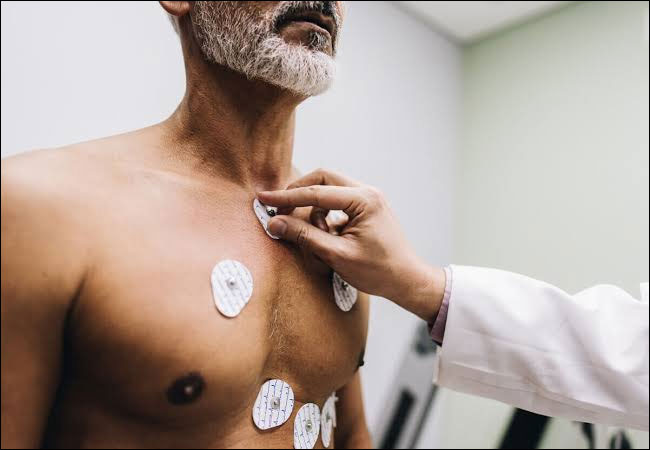
What is the Nuclear Cardiac Stress test?
A Nuclear Cardiac Stress Test is a diagnostic imaging procedure used to evaluate blood flow to the heart muscle both at rest and during physical exertion. It is more sensitive than a standard exercise stress test because it uses a small amount of a radioactive tracer to produce detailed images of the heart. The procedure is primarily used to identify coronary artery disease (CAD), determine the extent of heart damage after a heart attack, or assess the effectiveness of a cardiac treatment plan.
What happens during the Procedure?
A nuclear cardiac stress test is a multi-step process that usually takes between 2 and 4 hours, as it requires time for the radioactive tracer to circulate through your system.
1. Preparation and Baseline
Before the test begins, a technician will place electrodes on your chest to monitor your heart rate and rhythm (EKG) throughout the procedure. An intravenous (IV) line will be started in your arm to administer the tracer and, if necessary, medication to stress the heart.
2. The Resting Phase
First, a small amount of the radioactive tracer is injected through the IV. You will wait about 20–40 minutes for the heart muscle to absorb it. You will then lie still on a scanning table with your arms above your head while a gamma camera takes “resting” images of your heart.
3. The Stress Phase
Next, your heart is “stressed” to see how it handles a higher workload. This is done in one of two ways:
4. Exercise Stress
You walk on a treadmill, with the speed and incline gradually increasing until you reach a target heart rate or feel symptoms like fatigue or chest pain.
5. Pharmacological Stress
If you are unable to exercise, a provider administers a vasodilator (like regadenoson or adenosine). This medication mimics the effects of exercise by dilating the coronary arteries. At the peak of the stress phase, a second dose of the radioactive tracer is injected.
6. The Stress Imaging Phase
After your heart rate has returned to normal, you will return to the scanning table for a second set of images. The camera captures how the blood flows while the heart is working at its maximum capacity.
7. Preparation & Safety
Patients are typically asked to fast for a few hours and avoid caffeine for 24 hours prior, as caffeine can interfere with the test results (especially if a pharmacological stress agent is used). While “nuclear” sounds intimidating, the amount of radiation is relatively low and generally considered safe for most adults.
Indications
The primary indications include:
Diagnosis of Coronary Artery Disease (CAD)
This is the most common use, specifically for patients exhibiting symptoms that suggest heart issues
- Angina (Chest Pain): To confirm if the pain is caused by reduced blood flow to the heart.
- Unexplained Dyspnea: Investigating shortness of breath, especially when it is induced by physical exertion.
- Silent Ischemia: Screening high-risk individuals (such as those with long-standing diabetes) who may not experience typical chest pain.
2. Risk Stratification and Prognosis
For patients with known heart conditions, the test assesses the severity and future risk:
- Post-Myocardial Infarction: To determine the extent of damage after a heart attack and identify “hibernating” muscles that can still be saved.
- Pre-Operative Clearance: Assessing the cardiac risk for patients undergoing major non-cardiac surgeries (E.g vascular or transplant surgery)
- Assessment of Blockage: Quantifying exactly how much of the heart muscle is affected by known arterial narrowing.
3. Management and Treatment Planning
The test acts as a roadmap for clinical intervention
- Invasive Procedure Planning: Helping cardiologists decide if a patient is a candidate for stenting (PCI) or bypass surgery (CABG).
- Efficacy Monitoring: Evaluating if current medications or previous surgeries have successfully restored blood flow.
4. Special Clinical Scenarios
Nuclear imaging is indicated when other tests are likely to be inconclusive:
- Uninterpretable EKGs: For patients with pacemakers, Left Bundle Branch Block (LBBB), or baseline ST-segment changes.
- Inability to Exercise: For patients with orthopedic, neurological, or pulmonary limitations, a pharmacological nuclear stress test is the primary alternative to a treadmill test.
What the Results Reveal?
By comparing the rest and stress images, Cardiologists can identify three specific conditions:
- Normal Blood Flow: The heart muscle absorbs the tracer uniformly during both rest and exercise.
- Ischemia: Blood flow is normal at rest but restricted during stress. This usually indicates a significant blockage in a coronary artery.
- Infarction (Scar Tissue): A “cold spot” appears in both the rest and stress images, suggesting that the area has permanent damage, often from a previous heart attack.
Ayurveda’s Insight!
Ayurveda views the heart (Hridaya) as a holistic center where the physical pump, emotional seat (Sadhaka Pitta), and life essence (Ojas) converge. Heart health is maintained through the balance of Prana Vata, which regulates rhythm, and Avalambaka Kapha, which provides structural integrity, while cardiovascular pathology is often attributed to the accumulation of Ama (metabolic toxins) in the circulatory channels (Srotas). By integrating potent cardio-protective herbs like Arjuna with a focus on strengthening the digestive fire (Agni), Ayurveda addresses the root causes of arterial congestion and muscular weakness. This perspective complements modern diagnostics by offering a functional framework for restorative care, emphasizing that a healthy heart requires not just clear vessels, but also the preservation of metabolic and emotional equilibrium.
Arjun tea
Arjun Tea is a therapeutic herbal decoction primarily derived from the dry inner bark of the Terminalia arjuna tree, a cornerstone of Ayurvedic cardiology for over 2,500 years. Unlike traditional caffeinated teas, it is a caffeine-free “Hridya” (heart-tonic) rich in bioactive compounds like arjunolic acid, tannins, and natural saponins that specifically target the cardiovascular system.
Preparation from Arjuna Bark
The tea is traditionally prepared using the Arjuna bark powder or crushed bark fragments. In a clinical context, it is often brewed as a Kshir Pak (milk decoction) to enhance the absorption of its fat-soluble glycosides. The milk acts as a carrier, balancing the bark’s astringent (Kashaya) nature and providing cooling nourishment to the heart.
How to Make?
To prepare a standard cup of Arjuna tea:
- Mix 1 teaspoon (approx. 3-5g) of Arjuna bark powder with 1 cup of water and 1 cup of milk.
- Simmer the mixture on low heat.
- Continue boiling until the water evaporates and only the milk portion (approx. 1 cup) remains.
- Filter the decoction through a fine sieve. It can be consumed plain or with a small amount of natural sweetener like jaggery or honey (added once lukewarm).
Daily Usage Form
For long-term heart support and management of “stressed” cardiac tissue, Arjuna tea is typically consumed:
- Frequency: Once or twice daily, ideally on an empty stomach in the morning or before bedtime.
- Consistency: As a “Rasayana” (rejuvenative), it is most effective when taken consistently for 2–3 months to help strengthen the myocardial fibers and maintain arterial elasticity.
- Adaptability: It can also be prepared as a simple water-based tea (Phant) for those who prefer to avoid dairy, though the milk-based preparation is preferred for its superior cardiotonic efficacy
Role of Arjun Tea
Arjuna tea, derived from the bark of the Terminalia arjuna tree, serves as a potent therapeutic intervention for patients with a positive cardiac stress test, particularly those showing signs of myocardial ischemia. Its primary role is to enhance the heart’s functional capacity and oxygen utilization, acting as a natural cardiotonic that strengthens the cardiac muscles (myocardium).
The clinical utility of Arjuna tea in this context includes
- Improvement in Left Ventricular Function: Research suggests that Arjuna helps increase the stroke volume and cardiac output, which is essential for a heart struggling to maintain blood flow under stress.
- Anti-Ischemic Properties: The herb contains glycosides and flavonoids that help dilate the coronary arteries, potentially improving the flow of oxygenated blood to areas identified as “ischemic” during nuclear imaging.
- Reduction of Oxidative Stress: For patients with positive stress tests indicating early-stage blockages or “Ama” in the Srotas (channels), Arjuna acts as a powerful antioxidant, protecting the heart tissue from further damage caused by free radicals.
- Hypolipidemic Effects: It helps manage cholesterol levels and maintains the integrity of the vascular endothelium, assisting in the long-term management of the plaque responsible for abnormal stress test results.
By incorporating Arjuna tea into a daily routine, patients can support the “Hridaya” by improving the endurance of the heart muscle, making it a valuable adjunct to conventional management plans for coronary artery disease.
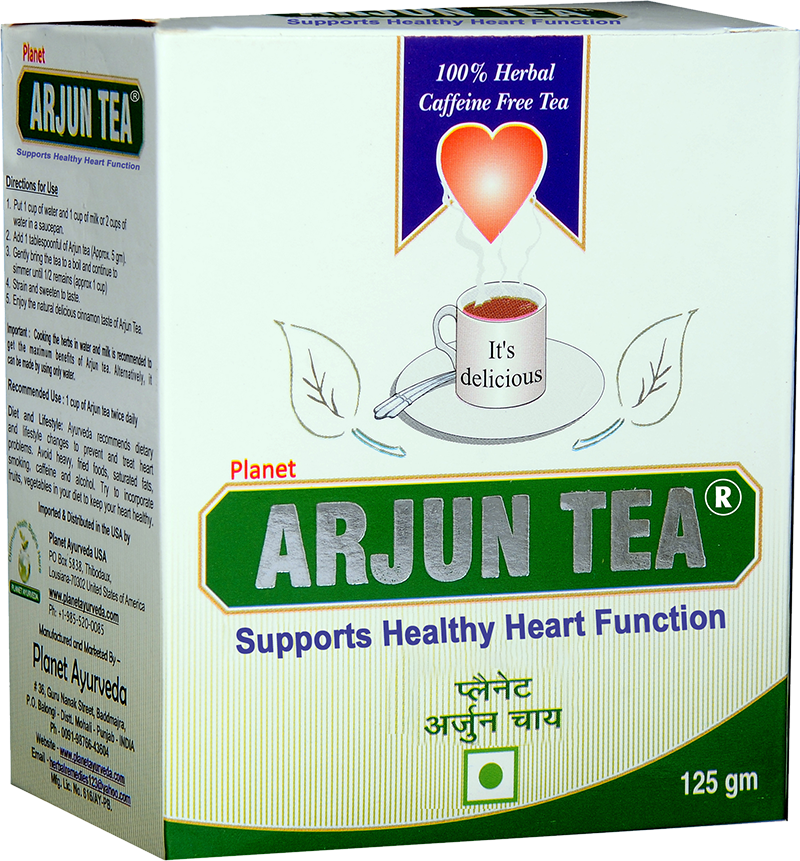

Why is Planet Ayurveda’s Arjun tea unique?
Planet Ayurveda’s Arjun Tea is a specialized, caffeine-free cardiovascular tonic formulated by M.D. Ayurveda experts support heart health through traditional methods. It is uniquely composed of a blend of potent herbs, including Arjuna (Terminalia arjuna), Punarnava, Pipal Tvak, Dalchini (Cinnamon), and Chhoti Elaichi. This combination acts as a natural source of Co-Enzyme Q10, providing approximately 23.5 mg per serving to enhance the heart’s pumping capacity and maintain healthy blood pressure and cholesterol levels. The preparation follows the ancient “Ksheer Pak” method, where 1 teaspoon (5g) of the tea is boiled with 1 cup of water and 1 cup of milk until the liquid reduces to half. This process ensures the extraction of both water-soluble and fat-soluble active constituents, such as arjunolic acid and flavonoids, for maximum bioavailability. By strengthening the myocardial fibers and improving circulation, Arjun Tea serves as an effective herbal solution for managing atherosclerosis, hypertension, and general cardiac endurance.
Conclusion
At last we can say that a healthy heart is the foundation of a long life. While a Nuclear Stress Test is a vital modern tool for spotting hidden blockages and measuring blood flow with high-tech precision, Ayurveda offers the natural tools to fix and strengthen what the test reveals. Using Planet Ayurveda’s Arjun Tea as a daily solution provides the heart with natural Co-Enzyme Q10 and antioxidants. When prepared the traditional way—boiled with milk and water—it specifically strengthens the heart muscle and clears the “toxins” that slow down circulation. By combining the best of modern testing with the best of natural healing, we can move from simply finding a problem to truly restoring heart health and vitality.