Alternative Treatment for Chronic Kidney Disease (CKD)
Abstract
Chronic Kidney Disease(CKD) also called chronic kidney failure, is a condition in which the kidney slowly stops working properly over time. The kidney helps remove waste,extra water and harmful substances from the blood through urine.As CKD gets worse, waste, fluids and salt build up in the body, which can cause health problems.In the early stages, CKD often has no symptoms, so many people do not know they have it. Symptoms usually appear when the disease becomes more advanced. The main goal of treatment is to slow down the damage to the kidney, manage symptoms and help keep the kidney for as long as possible. In the early stages, CKD often has no symptoms, so many people do not know they have it. Symptoms usually appear when the disease becomes more advanced.
Introduction
Chronic Kidney Disease(CKD) is a long term-condition in which the kidney gradually lose their ability to filter waste,excess water and toxins from the blood.The kidney also help regulate blood pressure, maintain the body fluid and mineral balance, support bone health and produce hormones that make red blood cells. CKD is most commonly caused by diabetes and high blood pressure,but it can also result from kidney infection, inherited disorders, autoimmune diseases or prolonged use of certain medicines. In its early stage,CKD often has no noticeable symptoms, making regular health check-ups important. As the disease progresses, symptoms such as fatigue, swelling in the legs or feet, changes in urination, nausea, muscle cramps and loss of appetite may develop.Although there is no cure, early diagnosis and proper treatment– including controlling blood sugar and blood pressure, eating a healthy diet , exercising regularly and avoiding smoking– can slow its progression. In severe cases, dialysis or a kidney transplant may be needed to replace lost kidney function
Stages of Chronic Kidney Disease
Stage 1: Kidney damage but normal kidney function
- GFR 90 or higher
Stage 2: Mild kidney damage
- GFR 60-89
Stage 3: Moderate Kidney damage
- GFR 30-59
Stage 4 : Severe Kidney damage
GFR 15-29
Stage 5: Kidney Failure ( end stage kidney disease)
GFR less than 15
Causes
1. Diabetes
High blood sugar over a long time damages the small filtering units of the kidney, making it harder for them to clean the blood properly.
2. High Blood pressure
Too much pressure in the blood vessels can damage the kidney blood vessels and reduce kidney function .
3. Glomerulonephritis
This is inflammation( swelling ) and damage of the kidneys’ tiny filtering unit called glomeruli, which affects their ability to filter waste.
4. Polycystic Kidney Disease
A genetic condition where many fluid filled sacs(cyst) grow inside the kidney, causing them to become enlarged and damaged over time.
5. Urinary blockage
when urine cannot flow normally because of problems like kidney stones or an enlarged prostate, urine can build up and put pressure on the kidney, causing damage.
Symptoms
- Build up of fluid or waste in body
- Nausea
- Vomiting
- Loss of appetite
- Fatigue and weakness
- Sleep problem
- Decreased mental sharpness
- High blood pressure that hard to manage
- Shortness of breath, if fluid builds up in the lungs
Diagnosis
- eGFR blood test:Measure blood creatinine levels and use your age and sex to calculate how well your kidney filter wastes. An eGFR below 60 mL/min/1.73 m² suggests kidney disease
- uACR Urine Test: check for albumin, a type of protein that leaks into the urine when filters are damaged. A ratio above 30 mg/g indicates kidney damage
- Imaging and Biopsy: Ultrasound scans check kidney size and structure, while a tissue biopsy helps identify the exact cause of damage if it is unclear.
Diagnosis according to ayurveda
- Darshan (observation): Checking for shotha(generalized or pitting edema around the ankle, face or feet) and pallor indicating anemia.
- Sparshana (palpation/Percussion): Testing skin texture, assessing fluid retention and checking for abdominal fullness or discomfort.
- Prashna(interrogation): Documenting symptoms like altered urination frequency, frothy urine, loss of appetite, nausea, vomiting, breathing difficulty and disturbed sleep patterns.
- Mutra Pariksha(Urine examination) : Direct examination of the physical properties of the urine, such as its color, density,clarity and frothiness
Modern Treatment
- RAS Inhibitors(ACEi/ARBs) : Drugs ramipril or lasartan lower blood pressure inside the kidney filter (glomeruli) and reduce protein leakage(proteinuria)
- SGLT2 inhibitors: Dapagliflozin protects both the heart and kidney, slowing disease progression even in the patient without diabetes.
- GLP-1 Receptors Agonists: Semaglutide helps control blood sugar, promote weight loss and significantly lower the risk of major kidney decline.
- Nonsteroidal MRAs: Finerenone reduces kidney inflammation and scarring (fibrosis) with a lower risk of high potassium than older drugs
Ayurvedic Overview
Chronic Kidney Disease(CKD) is a long term condition in which kidney function gradually declines. .In Ayurveda, Chronic kidney disease(CKD)does not have one exact equivalent disease name It is understood as a disorder of the Mutravaha Srotas (urinary system) and the Virkka (Kidney) and is related to condition such as Mutraghata ( difficulty in urine flow) and Shotha (swelling). According to Ayurveda, CKD develops due to an imbalance of the Tridoshas. Kapha blocks the body’s tiny channels(Srotosanga), reducing the normal flow of fluids and waste, while Vata causes gradual damage and loss of kidney tissue (Dhatukshaya). In addition, weak digestive fire (Agnimandya) leads to poor digestion and the formation of toxin(Ama) which can further affect kidney function. Together these changes gradually reduce the kidney ability to remove waste and maintain fluid balance
Herbal Formulation For Chronic Kidney Disease (CKD) By Planet Ayurveda
Planet Ayurveda is an Indian herbal manufacturing and healthcare enterprise founded by Dr. Vikram Chauhan in Mohali, Punjab. The company specializes in producing 100% natural Ayurvedic herbal supplements made from carefully selected medicinal plants. Its product range includes standardized plant extract capsules, powders, herbal teas, and liquid formulations featuring herbs such as Ashwagandha, Curcumin, and Triphala. All products are manufactured without the use of chemicals, preservatives, artificial colors, or additives, ensuring purity and authenticity. In addition to manufacturing herbal products, the company offers Ayurvedic clinical consultations and exports its products to customers worldwide, promoting traditional Ayurvedic healthcare through natural, high-quality herbal formulations. Ayurvedic medicine for Chronic Kidney Disease (CKD) are following :
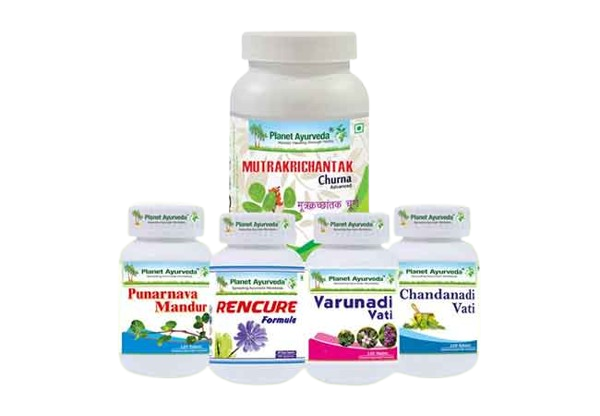
- Mutrakrichantak Churna
- Rencure Formula
- Varunadi Vati
- Punarnava Mandur
- Chandanadi Vati
Product Description

1. Mutrakrichantak Churna
Mutrakrichantak Churna is an herbal powder blend which contains Varun (Crataeva nurvala), Punarnava (Boerhavia diffusa), Gokshur (Tribulus terrestris), Kaasni (Chicorium intybus),Bhumi Amla (Phyllanthus niruri),Shirish (Albizia lebbeck), Shigru (Moringa oleifera), Apamarg (Achyranthes aspera) etc. It reduces urinary tract inflammation and helps clear internal obstruction ,reduce body swelling, detoxification etc.
Dose: 1 Teaspoonful twice daily warm with water
2. Rencure Formula
Rencure Formula is a great herbal combination which contains Punarnava (Boerhavia diffusa root extract), Varun (Crataeva nurvala bark extract),Gokshur (Tribulus terrestris fruit extract) Palaash (Butea monosperma flower extract)Kaasni (Cichorium intybus leaf extract)–It flushes excess fluid and reduces systemic tissue swelling , calms burning urination and act as an antimicrobial agent etc.
Dose: 2 Capsules twice daily with warm water after meals.
3. Varunadi Vati
Varunadi vati it is prepared on the basis of a classical ayurvedic formation Punarnava (Boerhavia diffusa ),Varun (Crataeva nurvala) ,Gokshur (Tribulus terrestris) ,Shuddha Guggulu (Commiphora mukul) – it Reduces swelling, support kidney stone management, promotes urination, support detoxification and reduce inflammation etc.
Dose : 2 tablets thrice daily with warm water after meals.
4. Punarnava Mandur
These tablets are preapared using Punarnava (Boerhavia diffusa) , Triphala (Haritaki, Amalaki, Bibhitaki) , Trikatu (Shunti/Ginger, Pippali/Long Pepper, Maricha/Black Pepper) ,Chitrak (Plumbago zeylanica) ,Vidang (Embelia ribes) ,Haridra (Curcuma longa) – Its by improving renal filtration, reducing fluid retention, boosting digestive metabolism to lower toxin buildup, and protecting surviving nephrons etc.
Dose : 2 tablets twice daily with warm water after meals.
5. Chandanadi Vati
Chandanadi vati is prepared using Safed Chandan (Santalum album ),Kababchini (Piper cubeba) ,Gokshura (Tribulus terrestris) ,Amalaki (Emblica officinalis) ,Karpoora (Cinnamomum camphora) -It help in cools and reduce inflammation, antioxidant pain relief, and mild antiseptic.
Dose : 2 tablets twice daily with warm water after meals.
Diet In Chronic Kidney Disease (Ckd)
To Take
- Whole Grains
- White Rice
- Apple
- Papaya
- Cabbage
- Turnip
- Peas
- Bottle gourd
- Bitter gourd
- Yellow lentil
- Orange lentils
- Split Pigeon Peas
- Split Chickpeas
- Green Gram
- Cow ghee
- Olive oil
- Mustard oil
To Avoid
- White Refined Flour
- Brown Rice
- Watermelon
- Jackfruit
- Banana
- Coconut
- All green leafy vegetable
- Tomato
- Garlic
- Spinach
- Black Gram Dal
- White Chickpea
- Kidney Beans
- Nutri-nuggets
- Bengal Gram
- Soybean
- Hydrogenated oil
- Palm oil,
- Soybean oil
- Coconut oil
- Cashew nuts
- Pistachio
- Peanuts
- Raisins
Conclusion
At last we can say that Chronic Kidney Disease (CKD) is a long-term condition where the kidneys gradually lose their ability to remove waste and maintain body balance. Early diagnosis through regular check-ups, blood and urine tests can help prevent further damage. The main causes include diabetes, high blood pressure, kidney inflammation, and genetic disorders. A healthy diet, regular exercise, proper treatment, and control of blood pressure and sugar levels can slow disease progression. According to Ayurveda, CKD is related to imbalance in Mutravaha Srotas, Tridoshas, Agni, and Ama. Ayurvedic medicines, diet, and lifestyle changes may support kidney health when used under proper medical guidance. Although CKD cannot always be cured, early detection and proper management can help protect kidney function and improve quality of life.