Diabetic Retinopathy – Interesting Facts, Statistics, Causes, Symptoms & Ayurvedic Management
Abstract
Diabetic retinopathy is one of the most common complications of diabetes mellitus and a leading cause of preventable vision impairment among adults worldwide. Prolonged elevation of blood glucose damages the small blood vessels of the retina, resulting in leakage, swelling, reduced blood flow, and the growth of abnormal new vessels. In its early stages, diabetic retinopathy may progress without noticeable symptoms, making regular eye examinations essential for timely diagnosis. Risk factors such as poor glycemic control, hypertension, long duration of diabetes, and dyslipidemia significantly increase the likelihood of disease progression. Management involves strict control of blood glucose, blood pressure, and lipid levels. Early screening, patient awareness, and comprehensive diabetes management remain the most effective strategies for preserving vision and improving quality of life.
Statistics for Diabetic Retinopathy
- Around 12.5% of the general population has diabetic retinopathy.
- Vision-threatening diabetic retinopathy (VTDR) affects approximately 5–6% of people with diabetes worldwide, including in the United States.
- More than 103 million adults worldwide are affected by diabetic retinopathy.
- Diabetic macular edema (DME), a serious complication that can reduce vision, affects about 4% of adults with diabetes.
- Diabetic retinopathy is the leading cause of new cases of blindness among working-age adults.
- About 80% of people with diabetes develop diabetic retinopathy after living with the disease for 15 years.
- Among these patients, around 2% lose their eyesight completely, while about 10% develop severe vision problems.
Some Interesting Facts about Diabetic Retinopathy
- Every person with diabetes has a risk of developing diabetic retinopathy.
- The chance of getting diabetic retinopathy increases the longer a person has diabetes.
- If it is not treated early, diabetic retinopathy can lead to permanent vision loss or blindness.
- It is one of the causes of blindness and affects more than 7.6 million people worldwide.
- In most cases, the disease develops in both eyes.
- Diabetic retinopathy usually does not cause pain.
- Many people do not notice any symptoms until their eyesight has already been seriously damaged.
- The disease can increase the risk of retinal detachment, a condition in which the retina separates from the back of the eye and loses its normal blood supply.
Introduction
Diabetic retinopathy is an eye disease that develops as a complication of diabetes. It occurs when high blood sugar levels damage the tiny blood vessels in the retina, the light-sensitive layer at the back of the eye that is responsible for vision. People with type 1 or type 2 diabetes can develop diabetic retinopathy. The risk becomes higher if a person has had diabetes for many years or if blood sugar levels are not well controlled. In the early stages, diabetic retinopathy may not cause any symptoms or may only lead to mild vision changes. If it is not diagnosed and treated on time, it can result in severe vision loss or blindness. High blood sugar can cause the retinal blood vessels to become weak, swollen, or leaky. Some blood vessels may become blocked, reducing blood flow to the retina. In advanced stages, new abnormal blood vessels may grow on the retina, which can further damage vision and increase the risk of blindness.
Stages of Diabetic Retinopathy
Diabetic retinopathy has two main stages:
1. Non-Proliferative Diabetic Retinopathy (NPDR)
- NPDR is the early stage of diabetic retinopathy.
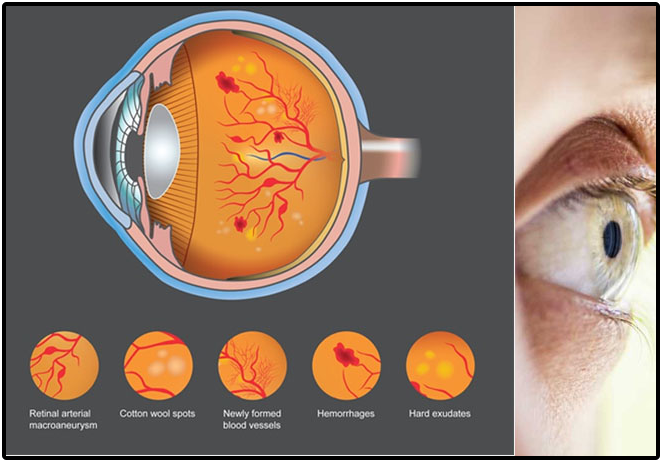
- It occurs when the small blood vessels in the retina become weak and start to leak fluid or blood.
- The leaking fluid can cause swelling of the retina.
- When the macula (the central part of the retina) becomes swollen, it is called diabetic macular edema (DME), which is a common cause of vision loss.
- Fatty deposits, called hard exudates, may also collect in the retina and affect vision.
- Some blood vessels may become blocked, reducing the blood supply to the retina. This condition is known as macular ischemia.
- People with NPDR may have blurred vision or may not notice any symptoms in the early stages.
2. Proliferative Diabetic Retinopathy (PDR)
- PDR is the advanced stage of diabetic retinopathy.
- In this stage, new abnormal blood vessels grow on the retina because of poor blood supply.
- These new blood vessels are fragile and can bleed into the vitreous, causing floaters or sudden vision loss.
- Scar tissue may develop and pull on the retina, increasing the risk of retinal detachment.
- If left untreated, PDR can cause severe vision loss or blindness by affecting both central and side (peripheral) vision.
Causes and Risk factors of Diabetic Retinopathy
In the early stage of diabetic retinopathy, the small blood vessels in the retina become weak and damaged. These weakened blood vessels may develop tiny bulges and start to leak blood or fluid into the retina. As a result, the retinal tissue can swell, and small white deposits may appear. If the disease continues to progress, new abnormal blood vessels begin to grow on the surface of the retina. These fragile blood vessels can bleed easily and lead to serious vision problems or even permanent vision loss if left untreated. Anyone with diabetes can develop diabetic retinopathy, but certain factors can increase the chance of developing this eye condition that include:
- Long duration of diabetes: The risk becomes higher when a person has diabetes for many years, as continuous high blood sugar can gradually damage the retinal blood vessels. Long-term exposure to high blood glucose levels can gradually damage the tiny blood vessels of the retina, leading to leakage, swelling and reduced blood supply.
- Poor blood sugar control: Uncontrolled or frequently high blood glucose levels can increase damage to the small blood vessels of the retina and speed up disease progression. Poorly managed diabetes can weaken the retinal blood vessels and increase the chances of disease progression and vision loss.
- High blood pressure: Elevated blood pressure can put extra stress on retinal blood vessels, making them more likely to become damaged or leak.
- High cholesterol levels: Increased levels of cholesterol and other fats in the blood can contribute to blood vessel damage. It can contribute to the formation of deposits in retinal blood vessels and may worsen vision problems.
- Pregnancy: Hormonal and metabolic changes during pregnancy can increase the risk of diabetic retinopathy becoming worse, especially in women with existing diabetes.
- Tobacco use: Smoking and tobacco use can negatively affect blood vessels throughout the body, including those in the eyes. Tobacco reduces oxygen supply, promotes blood vessel damage, and may increase the risk of complications from diabetic retinopathy.
- Ethnic background: Some populations, including Black, Hispanic/Latino, and Native American communities, have been found to have a higher risk of developing diabetic retinopathy, which may be linked to genetic, health, and social factors.
- Age and lifestyle factors: Older age, unhealthy diet, physical inactivity, and obesity can contribute to poor diabetes control and increase the likelihood of developing diabetic retinopathy.
Symptoms of Diabetic Retinopathy
Diabetic retinopathy often develops slowly, and many people may not notice symptoms in the early stages. As the disease progresses, damage to the retinal blood vessels can affect vision in different ways. Common symptoms include:
- Blurry vision: Damage to the retinal blood vessels can cause fluid to leak into the retina, leading to swelling and changes in vision. A person may experience unclear vision, difficulty focusing, or vision that becomes better or worse at different times of the day, especially when blood sugar levels change.
- Floaters or spots in vision: Small dark spots, shadows, or floating shapes may appear in the field of vision. These occur when damaged blood vessels bleed into the vitreous, the clear gel-like substance inside the eye. Floaters may appear as dots, lines, cobweb-like shapes, or moving shadows.
- Dark regions in the field of view: Reduced blood flow to the retina can damage light-sensitive cells and create areas where vision becomes weak or missing. A person may notice dark patches, blank spots, or areas where objects are difficult to see clearly.
- Difficulty in night vision: Diabetic retinopathy can affect the retina’s ability to adjust to low-light conditions. People may experience problems seeing in dim environments, difficulty driving at night, or increased sensitivity to glare from headlights and bright lights.
- Sudden loss of vision: In severe stages, abnormal blood vessels may grow on the retina and bleed into the eye. A large amount of bleeding or retinal detachment can block vision and may cause sudden, severe vision loss. Immediate medical attention is required to prevent further damage.
Diagnosis of Diabetic Retinopathy
Diabetic retinopathy is diagnosed through a detailed eye examination and specialized imaging tests. These methods help eye specialists detect changes in the retina, identify the severity of the disease, and plan appropriate treatment. The diagnostic tests include:
- Dilated Eye Examination: A dilated eye exam is one of the most common methods used to diagnose diabetic retinopathy. During this test, eye drops are used to widen the pupil, allowing the doctor to get a better view of the back of the eye, including the retina and blood vessels. The examination helps identify signs of damage such as swelling, bleeding, abnormal blood vessel growth, and changes in the retinal tissue.
- Optical Coherence Tomography (OCT) Scan: OCT is a non-invasive imaging technique that provides detailed cross-sectional images of the retina. It helps doctors detect swelling, fluid buildup, or thickening of the retina, especially in the macula (the central area responsible for sharp vision). OCT is also useful for monitoring disease progression and evaluating the response to treatment.
- Fluorescein Angiography: Fluorescein angiography is an imaging test used to examine the blood circulation in the retina. A special dye called fluorescein is injected into a vein, and photographs are taken as the dye passes through the retinal blood vessels. This test helps identify leaking blood vessels, blocked areas, and abnormal new vessel growth that may not be visible during a regular eye examination.
- Fundus Photography: Fundus photography involves taking detailed photographs of the retina to document changes caused by diabetic retinopathy. These images help in early detection, disease monitoring, and comparing changes over time.
- Regular Eye Screening: People with diabetes should undergo regular eye check-ups, even if they do not have vision problems. Early diagnosis allows timely treatment and can help prevent serious complications, including permanent vision loss.
Management of Diabetic Retinopathy
The management of diabetic retinopathy focuses on preventing disease progression, preserving vision, and treating retinal damage at the appropriate stage. A combination of good diabetes control, regular eye monitoring, and medical or surgical treatments can help reduce the risk of severe vision loss. The management strategies include:
- Control of Diabetes – Maintaining healthy blood glucose levels is one of the most important steps in managing diabetic retinopathy. Good control of diabetes can slow the progression of retinal damage. Regular monitoring of HbA1c levels helps assess long-term blood sugar control.
- Lifestyle Changes – A balanced diet, regular exercise, and avoiding smoking can help protect blood vessels and reduce complications.
- Regular Eye Monitoring – People with diabetes should have routine eye examinations to detect retinal changes at an early stage. In mild cases of diabetic retinopathy, doctors may recommend regular follow-up visits without immediate treatment.
- Patient Education – Patients should understand the importance of regular eye examinations and following diabetes treatment plans. Recognizing warning signs such as sudden vision changes, increased floaters, or loss of vision allows early medical attention.
- Laser Treatment (Photocoagulation) – Laser therapy is used to treat certain complications of diabetic retinopathy. Small laser burns are applied to specific areas of the retina to reduce abnormal blood vessel growth and prevent further leakage. This treatment can help reduce the risk of severe vision loss, especially in advanced stages of the disease.
- Corticosteroids – Steroid medications may be used in some patients with diabetic macular edema. They help reduce inflammation and fluid accumulation in the retina.
- Anti-VEGF Injections – Anti-vascular endothelial growth factor medicines are injected directly into the eye to block the growth of abnormal blood vessels and reduce fluid leakage. It is used to treat diabetic macular edema and proliferative diabetic retinopathy.
Ayurveda Insights
Ayurveda describes diabetes as “Madhumeha”, a metabolic disorder associated with disturbances in the body’s balance and impaired regulation of sugar metabolism. Although diabetic retinopathy is a modern medical diagnosis, Ayurvedic principles emphasize maintaining healthy metabolism, improving circulation, and preventing complications through a balanced lifestyle. Ayurvedic approaches may be considered as supportive measures alongside standard medical care and regular eye examinations.
Pathogenesis of Diabetic Retinopathy
In Ayurveda, diabetic retinopathy can be understood through the concepts of Madhumeha (diabetes mellitus) and Netra Roga (eye disorders). Although Ayurveda does not describe diabetic retinopathy as a separate disease entity, the progression of retinal damage can be correlated with disturbances caused by prolonged imbalance in Doshas, Dhatus, and body metabolism.
Role of Dosha Imbalance
- Kapha Dosha imbalance:
Excessive Kapha due to unhealthy dietary habits may contribute to increased body heaviness, reduced metabolism, and accumulation of unwanted substances. - Pitta Dosha imbalance:
Disturbed Pitta may contribute to inflammatory changes and damage to delicate tissues, including ocular structures. - Vata Dosha imbalance:
As the disease progresses, aggravated Vata affects the circulation and transportation of nutrients, leading to degeneration and functional impairment of tissues.
Herbal Remedies for Diabetic Retinopathy by Planet Ayurveda
Planet Ayurveda is a well-established Ayurvedic healthcare organization that works to promote the ancient knowledge of Ayurveda through natural remedies and holistic health solutions. The company develops a wide range of herbal formulations using pure, high-quality ingredients and standardized herbal extracts, with a focus on maintaining safety, authenticity, and effectiveness. Following the principles of classical Ayurveda, Planet Ayurveda aims to support overall health by addressing the underlying causes of health concerns and encouraging balance in the body, mind, and emotions. With an emphasis on quality, natural ingredients, and traditional approaches supported by modern research, the organization works toward making Ayurvedic wellness solutions available globally. We will explore various herbal approaches used for the management of Diabetic Retinopathy according to Ayurvedic principles. The herbal formulations are:
- Chandraprabha vati
- Dia-beta plus Capsules
- Fenugym Capsules
- Madhumehantak Churna
- Cap Angel eye vitale
Product Description
1. Chandraprabha vati
Chandraprabha Vati may help in diabetic retinopathy by improving glucose metabolism, reducing oxidative stress, and controlling inflammation. Its ingredients such as Guduchi (Tinospora cordifolia), Amalaki (Emblica officinalis), Haridra (Curcuma longa) and Pippali (Piper longum) may support vascular protection, improve microcirculation, and reduce hyperglycemia-induced retinal damage. Through its Pramehahara and Rasayana properties, it may help maintain retinal tissue health and slow the progression of diabetic complications.
Dosage: 2 tablets twice daily with lukewarm water.
2. Dia-beta plus Capsules
Dia-beta Plus Capsules contain a synergistic blend of Gurmaar (Gymnema sylvestre), Karela (Momordica charantia), Saptrangi (Salacia chinensis), Vijaysaar (Pterocarpus marsupium), Ashwagandha (Withania somnifera), and Tulsi (Ocimum sanctum) that helps support healthy blood glucose metabolism and protects the delicate blood vessels of the retina. By assisting in glycemic control, reducing oxidative stress, improving microcirculation, and providing antioxidant and anti-inflammatory effects, these herbs may help slow the progression of diabetic retinopathy, support retinal health, and reduce the risk of diabetes-related eye damage as part of a comprehensive diabetes management plan.
Dosage: 2 capsules twice daily with plain water before meals.
3. Fenugym capsules<
Fenugym Capsules contain a scientifically selected combination of Fenugreek (Trigonella foenum-graecum), Gurmar (Gymnema sylvestre), Saptarangi (Salacia chinensis), and Haridra (Curcuma longa) that helps support healthy blood glucose levels while protecting the delicate retinal blood vessels. These herbs possess antioxidant and anti-inflammatory properties that help reduce oxidative stress, improve microvascular health, and limit diabetes-induced retinal damage. By promoting better glucose metabolism and supporting healthy circulation, Fenugym Capsules may help slow the progression of diabetic retinopathy and maintain overall retinal function as part of comprehensive diabetes care.
Dosage: 1 capsule twice a day.M
4. Madhumehantak Churna
Madhumehantak Churna is a polyherbal formulation containing Saptrangi (Salacia chinensis), Vijaysaar (Pterocarpus marsupium), Bilva Patra (Aegle marmelos), Gurmaar (Gymnema sylvestre), Daruhaldi (Berberis aristata), Neem Patra (Azadirachta indica), Methi (Trigonella foenum-graecum), Jamun (Syzygium cumini), Karela (Momordica charantia), Tulsi (Ocimum sanctum), Sadabahar (Catharanthus roseus), and Babool (Acacia arabica). These herbs work together to support healthy blood glucose metabolism, reduce oxidative stress, improve microcirculation, and protect the delicate retinal blood vessels. Their antioxidant and anti-inflammatory properties help minimize diabetes-induced retinal damage, support retinal function, and may help slow the progression of diabetic retinopathy as part of comprehensive diabetes management.
Dosage: 1 teaspoon twice a day before meals with plain water or iced tea or apple juice.
5. Cap Angel eye vitale
Angel Eye Vitale Capsules contain standardized extracts of Amla (Emblica officinalis), Gotu Kola (Centella asiatica), and Bhringraj (Eclipta alba) that help support retinal health in people with diabetic retinopathy. These herbs provide potent antioxidant and anti-inflammatory activity, helping reduce oxidative stress and protect retinal cells from diabetes-related damage.They also support healthy microcirculation and strengthen the delicate blood vessels of the eyes, promoting better retinal function and helping slow the progression of diabetic retinal changes as part of comprehensive diabetes care.
Dosage: 2 capsules twice a day.
Conclusion
Diabetic retinopathy is a serious complication of diabetes that can gradually affect vision if left untreated. Maintaining healthy blood sugar levels, following a balanced diet, exercising regularly, and undergoing routine eye examinations are essential for protecting eye health. Early diagnosis and timely management can help slow disease progression and reduce the risk of vision loss. Along with conventional medical care, supportive measures such as antioxidant-rich nutrition and carefully selected herbal formulations may contribute to overall retinal health.