Ayurvedic Treatment and Care for Onychomycosis (Fungal Nail Infection)
Abstract
Fungal infections of the nails are a significant concern in clinical practice due to their prevalence, chronicity, and potential impact on quality of life as nails are of great importance in cosmetics. Nail disorders often require a multidisciplinary approach involving dermatology, microbiology, and pharmacology. This article provides an in-depth review of onychomycosis, a fungal infection affecting nails, discussing its etiology, clinical features, diagnostic strategies, management options, and preventive measures, integrating both modern medical perspectives and insights from traditional systems of medicine to highlight evidence-based interventions and holistic approaches.
Introduction
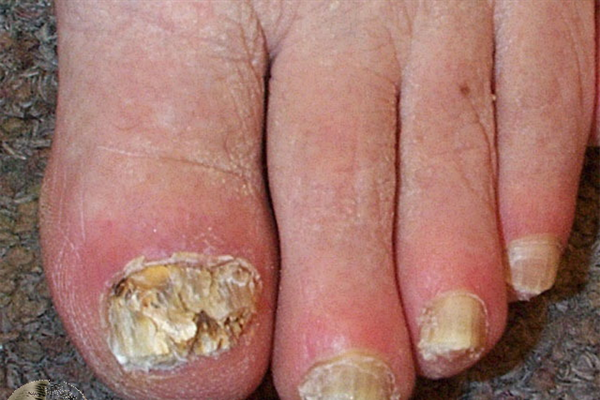
Onychomycosis, commonly referred to as nail fungus, is a chronic fungal infection affecting fingernails or toenails. It represents one of the most frequent nail disorders encountered globally. The condition is primarily caused by dermatophytes, but yeasts and non-dermatophyte molds are also implicated. Onychomycosis can lead to nail discoloration, thickening, brittleness, and pain, potentially impairing daily functioning and self-esteem. Risk factors include advanced age, diabetes mellitus, immunosuppression, nail trauma, and exposure to warm, moist environments. Understanding the pathophysiology and clinical spectrum is essential for accurate diagnosis and effective management.
Etiology (Causes)
Onychomycosis arises from fungal invasion of the nail plate, nail bed, or matrix. The causative organisms are broadly categorized as:
Dermatophytes – Responsible for approximately 90% of toenail infections. Common species include
- Trichophyton rubrum
- Trichophyton mentagrophytes
- Epidermophyton floccosum
Yeasts – Such as Candida albicans, more commonly affecting fingernails, especially in individuals with chronic wet work exposure.
- Non-dermatophyte molds – Include species like Scopulariopsis and Fusarium, usually opportunistic pathogens or secondary colonizers.
Predisposing factors
- Age-related slower nail growth
- Diabetes and peripheral vascular disease
- Immunosuppression (HIV, chemotherapy)
- Trauma to the nail plate or periungual skin
- Excessive sweating and prolonged occlusive footwear
Pathophysiology
Fungal organisms invade the keratinized tissue of the nail. Dermatophytes produce keratinases, enzymes that digest keratin, allowing the fungi to penetrate the nail plate. The infection may start in the distal edge (distal subungual onychomycosis), lateral nail folds, or nail matrix (proximal subungual onychomycosis). Chronic infection induces nail thickening, hyperkeratosis, and discoloration, creating an environment conducive to secondary bacterial infections. Nail growth is slow, so fungal colonization can persist for months to years, leading to chronicity and recurrence.
Types of Onychomycosis
Distal Subungual Onychomycosis (DSO)
- The most common form, mainly caused by T. rubrum.
- Nails show yellow-brown discoloration, thickening, and subungual debris.
Proximal Subungual Onychomycosis (PSO)
- Less common, associated with immunocompromised states.
- Infection starts near the proximal nail fold.
White Superficial Onychomycosis (WSO)
- Characterized by white, powdery patches on the nail surface.
- Often caused by T. mentagrophytes.
Total Dystrophic Onychomycosis (TDO)
- End-stage infection involving entire nail plate destruction.
Clinical Features
- Nail discoloration (white, yellow, brown, or Opaque)
- Thickening and deformity of the nail plate
- Brittleness and crumbling of distal edges
- Pain or tenderness in severe cases
- Secondary foul odor from bacterial colonization
- Paronychia in fingernail involvement
- Functional limitations and cosmetic concerns
Symptoms often progress slowly, making early detection challenging.
Diagnosis
Clinical Examination
- Visual inspection of nail morphology, color, and debris.
Laboratory Investigations
- KOH preparation
- Fungal culture
- Periodic acid-Schiff (PAS) staining
- PCR-based tests
Dermoscopy
Management
1. General Measures
- Keep nails dry, clean, and trimmed
- Avoid occlusive footwear; use breathable socks
- Avoid nail trauma or aggressive manicures/pedicures
- Maintain foot hygiene in public places
Topical Antifungal Therapy
Oral Antifungal Therapy
Adjunctive Measures
- Debridement of thickened nails
- Chemical nail avulsion or mechanical thinning to improve topical penetration
- Photodynamic therapy – emerging treatment for resistant cases
- Laser therapy – destroys fungal colonies through heat
Ayurvedic Perspective & Management of Onychomycosis
In Ayurveda, onychomycosis can be correlated to Kushtha (skin disease/leprosy) involving the nails, often associated with Kapha-Pitta dosha imbalance and local vitiation of Rakta dhatu (blood) due to external factors – krimi (microorganisms). These microorganisms affect the skin and cause dosha imbalance. Fungal proliferation is aggravated by dampness (Snigdha), poor hygiene, and external trauma. The dosha imbalance and infection can be corrected with ayurvedic herbs and medicines and prevents recurrence of such infections. Below are some of the available herbs that are used to get rid of stubborn fungal infection of nails.
- Neem (Azadirachta indica)
- Haridra (Curcuma longa)
- Manjishta (Rubia cordifolia)
- Garlic (Allium sativum)
- Daruharidra (Berberis aristata)
- Kumari (Aloe barbadensis)
- Bakuchi (Psoralea corylifolia)
External Applications
- Neem oil, Jatyadi oil, Triphala paste – antifungal and wound-healing
- Medicated herbal pastes and oils prepared with above mentioned herbs to reduce inflammation and promote nail regeneration.
Lifestyle Recommendations
- Keep feet dry and ventilated
- Avoid prolonged moisture exposure
- Maintain hygiene and prevent trauma
Complications
- Secondary bacterial infections
- Painful nail dystrophy
- Spread to adjacent nails or skin
- Recurrence due to incomplete treatment
- Functional impairment affecting daily activities
Prevention
- Regular washing and drying of hands and feet
- Avoid sharing footwear, socks, or nail tools
- Use antifungal powders if prone to sweating
- Wear protective footwear in public showers or gyms
- Treat early signs of fungal infections to prevent progression
Herbal Remedies by Planet Ayurveda for Onychomycosis
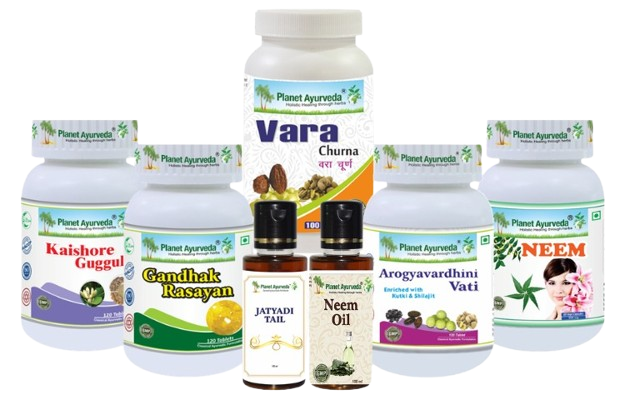

Planet Ayurveda is a renowned global brand dedicated to promoting natural health through authentic Ayurvedic principles. It focuses on delivering pure, chemical-free, and ethically prepared herbal formulations that support holistic healing and overall wellness. With a strong commitment to quality, Planet Ayurveda follows rigorous manufacturing standards and uses carefully selected herbs to ensure safety, potency, and effectiveness. The brand has earned the trust of people worldwide for providing reliable Ayurvedic solutions that enhance immunity, restore balance, and encourage a healthier lifestyle. Planet Ayurveda is pleased to present its product list for remarkable management of Onychomycosis.
Product list
- Gandhak Rasayan
- Neem Capsules
- Arogyavardhini Vati
- Vara Churna
- Kaishore Guggul
- Neem Oil
- Jatyadi Oil
Product Description
1. Gandhak Rasayan
Gandhak Rasayan is a classical Ayurvedic medicine prepared primarily from Shuddh Gandhak (Purified Sulphur). It is highly regarded in Ayurveda for its wide-ranging therapeutic benefits. This potent formulation is known for its antifungal, antimicrobial, anti-inflammatory, and blood-purifying properties, which make it extremely effective in managing conditions like onychomycosis. By targeting the root cause of fungal infections, Gandhak Rasayan not only helps eliminate the infection but also alleviates the associated itching, redness, inflammation, and discomfort. Additionally, its blood-purifying action supports overall skin and nail health, promoting faster healing and strengthening the body’s natural defense mechanisms. Regular use of Gandhak Rasayan provides comprehensive support in this condition.
Dosage : Two tablets twice a day.
2. Neem Capsules
Neem Capsules from Planet Ayurveda are prepared using pure Neem (Azadirachta indica), a well-known herb in Ayurveda celebrated for its antifungal, antibacterial, and blood-purifying (Raktashodhana) properties. These qualities make Neem highly effective in managing onychomycosis. Neem works to detoxify the blood, strengthen the immune system, and balance Kapha-Pitta doshas, which helps in reducing inflammation, itching, and fungal growth. Beyond addressing the infection, it also supports overall skin and nail health, prevents recurrence, and enhances the effectiveness of topical treatments. Thereby, Neem Capsules provide valuable support in the natural management of onychomycosis, helping restore healthy nails and maintain skin wellness.
Dosage : One capsule twice a day.
3. Arogyavardhini Vati
Arogyavardhini vati is a classical ayurvedic medicine and has a number of health benefits. It is a herbomineral medicine and have a number of ingredients such as kutki (Picrorhiza kurroa), chitral mool (Plumbago zeylanica), amalaki (Emblica officinalis), shuddh shilajit (Purified asphaltum), shudh guggulu (Commiphora mukul) and various others. Kutki being the major ingredient helps managing onychomycosis with its pitta and kapha dosha pacifying action and the formulation exhibits anti-fungal actions. And as the name of the formulation suggests, it provides and prolongs disease free life. Antiinflammatory and antipruritic properties add to the very essence of the medicine that helps in the management and preventing recurrence of Onychomycosis.
Dosage : Two tablets twice a day.
4. Vara Churna
Vara Churna is a product of Planet Ayurveda that contains equal quantities of amla (Emblica officinalis), hariraki (Terminalia chebula) and bibhitaki (Terminalia billerica). Together they are known as triphala. It is known for its wide ranging therapeutic actions. It balances all the doshas and establishes normalcy. It is enriched with antioxidants and possesses antimicrobial and alleviates inflammation. It provides healthy skin by its skin soothing property and also helps in healing of skin lesions. Intake and even when applied locally, the benefits are marvellous as it acts as a nectar. In this condition, Vara Churna provides great help in its management.
Dosage : Wash the affected area with water with Vara churna.
5. Kaishore Guggul
Kaishore Guggul is a classical Ayurvedic formulation composed of a blend of potent herbs, including Guduchi (Tinospora cordifolia), Guggul (Commiphora mukul), Marich (Piper nigrum), Pippali (Piper longum), Vidanga (Embelia ribes), Amla (Emblica officinalis), Bibhitaki (Terminalia bellirica), Haritaki (Terminalia chebula), and several others. This powerful combination is highly regarded in Ayurveda for its antimicrobial, anti-inflammatory, and blood-purifying (Raktashodhana) properties, making it particularly effective in managing onychomycosis. Kaishore Guggul works by detoxifying the blood, controlling fungal growth, and relieving itching, redness, and inflammation. When used alongside proper foot hygiene, topical antifungal treatments, and supportive measures, it helps accelerate healing, prevent recurrence, and restore overall skin and nail health. Offering a holistic and natural approach, Kaishore Guggul provides comprehensive support in the management of fungal infections while promoting long-term wellness.
Dosage : Two tablets twice a day.
6. Neem Oil
Neem oil is an oil formulation prepared by Planet Ayurveda. Neem (Azadirachta indica) is largely known for their antipruritic, anti-inflammatory, wound healing and antimicrobial properties, and are a powerful and effective product in the management of onychomycosis. Neem’s bioactive compounds like nimbidin and azadirachtin directly inhibit dermatophytes and calm itching, burning, and redness. It pacifies Pitta and Kapha dosha, purifies the skin, prevents fungal spread, and promotes faster healing while minimizing recurrence of the condition.
7. Jatyadi Thailam
Jatyadi Thailam is a classical ayurvedic oil formulation that is used to apply locally on the affected skin area. Jatyadi Thailam have wound healing, antipruritic and antiinflammatory properties of a number of skin benefitting herbomineral ingredients such as chameli (Jasminum officinale), neem (Azadirachta indica), mulethi (Glycyrrhiza glabra), kushtha (Saussurea lappa), haridra (Curcuma longa), katuki (Picrorhiza kurroa), shudha tutha (Copper sulphate), karanj beej (Pongamia pinnata), til taila (Sesamum indicum), shveta sariva (Hemidesmus indicus), lodhra (Symplocos racemosus) and others. With such goodness of herbs in this oil, it helps utmost in Onychomycosis.
Direction to use
Take enough quantity of both the oils and apply to the affected region (wash and pat dry) two times a day.
Conclusion
Onychomycosis is a prevalent nail disorder that can lead to chronic nail damage and psychosocial impact if untreated. Effective management requires a combination of accurate diagnosis, antifungal therapy, hygiene measures, and lifestyle modifications. Integrating Ayurvedic formulations and external herbal applications can complement conventional treatment by providing antifungal, anti-inflammatory, and immune-supportive effects, promoting faster recovery, preventing recurrence, and maintaining overall nail and skin health. A multidisciplinary and patient-centered approach ensures sustainable, long-term management of this persistent condition. The products mentioned above are indeed beneficial in combating Onychomycosis and prevent its return.