Why Male Infertility is Becoming Common in the 21st Century?
Abstract
Male infertility refers to inability of male to cause pregnancy in a fertile male due to various factors and these days 40 to 50% of the infertility cases involve the issues related to male reproductive system. This is a very serious concern and is continuously increasing these days. The growing prevalence of sedentary lifestyles, stress, exposure to toxins, poor diet and chronic illnesses has contributed significantly to declining male fertility worldwide. This can be very emotionally and physically challenging for couples. So let’s discuss male infertility and its management in detail.
Introduction
Infertility is defined as the inability of a couple to conceive after one year of regular, unprotected intercourse. While it is often perceived as a female related issue, male factors are responsible for approximately 40 – 50% of infertility cases. It often results from issues like low sperm count (oligospermia), poor motility (asthenozoospermia) or abnormal morphology (teratozoospermia). It is recently increasing these days due to a complex interaction of lifestyle changes, environmental exposure, medical conditions and psychosocial factors that directly or indirectly impair sperm quality, hormonal balance and reproductive function.
Causes
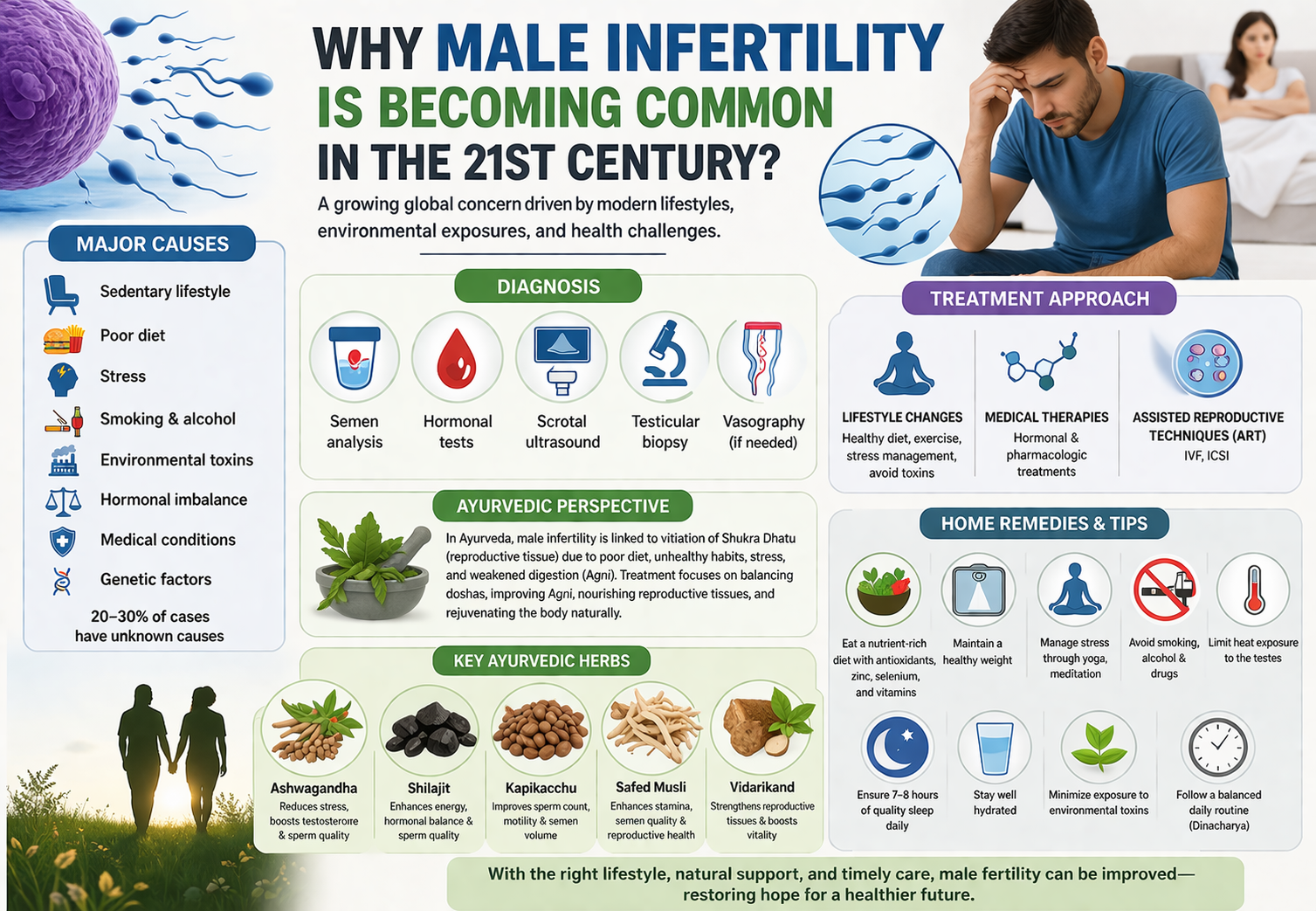
There are 20 to 30% cases where causes are not clear. The major causes that are associated with reduced sperm motility and production are:
- Y chromosome microdeletions
- Varicocele
- Hypergonadotrophic hypogonadism
- Hypogonadotrophic hypogonadism
The causes that lead to tubular dysfunction are:
- Varicocele
- Congenital abnormality of vas deferens/epididymis
- Previous sexually transmitted infection (chlamydia, gonorrhoea)
- Previous vasectomy
Other risk factors that have affected the male fertility rates are:
- Sedentary Lifestyle: One of the most significant contributors is lifestyle modification associated with urbanization. Sedentary habits, long working hours, prolonged sitting, lack of physical activity negatively affects the testosterone levels and sperm production.
- Unhealthy dietary habits: Increased consumption of processed foods, trans fats, refined sugars and low intake of micronutrients such as zinc, selenium, folate, and vitamin D disrupt sperm maturation and motility.
- The widespread use of tobacco, alcohol and recreational drugs significantly impairs sperm count, morphology, and motility.
- Environmental and occupational toxins: Exposure to pesticides, heavy metals (lead, cadmium, mercury), industrial chemicals interferes with male hormonal pathways and damages sperm DNA.
- Smoking induces oxidative stress and DNA fragmentation in sperm, while excessive alcohol disrupts the hypothalamic pituitary gonadal axis which ultimately results in infertility.
Diagnosis
- Detailed and comprehensive sexual, medical and lifestyle history
- A semen analysis is very important and helps to assess parameters such as ejaculate volume, sperm concentration, total sperm count, motility, morphology and sperm vitality.
- Hormonal evaluation is performed to assess endocrine function and typically includes serum levels of FSH, LH, testosterone, etc.
- Scrotal ultrasonography helps detect structural abnormalities such as varicocele, testicular atrophy, etc.
- Testicular biopsy is advised to evaluate spermatogenesis
- Vasography may be performed when an obstruction in the vas deferens or ejaculatory ducts is suspected
Treatment
Treatment of male infertility depends on the underlying cause and severity.
- It includes lifestyle modifications like quitting smoking, reducing alcohol and drug intake, improving diet, maintaining healthy weight, exercising, reducing stress and avoiding toxins.
- Hormonal Therapy includes use of injections like hCG or FSH to kickstart the body’s sperm production.
- Hormonal and pharmacologic treatments such as clomiphene, tamoxifen and aromatase inhibitors may be used to stimulate gonadotropin production and enhance spermatogenesis.
- Assisted reproductive techniques (ART) like IVF/ICSI are often indicated when sperm quality is severely compromised.
Ayurvedic Overview
In Ayurveda, it is related to dushti of Shukra Dhatu (vitiation of Reproductive tissue) which is caused by various aharaja and viharaja karana (dietary and lifestyle causes). These causes lead to the vitiation of agni (digestive fire) which results in formation of ama (metabolic waste) and it hinders the nutrition to the tissues of the body and when it vitiates the reproductive tissue and results in reduced vitality and sperm motility. Ayurveda emphasizes holistic management which is based on correcting Shukra Dhatu Dushti (vitiation or depletion of reproductive tissue), restoring Agni (digestive and metabolic fire), balancing Doshas and rejuvenating the body through integrated therapies and by combining Rasayana (rejuvenating) and Vajikarana (aphrodisiac) herbs, a balanced nourishing diet, appropriate lifestyle regulation and therapeutic measures like Shodhana (purification therapies) and Shamana (pacifying therapies) the underlying doshic disturbances are corrected, tissue nutrition is enhanced and overall reproductive strength, sperm quality and fertility rates are significantly improved. Such interventions aim not merely to improve sperm parameters but to restore overall physiological balance, enhance vitality and support natural fertility potential.
Some herbs that are very helpful are:
- Ashwagandha (Withania somnifera) is a powerful adaptogen and aphrodisiac that improves sperm count, motility, testosterone levels and stress tolerance.
- Shilajit (Asphaltum punjabianum) improves mitochondrial energy production, enhances sperm quality and supports hormonal balance.
- Kapikacchu (Mucuna pruriens) is rich in L-DOPA and is known to increase sperm concentration, motility and semen volume.
- Safed Musli (Chlorophytum borivilianum) acts as a natural aphrodisiac, enhances stamina, improves semen quality and nourishes reproductive tissues.
- Vidarikand (Pueraria tuberosa) strengthens Shukra Dhatu, improves sperm count and motility and helps to boost sexual vitality.
Home Remedies and Tips
- Eat a nutrient rich diet with antioxidants, zinc, selenium and vitamins.
- Maintain a healthy weight to balance hormones and sperm quality.
- Manage stress through yoga, meditation or mindfulness.
- Avoid smoking, alcohol and recreational drugs.
- Limit heat exposure to the testes.
- Ensure 7–8 hours of quality sleep daily.
- Stay well hydrated.
- Minimize exposure to environmental toxins.
- Follow a balanced daily routine (Dinacharya).
Planet Ayurveda’s Remedies
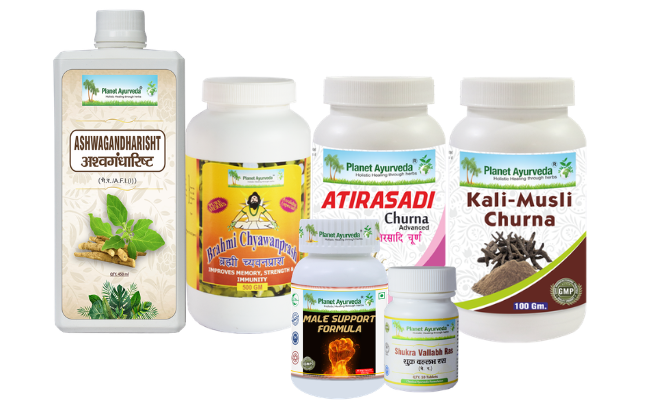
Planet Ayurveda is a distinguished name in the field of herbal healthcare and Ayurvedic medicine, known for its commitment to authentic, natural and holistic wellness solutions. It offers standardized, pure and preservative free herbal formulations prepared according to classical Ayurvedic principles. Their remedies aim to address male infertility by improving sperm quality, hormonal balance and overall reproductive health. The Male Infertility Care Pack is very effective and helpful.

Product Description
- Male Support Formula: It is a capsule formulation of Planet Ayurveda which consists of ashwagandha (Withania somnifera), shilajit (Asphaltum) and gokshur (Tribulus terrestris). It is very helpful in combating issues like low sperm count, erectile dysfunction and premature ejaculation. The active constituents include withanolides, fulvic acid, protodioscin etc. which improves nutrient absorption and mitochondrial energy thus amplifying spermatogenesis and stimulates luteinizing hormone and nitric oxide for better erections and sperm motility.
Dosage: 1 capsule twice daily with plain water after meals.
- Musli Strength: It is a capsule formulation of Planet Ayurveda which consists of safed musli (Chlorophytum tuberosum) and gokshur (Tribulus terrestris). It contains active saponins and phytosterols that act as aphrodisiacs which help in scavenging free radicals that protect sperm membranes rich in polyunsaturated fatty acids thus preventing lipid peroxidation and motility loss. It also helps to elevate testosterone and LH/FSH levels naturally.
Dosage: 1 capsule twice daily with plain water after meals.
- Atirasadi Churna: It is a powder formulation of Planet Ayurveda which consists of Shatavari (Asparagus racemosus), gokshura (Tribulus terrestris), akarkara (Anacyclus pyrethrum), kesar (Crocus sativus) and many others. It is very helpful in weakness and premature ejaculation and promoting stronger erections through its vajikaraka (aphrodisiac) nature. It nourishes the shukra dhatu (reproductive tissue) and helps to increase sperm count and motility thus addressing oligospermia very effectively.
Dosage: 1 tablespoon of powder twice daily with plain water after meals.
- Ashwagandharisht: It is a classical fermented tonic formulation prepared by Planet Ayurveda which consists of ashwagandha (Withania somnifera), safed musli (Chlorophytum borivilianum), vidarikanda (Pueraria tuberosa) and many others. It helps in male infertility by nourishing Shukra dhatu (reproductive tissue), enhancing spermatogenesis and testosterone production. Its alcoholic base aids deep tissue penetration making it ideal for Vata related reproductive weaknesses which is common in infertility.
Dosage: 10 – 20mL twice daily with equal amount of water after meals.
- Brahmi Chyawanprash: It is a classical paste formulation prepared by Planet Ayurveda which consists of key ingredients like brahmi (Bacopa monnieri), Bala (Sida cordifolia), ashwagandha (Withania somnifera), etc. It has rejuvenating (Rasayana) and brain strengthening (Medhya) properties which nourishes the reproductive tissues and fulfils all the nutritional deficiencies of the body. It balances Vata dosha and thus combating stress induced low sperm count and motility.
Dosage: 1 tablespoon twice daily with milk after meals.
- Shukra Vallabh Ras: It is a classical tablet formulation prepared by Planet Ayurveda in which key ingredients are Parad (purified mercury), gandhaka (purified sulphur), loha bhasma (Iron Calx), Hema Bhasma (Gold Calx) and many others. It is one of the best vajikarana rasayana (aphrodisiac, rejuvenator) which is mainly used in enhancing sexual potency, fertility and overall reproductive vitality. It nourishes the Shukra Dhatu (Reproductive Tissue), balances the vata and pitta dosha and helps in the imbalance of body caused by these.
Dosage: 1 tablet twice daily with plain water after meals.
Conclusion
Male infertility is a multifactorial condition that requires a comprehensive and individualized approach. While modern medicine offers diagnostic clarity and assisted reproductive techniques, Ayurveda provides a holistic framework to restore fertility by addressing root causes, nourishing reproductive tissues, and improving overall health. Herbal remedies such as Ashwagandha, Shilajit, Kapikacchu, and Safed Musli have shown significant benefits in improving sperm quality and reproductive function. Planet Ayurveda’s natural formulations further strengthen this approach by offering safe, effective, and time-tested solutions. With proper guidance, lifestyle correction, and consistent herbal support, many men can regain reproductive health and enhance their chances of natural conception.