Significance of Dhumapana (Medicated Herbal Smoking) in treatment practice
Abstarct
Dhumapana or medicated herbal smoking, is an ancient Ayurvedic practice prescribed for both preventive and therapeutic purposes. Mentioned extensively in classical texts like Charaka Samhita, Sushruta Samhita and others. Dhumapana (medicated smoking) plays a vital role in maintaining Urdhvajatrugata (head and neck region) health. It is particularly effective in eliminating Kapha dosha, clearing respiratory pathways, enhancing sensory functions, and preventing recurrent infections. Dhumapana (medicated smoking) is advised in various conditions such as chronic rhinitis, sinusitis, asthma, and voice disorders. Depending on the dosha involvement, different formulations (herbs) are selected, ensuring personalized care. In clinical practice, when used judiciously with proper indications, it supports both detoxification (Shodhana) and palliation (Shamana). This article explores the pharmacological significance, indications, and clinical relevance of Dhumapana (medicated smoking) in current Ayurvedic therapeutic protocols.
Introduction
Dhumapana, the therapeutic inhalation of medicated herbal smoke, is a time-tested procedure in Ayurveda aimed at preserving health and curing diseases of the upper body, especially those involving the head, throat, and respiratory system. Recognized as both a daily regimen (Dinacharya) and a curative measure, Dhumapana (medicated smoking) aids in the expulsion of vitiated Kapha and Vata doshas. Classical texts emphasize its role in managing disorders such as Pratishyaya (rhinitis), Kasa (cough), Shwasa (asthma), and Ardita (facial paralysis). It is also used post Panchakarma procedures like Nasya to ensure complete detoxification. With rising interest in integrative medicine, Dhumapana (medicated smoking) offers a unique, non-invasive modality that blends detoxification with herbal therapy, warranting its renewed attention in modern Ayurvedic clinical practice.
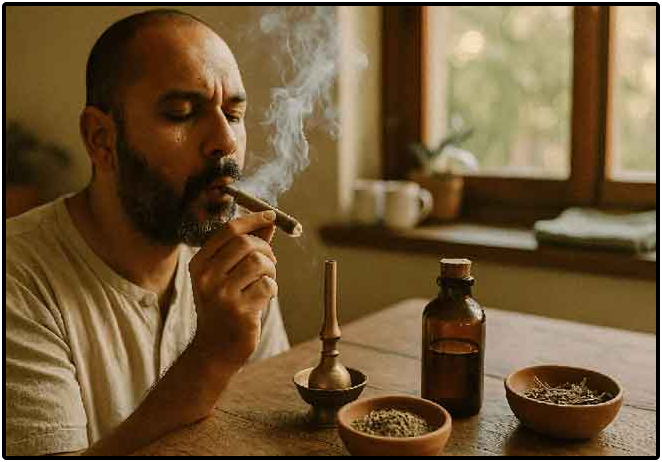
Smoking is a treatment in which medicinal smoke is inhaled through the nose or mouth and exhaled through the mouth. This treatment is beneficial in various Vata and Kapha disorders of the upper clavicle region. In Ayurveda scriptures, medicated smoking is described as a preventive measure and treatment. It is prescribed as a preventive measure to remove the Kapha dosha in the head under Dinacharya (daily regimen) and Vasant Ritucharya (Spring season regimen).
Medicated smoking is indicated for the treatment of Shirogaurav (heavy headedness), Headache, Ardhavbhedak (migraine), Karna-Akshishul (pain in ears and eyes), ear-nasal-eye-related secretions, smelly sensation in mouth and nasal area, Pinus (nasal disease), Kshavthu (sneezing), Kaas (cough), Hikka (hiccups), Shvas (breathlessness), Galgraha (inflammation of the throat), Dantadaurablya (weak tooth), Danta shula (pain in the tooth), Arochaka (loss of appetite), Kaphaprasek (excessive salivation), Vaishvarya (hoarseness of voice), Hanugraha (lock jaw), Manyagraha (stiffness of the neck), Kandu (itching). Furthermore, it is also helpful in various disorders like helminthic disease, oral thrush, tonsillitis, subgingivitis, alopecia, greying of hair, hair fall, hypersomnolence, fascination, hypersomnia, etc. This treatment increases the strength of mind, senses and voice (Charaka Samhita Sutrasthan 5/27-32).
Acharya Charaka describes three types of smoking namely Prayogik (daily), Snehik (lubricating) and Vairechnik (purifying) Dhumpana (medicated smoking). Apart from these types, Acharya Susruta also describes two other types namely Kasaghna (cough reducer) and Vamaniya Dhumpana (medicated smoking). Acharya Vagbhata classifies Dhumpana into three types namely Snigdha (lubricating), Madhya (medium) and Tikshna (sharp/purifying) Dhumpana which are specified in Vataja, Vata-Kaphaja and Kaphaja disorders respectively. Shaman (palliative) Dhumpana is known as Prayogik (daily) or Madhyam Dhumpana. Brihan (strengthening) Dhumpana is known as Snehana (lubricating) or Mild Dhumpana (mridu) and Shodhana (purifying) Dhumpana is known as Virechana or Tikshna Dhumpana. Acharya Vriddha Vagbhata, Acharya Sharngdhar and Acharya Bhavamishra list 6 types of Dhumpana namely Shaman (palliative), Brihan (strengthening), Rechana/Shodhan (purifying), Kasaha/Kasaghna (Cough reducer), Vaaman (vomit inducing) and Vranadhupana (wound fumigation).
Daily use of Prayogik Dhumpana is prescribed for prevention of upper clavicle diseases in healthy people. For Prayogik Dhumpana, paste of medicines like Harenuk (Pisum sativum), Priyangu (Callicarpa macrophylla), Krishna Jeerak (Carum carvi), Nagkeshar (Mesua ferrea), Hauber (Juniperus communis), Chandan (Santalum album), Tamalpatra (Cinnamomum tamala), Twak (Cinnamomum zeylanicum), Ela (Elettaria cardamomum), Ushir (Chrysopogon zizanioides), Yashtimadhu (Glycyrrhiza glabra), Jatamansi (Nardostachys jatamansi), Guggul (Commiphora mukul) etc. is used in the preparation of Dhoomvarti (medicated herbal stick). This Dhoomvarti (medicated herbal stick) is as thick as a thumb and eight fingers in length. Prayogik Dhumpana provides benefits similar to Snehic and Varechnik smoking, hence it is beneficial for the mitigation of aggravated Vata and Kapha doshas.
For the preparation of Snehic Dhumpana, sweet medicines (jeevani ganokta medicines) along with vasa (fat), ghee (clarified butter), madhuchchhishta (beeswax) are used, as a result of which, the dryness of the smoke is reduced. Snehic Dhumpana, by virtue of its lubricating and smearing actions, alleviates the Vata dosha. Varechanic dhumpana is used to remove head affecting doshas. As a result of the dry, hot, pungent and vivid properties of Varechanic dhumpana, Kapha dosha gets aggravated and eliminated. Therefore, it is beneficial for alleviating Kapha Dosha. Ingredients like Aparajita, Jyotishmati, purified Harital, purified Manashila, Aguru, Tamalpatra, etc. are used in the manufacturing of its Dhumvarti (medicated herbal stick).
Kasaghna Dhumpana is beneficial in managing cough, breathing and hoarseness. Medicines like Brihati, Kantakari, Trikatu, Kasamard, etc. are used in the preparation of Kasaghan Dhumvarti (medicated herbal stick).
Vamaniya Dhumpana expels vitiated kapha as a result of Vaamaka (emetic) property. Vamak (emetic) medicinal substances like skin, muscles, horns, crab bones, vallur, madanphal, etc. are used in Vamaniya Dhumvarti (medicated herbal stick). For wound fumigation, Vranadhupana, a paste of medicinal substances like Nimb, Vacha etc. is burnt in a Sharavasamput. Medicinal smoke flows out from this Sharavasamput through a pipe. This medicinal smoke is used to fumigate wounds for wound cleaning and wound dressing. Eight periods are described for daily use of Prayogik Dhumpana, such as after bathing, eating, tongue cleaning, kshavathu (sneezing), tooth washing, sleep, naavan (nasya) and anjanvidhi (applying collyrium). The affliction of vata and kaphaj disorders occurs especially in these eight periods, hence smoking should be done daily only in these periods. Snehik, prayogik (madhyam) and vairechnik dhumpana are specified to be used once, twice and three to four times a day respectively. According to Acharya Vagbhata, mridu (light) dhumpana is described after Kshavathu (sneeze), Jrimbha (yawning), Shastrakarma (surgical procedures), tooth brushing, after passing stool-urine, etc., in the above mentioned conditions, madhyam (moderate) dhumpana after Navana (Nasya) and after dinner and sharp/varechanic dhumpana after sleep, bath, snehana nasya (nasal administration), anjana (collyrium), vamana (therapeutic emesis) etc.
Dhumpana (medicated smoking) is prohibited after purgation and Asthapana Basti (medicated enema). In pregnant and emaciated persons, in raktapitta (bleeding) and general disorders and in conditions of poison, labor, prajagar (awake at night), unconsciousness, confusion, thirst, injury, trauma, palpitations, visual disturbances, headache, intoxication, stomach disease, urinary disorders, adhaman (bloating), pandu (anemia), grief, anger, fear and after consumption of fermented drink , milk, oils, honey, curd based substances, etc. The use of smoking after consuming fish is also prohibited. Smoking is prohibited before the age of 12 and after the age of 80.
There is a detailed description of the smoking method in Ayurveda texts. Dhumvarti (medicated herbal stick), a cube similar to a thumb, is made from the paste of various medicinal substances. In the Dhumpan (medicated smoking) method, after burning the Dhumvarti (medicated herbal stick), the Tajjanya Dhum (smoke coming out of dhumvarti) having medicinal properties is consumed through the Dhumnetra (smoking pipe). Dhumnetra (smoking pipe) should be made of metals like gold, straight and equipped with three chambers. There should be holes in its base and holes same as pig bones to enter in its front part. For the consumption of sharp, medium, snehik, kasaghna and vaamniya dhumpana, the length of the smoking pipe should be 24, 40, 32, 16 and 10 fingers respectively. The length of the smoker used for vran dhupana should also be 10 fingers.
With proper use of dhumpana (medicated smoking), purification and lightness of heart, throat region and sensory organs and symptoms of lightness in the head are felt. With this, the Kapha dosha gets weaker and eliminated and the contaminated doshas are mitigated. Symptoms like lack of purity of voice, accumulation of phlegm in the throat and stagnation in the head region etc indicate the improper usage of medicated smoking. Symptoms like inflammation and pain in the palate, nose and throat, excessive thirst, delusion, excessive bleeding, dizziness, unconsciousness, distress in the senses etc indicate the excess of medicated smoking.
Medicated smoking at inappropriate times and excessively can result in problems like deafness, blindness, muteness, hematemesis and dizziness. According to Acharya Sushruta, as a result of inappropriate smoking, unconsciousness and headache occur and the sense of smell, hearing, working of the eyes and tongue get severely disrupted. In the management of Vata-Pitta-dominated disorders caused by medicated smoking, treatments like Ghritpaan (consumption of clarified butter), Navan (nasya), Anjan (collyrium) and Tarpan (eye treatment procedure) are described. Cold treatment and Virukshan (drying) therapy are described for the management of pitta dominant and kapha pitta dominant complications of medicated smoking.
Acharya Charak has given instructions on various types of medicated smoking for the treatment of diseases of the head, nasal diseases, loss of appetite, mania, worm related skin diseases, vitiligo, nausea, sneezing and disorders caused by suppressing natural urges. The therapeutic relevance of medicated smoking has been documented in disorders such as bronchial asthma and COVID-19-induced anosmia.
Conclusion
Dhumapana (medicated herbal smoking) stands as a profound therapeutic and preventive practice rooted in classical Ayurvedic scriptures. Its multifaceted benefits in Urdhvajatrugata Vikaras (disorders above the clavicle) make it a significant component in managing conditions such as chronic rhinitis, asthma, sinusitis and migraine. With its well-classified forms—Prayogik, Snehik, and Vairechanik—tailored to individual dosha imbalances, Dhumapana offers both Shamana (palliative) and Shodhana (detoxifying) effects. The detailed protocols regarding timing, indications, types, and methods of administration emphasize its scientific precision. When practiced judiciously, Dhumapana enhances sensory perception, mental clarity, and physical vigor. However, strict adherence to classical contraindications is essential to avoid complications. In today’s integrative healthcare framework, Dhumapana represents a valuable, non-invasive modality that blends tradition with therapeutic efficacy, deserving greater clinical and research attention in modern Ayurvedic practice.