Encapsulating Peritoneal Sclerosis – Symptoms, Causes & Ayurvedic Treatment
Abstract
Disorders affecting the peritoneum are uncommon but can significantly compromise gastrointestinal function and overall quality of life. The peritoneum is a delicate serous membrane lining the abdominal cavity and covering the abdominal organs. It provides lubrication, supports immune defense, and facilitates the movement of abdominal viscera. Persistent inflammation, repeated injury, or chronic irritation of this membrane can lead to structural alterations that interfere with its normal function. Among the most severe consequences of chronic peritoneal injury is Encapsulating Peritoneal Sclerosis (EPS), a rare yet potentially life-threatening condition characterized by progressive fibrosis and thickening of the peritoneum, resulting in partial or complete encasement of the intestines within a dense fibrocollagenous membrane. Early recognition and multidisciplinary treatment are essential for improving outcomes. In this article, we shall discuss Encapsulating Peritoneal Sclerosis in detail, including its causes, pathogenesis, clinical features, diagnosis, contemporary management, and its understanding and management through the Ayurvedic system of medicine.
Introduction
Encapsulating Peritoneal Sclerosis (EPS), also referred to as sclerosing encapsulating peritonitis, is a chronic fibro-inflammatory disorder in which the peritoneal membrane undergoes progressive thickening and fibrosis. Over time, a dense fibrous capsule develops around loops of the small intestine, restricting their movement and leading to varying degrees of intestinal obstruction. Although rare, EPS is regarded as one of the most serious complications of long-term peritoneal dialysis (PD). Improvements in dialysis techniques have reduced its incidence, yet the condition remains clinically significant because of its high morbidity and mortality. The risk increases with prolonged duration of peritoneal dialysis, particularly beyond five years. The disease does not develop suddenly. It evolves gradually through persistent inflammation, mesothelial injury, angiogenesis, fibroblast activation, and collagen deposition. During the early stages, patients may experience nonspecific gastrointestinal complaints, making diagnosis difficult. As fibrosis progresses, bowel loops become enclosed within a rigid fibrotic sac, impairing intestinal motility and nutrient absorption.

Epidemiology
Encapsulating Peritoneal Sclerosis is an uncommon disorder, but its prevalence varies according to the population studied and the duration of peritoneal dialysis. Important epidemiological observations include:
- Most commonly affects patients receiving long-term peritoneal dialysis.
- Risk increases significantly after 5–8 years of continuous PD.
- Can occur after discontinuation of peritoneal dialysis.
- Reported incidence varies between dialysis centers due to differences in patient selection and diagnostic criteria.
- Mortality remains considerable in advanced disease, especially when bowel obstruction and severe malnutrition develop.
How Does Encapsulating Peritoneal Sclerosis Develop?
The pathogenesis of EPS is complex and multifactorial. A widely accepted explanation is the “two-hit hypothesis.
First Hit: Chronic Peritoneal Injury
Long-term exposure to hyperosmolar glucose-containing dialysis solutions gradually damages the mesothelial lining of the peritoneum. Repeated exposure causes:
- Mesothelial cell loss
- Chronic inflammation
- Neoangiogenesis
- Thickening of the submesothelial tissue
- Increased vascular permeability
At this stage, the peritoneum becomes susceptible to additional injury.
Second Hit: Triggering Event
The already damaged peritoneum is further injured by factors such as:
- Recurrent bacterial peritonitis
- Severe inflammation
- Abdominal surgery
- Discontinuation of peritoneal dialysis
- Tuberculosis
- Autoimmune disorders
This second insult activates fibroblasts, resulting in excessive collagen deposition and progressive fibrosis. Eventually:
- The peritoneum thickens markedly.
- Dense fibrocollagenous tissue forms.
- Small bowel loops become encased.
- Adhesions develop.
- Intestinal motility decreases.
- Mechanical bowel obstruction occurs.
Risk Factors
Several conditions increase the likelihood of developing EPS.
Dialysis-Related Factors
- Long duration of peritoneal dialysis
- Repeated episodes of bacterial peritonitis
- High glucose dialysis solutions
- Bioincompatible dialysis fluids
- Frequent exposure to dialysis-related inflammation
Non-Dialysis Causes
Although uncommon, EPS has also been reported with:
- Tuberculous peritonitis
- Abdominal tuberculosis
- Liver cirrhosis
- Autoimmune diseases
- Systemic lupus erythematosus
- Sarcoidosis
- Endometriosis
- Ventriculoperitoneal shunts
- Previous abdominal surgery
- Intraperitoneal chemotherapy
- Certain medications
Clinical Features
Symptoms usually develop gradually
Early Symptoms
- Loss of appetite
- Mild abdominal discomfort
- Nausea
- Early satiety
- Intermittent constipation
- Weight loss
- Generalized weakness
Because these complaints are nonspecific, diagnosis is often delayed.
Progressive Disease
As fibrosis advances, patients may develop:
- Recurrent abdominal pain
- Progressive abdominal distension
- Vomiting
- Severe constipation
- Features of intestinal obstruction
- Inability to tolerate oral feeding
- Marked weight loss
- Protein-energy malnutrition
- Dehydration
Complications
Untreated EPS can result in serious complications. These include:
- Recurrent intestinal obstruction
- Severe malnutrition
- Electrolyte imbalance
- Intestinal ischemia
- Bowel perforation
- Sepsis
- Chronic abdominal pain
- Dependence on parenteral nutrition
- Reduced quality of life
- Increased mortality
Investigations
Laboratory Investigations
Routine laboratory tests help evaluate nutritional status, inflammation, and renal function. These include:
- Complete Blood Count (CBC)
- ESR
- C-Reactive Protein (CRP)
- Serum albumin
- Kidney function tests
- Liver function tests
- Electrolytes
- Blood cultures if infection is suspected
Imaging Studies
- CT Scan
- Ultrasonography
- MRI
- Histopathology
Contemporary Management
Management depends upon disease severity, nutritional status, and the degree of bowel obstruction.
1. Discontinuation of Peritoneal Dialysis
Patients with confirmed EPS are usually shifted from peritoneal dialysis to hemodialysis to prevent ongoing peritoneal injury.
2. Nutritional Support
Malnutrition significantly influences prognosis. Supportive nutritional management includes:
- High-protein nutrition
- Enteral nutrition whenever feasible
- Total parenteral nutrition in severe obstruction
- Vitamin supplementation
- Electrolyte correction
3. Medical Therapy
Various medications may be used according to individual clinical circumstances. These include:
- Corticosteroids
- Immunosuppressive agents
- Tamoxifen in selected patients
- Antibiotics when infection is present
- Pain management
- Antiemetics
- Fluid and electrolyte replacement
The choice of therapy depends on disease stage, inflammatory activity, and overall clinical status.
4. Surgical Management
Surgery is considered when
- Persistent bowel obstruction occurs.
- Medical treatment fails.
- Severe nutritional compromise develops.
- Life-threatening complications arise.
The preferred procedure is enterolysis with complete excision of the fibrous capsule, often referred to as peritonectomy and enterolysis.
Ayurvedic View and Management of Encapsulating Peritoneal Sclerosis
Encapsulating Peritoneal Sclerosis (EPS) is not described as a distinct disease in the classical Ayurvedic texts. However, based on its clinical presentation and pathological changes, it can be most appropriately correlated with Udara Roga, particularly Baddhodara. Baddhodara is characterized by obstruction within the abdominal cavity due to accumulated pathological factors that impede the normal movement of Vata Dosha. Classical Ayurvedic literature explains that when Apana Vata (subtype of vata dosha) becomes obstructed, the normal movement of intestinal contents is disturbed, leading to abdominal distension, constipation, pain, impaired digestion, and progressive debility. In Encapsulating Peritoneal Sclerosis, dense fibrous tissue surrounds the intestinal loops, restricting their movement and producing recurrent intestinal obstruction. This mechanical restriction closely resembles the obstructive pathology described in Baddhodara.
The disease begins with long-standing impairment of Agni (digestive and metabolic fire) due to chronic illness and repeated inflammation. Weak Agni (digestive fire) results in the formation of Ama (metabolic toxins), which circulates through the body and accumulates in the Annavaha (intestinal microchannels) and Purishavaha Srotas (excretory microchannels). Simultaneously, persistent inflammatory changes disturb Vata Dosha, especially Apana Vata, which governs bowel movements and elimination. As Ama combines with aggravated Vata and Kapha, obstruction (Srotorodha) develops within the abdominal channels. Gradually, the tissues lose their normal flexibility and nourishment, resulting in stiffness, thickening, and impaired intestinal mobility. The disturbed Vata becomes trapped within the obstructed channels, giving rise to abdominal pain, distension, constipation, nausea, reduced appetite, and difficulty in the movement of intestinal contents.
The primary objectives of Ayurvedic management are
- Rekindling Agni (digestive fire) to improve digestion and metabolism.
- Eliminating Ama (metabolic toxins) from the body.
- Restoring the normal movement of Vata Dosha.
- Removing obstruction within the channels (Srotoshodhana).
- Supporting healthy urinary and abdominal functions.
- Nourishing weakened tissues while maintaining digestive balance.
- Promoting proper bowel evacuation and reducing abdominal discomfort.
Depending upon the patient’s strength and digestive capacity, management includes carefully planned dietary measures, lifestyle regulation, Deepana-Pachana therapies, and selected herbal formulations. A light, easily digestible diet is generally preferred. Warm meals prepared with digestive spices, adequate hydration, regular meal timings, and avoidance of excessively oily, heavy, processed, and difficult-to-digest foods help maintain digestive balance. Gentle physical activity, appropriate rest, and stress management also contribute to improving overall well-being.
Herbal Remedies by Planet Ayurveda for Encapsulating Peritoneal Sclerosis
Planet Ayurveda is a GMP-certified Ayurvedic herbal manufacturing company dedicated to preparing authentic herbal formulations using standardized extracts and premium-quality herbs described in the Ayurvedic classics. The formulations are free from artificial preservatives, synthetic chemicals, and harmful additives, ensuring purity and quality. The products are prepared under the guidance of experienced Ayurvedic physicians with the objective of supporting natural health and maintaining physiological balance.Planet Ayurveda is pleased to present its herbal formulations for the management of Encapsulating Peritoneal Sclerosis.
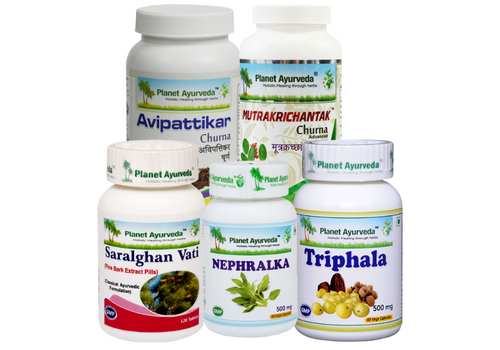
Product List
- Mutrakrichantak Churna
- Nephralka Capsules
- Saralghan Vati
- Triphala Capsules
- Avipattikar Churna

Product description
1. Mutrakrichantak Churna
Mutrakrichantak Churna is a polyherbal formulation prepared using herbs such as Varun (Crataeva nurvala), Gokshura (Tribulus terrestris), Bhumi Amla (Phyllanthus niruri) and Kalmegh (Andrographis paniculata), and several other valuable herbs known for supporting urinary and renal health. Varun (Crataeva nurvala) helps maintain healthy urinary channels and supports smooth urinary flow. Gokshura (Tribulus terrestris) supports urinary tract function and promotes healthy elimination. Bhumi Amla (Phyllanthus niruri) contributes to healthy liver and kidney function, while Kalmegh (Andrographis paniculata) supports metabolism and digestive efficiency. By supporting healthy elimination, maintaining fluid balance, and improving metabolic functions, Mutrakrichantak Churna assists in promoting physiological harmony in patients experiencing chronic abdominal and renal conditions associated with Encapsulating Peritoneal Sclerosis.
Dosage: 1 teaspoon twice daily.
2. Nephralka Capsules
Planet Ayurveda’s Nephralka Capsules contain a carefully selected combination of Punarnava (Boerhavia diffusa), Kalmegh (Andrographis paniculata), Mooli Satva (Raphanus sativus extract) and others. Punarnava (Boerhavia diffusa) supports healthy kidney function and fluid regulation. Kalmegh (Andrographis paniculata) supports healthy liver metabolism and digestive balance, whereas Mooli Satva (Raphanus sativus extract) contributes to urinary health and assists normal metabolic processes. Together, these herbs help maintain renal function, support detoxification, promote fluid homeostasis, and contribute to overall abdominal health.
Dosage: 1 capsule twice daily.
3. Saralghan Vati
Saralghan Vati is prepared from the concentrated extract of Saral (Pinus roxburghii), a herb well known in Ayurveda for its cleansing and channel-supporting properties. Saral supports healthy circulation, promotes proper tissue metabolism, and helps maintain the normal functioning of the urinary system. It assists in balancing aggravated Vata and Kapha while encouraging healthy movement within the body’s channels. By supporting metabolic activity and maintaining tissue health, Saralghan Vati complements the overall Ayurvedic management of chronic abdominal disorders including Encapsulating Peritoneal Sclerosis.
Dosage: 2 tablets twice daily.
4. Triphala Capsules
Triphala Capsules by Planet Ayurveda contain the classical Ayurvedic combination of Haritaki (Terminalia chebula), Bibhitaki (Terminalia bellirica), and Amalaki (Emblica officinalis). Haritaki (Terminalia chebula) is regarded as one of the finest herbs for regulating Vata and supporting bowel function. Bibhitaki (Terminalia bellirica) supports healthy digestion and assists in maintaining balanced Kapha, while Amalaki (Emblica officinalis) nourishes tissues and provides powerful antioxidant support. Together, these three fruits promote digestive efficiency, support regular bowel movements, facilitate natural detoxification, and improve gastrointestinal health. In Encapsulating Peritoneal Sclerosis, maintaining digestive balance and regular bowel function is particularly important because impaired intestinal motility contributes significantly to disease progression and patient discomfort.
Dosage: 1 capsule twice daily.
5. Avipattikar Churna
Avipattikar Churna is a classical Ayurvedic formulation containing Triphala, Trikatu (Pippali, Maricha, Shunthi), Nagarmotha (Cyperus rotundus), Vidanga (Embelia ribes), Ela (Elettaria cardamomum), Lavanga (Syzygium aromaticum), and several other digestive herbs. The formulation helps maintain balanced Pitta and supports healthy digestion by improving Agni and facilitating proper bowel evacuation. Trikatu enhances digestive strength and metabolism, Musta supports digestive comfort, Vidanga (Embelia ribes) promotes intestinal health, while Ela (Elettaria cardamomum) and Lavanga (Syzygium aromaticum) contribute to improved digestion and reduction of abdominal discomfort. Regular digestive function plays a vital role in the Ayurvedic management of abdominal disorders. Avipattikar Churna helps maintain efficient digestion, encourages proper elimination, and supports gastrointestinal comfort in Encapsulating Peritoneal Sclerosis.
Dosage: ½ teaspoon twice daily with warm water.
Conclusion
Encapsulating Peritoneal Sclerosis is a rare but serious fibro-inflammatory disorder of the peritoneum that can lead to recurrent intestinal obstruction, malnutrition, and significant morbidity. Because its symptoms often develop gradually and resemble other gastrointestinal conditions, early diagnosis requires a high index of clinical suspicion, particularly in individuals undergoing long-term peritoneal dialysis. Contemporary management focuses on timely diagnosis, nutritional rehabilitation, medical therapy to control inflammation, and surgical intervention in advanced cases to relieve intestinal obstruction and improve quality of life. From the Ayurvedic perspective, Encapsulating Peritoneal Sclerosis can be understood in relation to Baddhodara, where impaired Agni (digestive fire), Ama (metabolic toxins) formation, aggravated Vata, and Srotorodha together disturb the normal movement of the intestines and digestive processes. Management is directed toward rekindling digestive fire, eliminating Ama, restoring the normal movement of Vata, maintaining healthy bowel function, and supporting the body’s natural metabolic processes. Planet Ayurveda’s herbal formulations provide a holistic Ayurvedic approach by supporting digestive health, urinary function, metabolic balance, tissue nourishment, and proper elimination. When incorporated into a comprehensive treatment plan under the guidance of qualified healthcare professionals, these herbal formulations help promote overall well-being and contribute to improving the quality of life of individuals living with Encapsulating Peritoneal Sclerosis.