Urethrovaginal Fistula – Ayurvedic Management & Treatment
Abstract
Fistulas are abnormal passages that develop between two epithelial-lined organs or between an internal organ and the skin. They interfere with normal anatomical function and often result in the continuous leakage of bodily fluids, recurrent infections, discomfort, and significant emotional distress. Depending on their location, fistulas can affect the gastrointestinal, urinary, or reproductive systems, substantially reducing an individual’s quality of life. A Urethrovaginal Fistula (UVF) is an uncommon type of genitourinary fistula in which an abnormal communication forms between the urethra and the vagina, allowing urine to leak involuntarily through the vaginal canal. Although less common than vesicovaginal fistula, urethrovaginal fistula can cause persistent urinary incontinence, recurrent urinary tract infections, irritation, and considerable psychosocial challenges. In this article, we shall discuss urethrovaginal fistula in detail, including its causes, symptoms, diagnosis, complications, and management in contemporary medicine. The article also explores its Ayurvedic perspective along with Ayurvedic principles aimed at promoting tissue healing, reducing inflammation, supporting urinary health, and restoring physiological wellness.
Introduction
The urinary system and female reproductive tract lie in close anatomical proximity within the pelvis. Under normal circumstances, the urethra carries urine from the bladder to the outside of the body, while the vagina functions as part of the reproductive canal. These two structures remain completely separate. A urethrovaginal fistula develops when an abnormal opening forms between the urethra and the vagina, allowing urine to bypass its normal route and leak continuously through the vagina. The condition is relatively uncommon but can significantly affect daily activities, personal hygiene, sexual health, emotional well-being, and social confidence. Most urethrovaginal fistulas occur following pelvic surgery, difficult childbirth, pelvic trauma, or injury during gynecological procedures. Prompt diagnosis and appropriate management are essential to prevent chronic infections, persistent urinary leakage, and long-term complications.
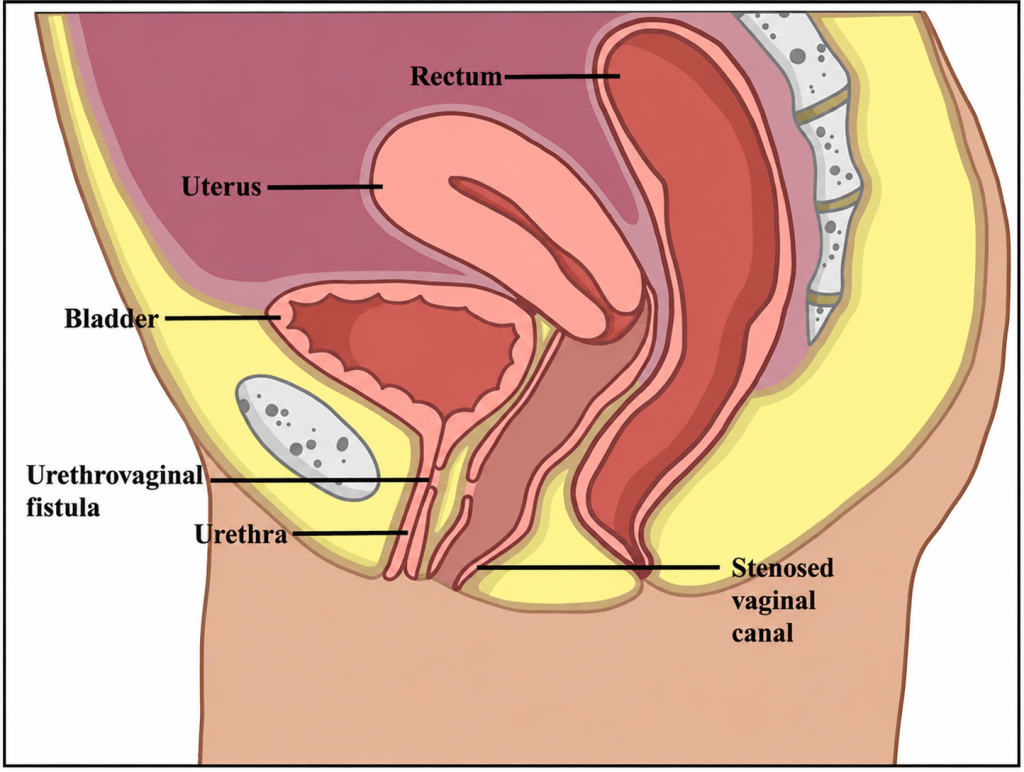
Urethrovaginal Fistula
A urethrovaginal fistula is an abnormal epithelial-lined tract connecting the female urethra to the vaginal wall. Because of this connection, urine escapes involuntarily into the vagina instead of passing entirely through the external urethral opening. The amount of urinary leakage depends upon the size and location of the fistula. Small fistulas can produce intermittent leakage, whereas larger defects often result in continuous urinary incontinence. Unlike stress urinary incontinence, where urine leakage occurs mainly during coughing, sneezing, or physical exertion, urethrovaginal fistula commonly produces persistent leakage regardless of physical activity.
Causes and Risk Factors
Urethrovaginal fistulas usually develop following injury to the urethral wall and adjacent vaginal tissues. Common causes include:
- Prolonged obstructed labor causing pressure-induced tissue damage
- Pelvic reconstructive surgery
- Anti-incontinence procedures
- Urethral diverticulum surgery
- Gynecological operations
- Pelvic trauma
- Instrumental vaginal delivery
- Forceps-assisted childbirth
- Pelvic fractures
- Radiation therapy involving the pelvis
- Recurrent pelvic surgeries
- Severe pelvic infections
- Tissue necrosis following prolonged compression during childbirth
Reduced blood supply to compressed tissues causes ischemia, followed by tissue breakdown and eventual formation of an abnormal tract between the urethra and vagina.
How Does a Urethrovaginal Fistula Develop?
The development of a urethrovaginal fistula generally follows a predictable sequence. Initially, prolonged pressure, surgical trauma, or direct injury damages the delicate tissues separating the urethra from the vagina. The local blood supply becomes compromised, reducing oxygen delivery to the affected area. As ischemia progresses, tissue necrosis develops, resulting in breakdown of the intervening tissue. During healing, instead of complete restoration of normal anatomy, an abnormal epithelial-lined communication forms between the urethral lumen and the vaginal canal. Once established, urine continuously passes through this newly formed tract. Inflammation, infection, poor tissue nutrition, diabetes, smoking, and repeated surgical interventions can delay healing and increase the likelihood of persistent fistula formation.
Clinical Features
The hallmark symptom of urethrovaginal fistula is continuous involuntary leakage of urine through the vagina. Other clinical features include:
- Constant wetness
- Vaginal urine leakage
- Urinary incontinence
- Irritation of vulval skin
- Burning sensation
- Foul urine odor
- Recurrent urinary tract infections
- Pain during urination
- Vaginal discomfort
- Pain during sexual intercourse
- Local inflammation
- Perineal dermatitis
- Emotional distress
- Social withdrawal
- Sleep disturbance due to persistent leakage
Complications
Untreated urethrovaginal fistula can result in several complications, including:
- Recurrent urinary tract infections
- Chronic vaginitis
- Persistent dermatitis
- Skin excoriation
- Dyspareunia
- Psychological stress
- Depression
- Social isolation
- Reduced quality of life
- Sexual dysfunction
Diagnosis and Investigations
Diagnosis begins with a detailed medical history and pelvic examination. Common investigations include:
- Pelvic examination using a speculum
- Dye test with methylene blue
- Cystourethroscopy
- Vaginoscopy
- Urinalysis
- Urine culture
- Ultrasound when indicated
- MRI pelvis in complex fistulas
- CT urography for selected patients
- Retrograde urethrogram when urethral injury is suspected
Cystourethroscopy remains one of the most valuable investigations because it helps determine the exact size, location, and number of fistulous openings.
Management in Contemporary Medicine
Treatment depends upon the size, location, duration, and underlying cause of the fistula. Very small, recently developed fistulas occasionally heal with prolonged bladder drainage using a urinary catheter. However, definitive treatment for most urethrovaginal fistulas involves surgical repair. The objective is complete closure of the fistulous tract while restoring normal urethral anatomy and urinary continence. Depending on the individual case, surgeons perform:
- Transvaginal fistula repair
- Transabdominal repair
- Layered tissue closure
- Tissue flap reconstruction
- Urethral reconstruction when necessary
Following surgery, prolonged bladder catheterization supports tissue healing while minimizing tension on the repair site.
Ayurvedic View and Management of Urethrovaginal Fistula
Although Urethrovaginal Fistula is not described by the same name in the classical Ayurvedic texts, its pathological features closely resemble traumatic injury involving the Yoni Marga and Mutravaha Srotas, resulting in an abnormal passage for urine. The condition can be understood through the principles of Agantuja Vrana (traumatic wound) affecting the urinary and reproductive passages. The initiating factor is injury caused by difficult childbirth, surgical intervention, pelvic trauma, or instrumentation. Such trauma disturbs Vata Dosha, particularly Apana Vata, which governs urination, pelvic organ function, and tissue integrity. Simultaneously, tissue injury provokes Pitta Dosha, leading to inflammation, burning sensation, tenderness, and impaired healing. The damaged tissues lose their structural continuity, allowing urine to escape through an abnormal tract.
From an Ayurvedic perspective, successful management focuses on restoring tissue integrity and normal function rather than merely addressing urine leakage.
The primary principles include Vrana Shodhana (cleansing the wound), Vrana Ropana (promoting healthy tissue repair), balancing aggravated Vata and Pitta, strengthening tissues, and maintaining urinary tract health. Herbs possessing Ropana (healing), Shothahara (anti-inflammatory), Krimighna (antimicrobial), Raktaprasadana (blood-purifying), and Rasayana (rejuvenating) properties are particularly valuable. Neem (Azadirachta indica) supports healthy tissue repair and urinary hygiene through constituents such as azadirachtin, nimbidin, and quercetin. Ashwagandha (Withania somnifera), rich in withanolides, nourishes damaged tissues, supports recovery, and promotes overall strength. Guggul (Commiphora mukul) contains guggulsterones that assist healthy inflammatory responses and tissue regeneration. Gokshura (Tribulus terrestris) contains steroidal saponins, particularly protodioscin, which support urinary tract function and strengthen Mutravaha Srotas. Haridra (Curcuma longa), containing curcuminoids, promotes healthy tissue repair and supports local healing. Ayurveda also emphasizes proper nutrition, adequate hydration, bowel regularity, avoidance of excessive physical strain, and maintenance of local hygiene to facilitate optimal tissue recovery and strengthen pelvic structures.
Herbal Remedies by Planet Ayurveda for Urethrovaginal Fistula
Planet Ayurveda is dedicated to providing authentic herbal formulations prepared according to Ayurvedic principles using standardized botanical extracts and carefully selected classical ingredients. Every formulation is manufactured under stringent quality standards without artificial preservatives, synthetic chemicals, or unnecessary additives. The objective is to support the body’s natural healing processes through herbs recognized for their ability to promote tissue repair, maintain urinary health, strengthen immunity, and restore physiological balance. Planet Ayurveda is pleased to present its herbal formulations for the management of Urethrovaginal Fistula. The formulations support tissue healing, healthy inflammatory response, urinary tract wellness, pelvic tissue strength, and overall recovery.
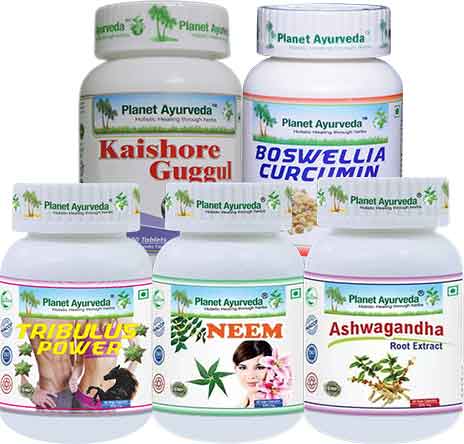
Product List
- Kaishore Guggul
- Neem Capsules
- Ashwagandha Capsules
- Tribulus Power
- Boswellia Curcumin

Product Description
1. Kaishore Guggul
Kaishore Guggul is a classical Ayurvedic formulation containing Shuddha Guggul (Commiphora mukul), Triphala (Haritaki, Bibhitaki, Amalaki), Guduchi (Tinospora cordifolia), Trikatu (Pippali, Maricha, Shunthi), Vidanga (Embelia ribes), Danti (Baliospermum montanum ), and Nishoth (). The formulation supports healthy inflammatory balance, purification of body tissues, and proper wound healing. Guggulsterones present in Guggul support tissue repair and healthy circulation. Guduchi, containing diterpenoid lactones and alkaloids, promotes immune function and tissue nourishment. Triphala contributes antioxidant support through tannins, gallic acid, and emblicanins, assisting healthy cellular regeneration.
Dosage: 2 tablets twice daily after meals.
2. Neem Capsules
Neem Capsules contain standardized extract of Neem (Azadirachta indica). Neem contains azadirachtin, nimbidin, nimbin, quercetin, and limonoids, compounds that support healthy inflammatory response, maintain urinary hygiene, and promote healthy tissue regeneration. Neem also supports the body’s natural defense mechanisms and helps maintain healthy skin and mucosal surfaces.
Dosage: 2 capsules twice daily after meals.
3. Ashwagandha Capsules
Ashwagandha Capsules contain standardized extract of Ashwagandha (Withania somnifera). Ashwagandha is rich in withanolides, naturally occurring steroidal lactones that nourish tissues, promote strength, support healthy recovery, and improve overall vitality. In conditions involving tissue injury, Ashwagandha helps maintain healthy healing while supporting physical resilience and immune balance.
Dosage: 1 capsule twice daily after meals.
4. Tribulus Power
Tribulus Power contains standardized extract of Gokshura (Tribulus terrestris). The herb contains protodioscin, dioscin, flavonoids, and steroidal saponins, which support urinary tract health, healthy urinary flow, tissue nourishment, and normal function of the Mutravaha Srotas (urinary channels). Gokshura is highly regarded in Ayurveda for strengthening urinary system while supporting tissue repair.
Dosage: 1 capsule twice daily after meals.
5. Boswellia Curcumin
Boswellia Curcumin combines Shallaki (Boswellia serrata) and Curcumin (Curcuma longa). Boswellia contains boswellic acids, while Curcuma longa provides curcuminoids, particularly curcumin. Together, these bioactive compounds support a healthy inflammatory response, encourage tissue repair, maintain connective tissue health, and promote healthy healing of damaged structures.
Dosage: 1 capsule twice daily after meals.
Conclusion
Urethrovaginal fistula is an uncommon but distressing genitourinary condition that profoundly affects urinary continence, personal hygiene, emotional well-being, and quality of life. Prompt diagnosis, appropriate surgical intervention when indicated, and comprehensive supportive care are essential for restoring normal urinary function and preventing long-term complications. From an Ayurvedic perspective, the condition closely resembles a traumatic injury involving the Yoni Marga and Mutravaha Srotas, where aggravated Vata and Pitta Dosha disrupt tissue integrity and healing. Ayurvedic management focuses on cleansing damaged tissues, promoting wound healing, restoring tissue strength, supporting urinary tract health, and improving overall vitality. Planet Ayurveda’s formulations offer a comprehensive herbal approach that addresses inflammation, tissue regeneration, urinary wellness, immune balance, and recovery. Together with appropriate medical care, healthy nutrition, proper hydration, and meticulous personal hygiene, these herbal formulations contribute to strengthening the body’s natural healing capacity and promoting long-term pelvic health.