Idiopathic Thrombocytopenic Purpura: A Clinical Overview with Ayurvedic Management Strategies
Abstract
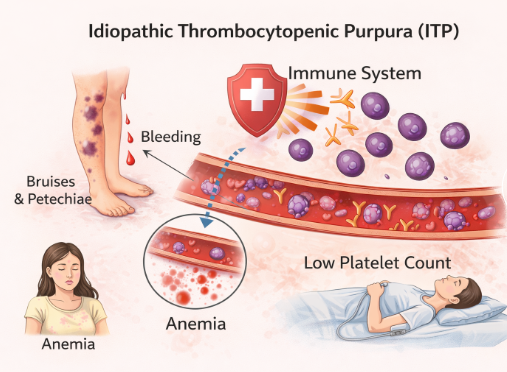
ITP i.e Idiopathic Thrombocytopenic Purpura is an autoimmune disease. In ITP our own immune system attacks platelets which leads to destruction of platelets and eventually there is fall in the number of platelets. Fall in platelet count leads to many serious symptoms such as bruises and petechiae on several areas such as face, back, eyes, thighs and buttocks. If a patient meets with an accident or gets any minor injury or trauma then it can lead to heavy bleeding which does not stop easily and may lead to serious complications such as hypovolemic shock and anaemia. ITP is of different types such as short term and long term. It is a serious condition that needs timely management.
Introduction
ITP, known as Idiopathic Thrombocytopenic Purpura, is a rare auto immune disease. In this condition the mechanism of blood clotting does not work properly because the immune system attacks healthy platelets and their number declines, which can be life threatening. It is characterised by bruises, petechiae and rashes all over the body which can easily bleed. Other symptoms include gum bleeding, heavy menstrual bleeding and nose bleeding.
The tendency of blood haemorrhage increases in this disease. If a patient meets with any major or minor accident then heavy blood loss can occur which may lead to complications such as hypovolemic shock and anaemia. ITP is of two types: short term and long term. Short term ITP lasts for less than six months and is the most common type usually occurring in children, whereas long term ITP mostly occurs in adults and lasts for more than six months.
The exact cause of ITP is not clearly known but it is suspected to occur due to impairment of the immune system. Diagnosis is generally made clinically by symptoms and blood investigations. Bone marrow biopsy can be done to rule out other causes. Primary ITP occurs when there is no other associated disease, whereas secondary ITP occurs when it is associated with other autoimmune diseases such as HIV.
In Ayurveda it correlates with Tiryagata Raktapitta. Raktapitta is a Pitta predominant disease which occurs due to consumption of tikshna, ushna, kshara, lavana, amla and katu predominant food. It is of three types in Ayurveda: Urdhva, Adho and Tiryaga. ITP is correlated with Tiryaga Raktapitta.
Pathogenesis as per Ayurveda (Samprapti)
Consumption of pitta aggravating food and activities
↓
Agitation of blood
↓
Contamination of blood
↓
Causes Raktapitta (ITP)
Management
Treatment generally includes corticosteroids, immunosuppressants and drugs that help in blood clotting. Corticosteroids such as prednisolone and immunosuppressants such as azathioprine, methotrexate and cyclosporine are commonly used. Drugs which help in blood clotting such as Inj Tranexa are also used in management.
Ayurveda has a different approach towards ITP. According to Ayurveda it may occur due to aggravated Pitta in the body and can be managed with immune boosting, Pitta pacifying and detoxifying herbs and formulations.
Planet Ayurveda Approach
Planet Ayurveda is a leading herbal manufacturing unit managing this condition for the last 20 years and obtaining encouraging results. The formulations are prepared under the guidance of expert Ayurveda MD doctors and are free from harmful chemicals or preservatives.
ITP Care Pack
For managing ITP they have prepared an ITP Care Pack which includes the following formulations.
- Immune Booster – 2 capsules twice daily
- Ashwagandha Capsules – 2 capsules twice daily
- Giloy Capsules – 1 capsule twice daily
- Gandhak Rasayan – 2 tablets twice daily
- Green Essentials – 2 capsules twice daily
- Kumar Kalyan Ras – 1 tablet twice daily
- Brahmi Chyawanprash – 1 teaspoonful twice daily
- Suvarna Basant Malti Ras – 1 tablet twice daily
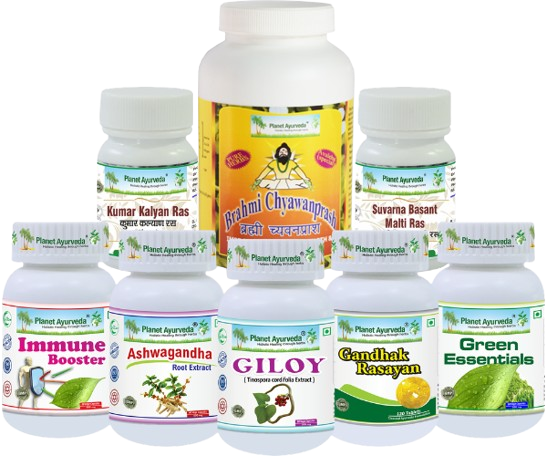

All these formulations work synergistically in managing Immune Thrombocytopenia by boosting immunity and detoxifying the body through reduction of free radical production. These formulations also help reduce the destruction of platelets and clear obstruction present in microchannels while improving coordination in body functions.
Conclusion
ITP is a condition in which the body’s immune system mistakenly attacks and destroys platelets. It is characterised by bruising, petechiae and heavy menstrual bleeding in females. The condition can be managed with supportive Ayurvedic formulations that help boost immunity and maintain balance in the body. Ayurveda also emphasizes following a proper diet and lifestyle along with medications in order to maintain overall health and well-being.