Chavyakarishta , Ingredients, Health Benefits and Contraindications
Introduction
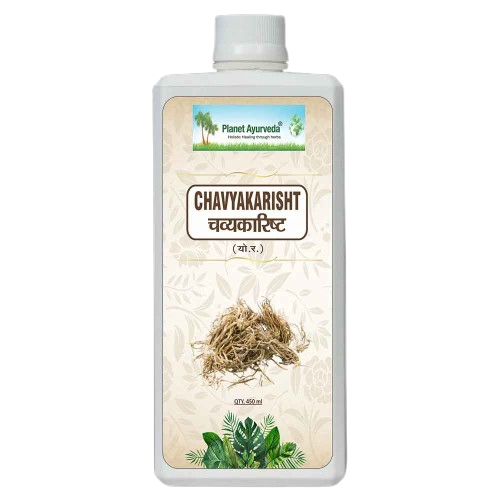
Chavyakarishta is a traditional Ayurvedic formulation known for its action on digestive, metabolic, and systemic disorders. It is primarily used in conditions arising from weakened digestion and disturbed balance of Doshas in our body, especially affecting the abdomen, liver, respiratory system, and urinary functions. Its therapeutic scope extends from functional digestive disturbances to chronic systemic disorders, reflecting its ability to clear metabolic obstruction, support tissue nourishment, and restore physiological harmony.

Ingredients
- Chavya (Piper retrofractum)- 2 Kg
- Chitrak Mula (Plumbago zeylanica)- 1 Kg
- Krishna Jeera (Carum carvi)- 500 g
- Pushkarmnula (Inula racemosa)- 500 g
- Vacha (Acorus calamus)- 500 g
- Hrivera (Pavonia odorata)- 500 g
- Kachura (Curcuma zedoaria)- 500 g
- Patol (Trichosanthes dioica)- 500 g
- Haritaki (Terminalia chebula)- 500 g
- Bibhitaki (Terminalia bellirica)- 500 g
- Amalaki (Emblica officinalis)- 500 g
- Ajwain (Trachyspermum ammi)- 500 g
- Kutaj (Holarrhena antidysenterica)- 500 g
- Indrayan (Citrullus colocynthis)- 500 g
- Dhaniya (Coriandrum sativum)- 500 g
- Rasna (Pluchea lanceolata)- 500 g
- Danti Mula (Baliospermum montanum)- 500 g
- Vidanga (Embelia ribes)- 200 g
- Nagarmotha (Cyperus rotundus)- 200 g
- Manjishtha (Rubia cordifolia)- 200 g
- Devdaru (Cedrus deodara)- 200 g
- Shunthi (Zingiber officinale)- 200g
- Kali Mirch (Piper nigrum)- 200 g
- Pippali (Piper longum)- 200 g
- Jal (Water)- 100 Litres
- Gud (Jaggery)- 15 Kg
- Dhataki (Woodfordia fruticosa)- 1 Kg
- Dalchini (Cinnamomum zeylanicum)- 80 g
- Badi Elaichi (Amomum subulatum)- 80 g
- Tejpatra (Cinnamomum tamala)- 80 g
- Nagkesar (Mesua ferrea)- 80 g
- Lavang (Syzygium aromaticum)- 40 g
- Shunthi (Zingiber officinale)- 40 g
- Kali Mirch (Piper nigrum)- 40 g
- Pippali (Piper longum)- 40 g
- Sheetal Chini (Piper cubeba)- 40 g
Description Of Ingredients
- Chavya (Piper retrofractum)- This herb is called ‘Java Long Pepper’ in English and is Vata & Kapha balancing in nature. It is a Katu (Pungent) tasting herb with Ushna (Hot) potency. Its main phytoconstituents are Piperine, Piplartine etc. According to Ayurveda, it is Deepaneeya (Stimulates digestive fire) as well as is useful in managing pain. It promotes downward flow of Vata, and has an anti-inflammatory effect, reducing abnormal tissue proliferation in the body.
- Chitrak Mula (Plumbago zeylanica)- Often called ‘Leadwort’ in English, this herb has plenty of therapeutic benefits, as mentioned in Ayurveda. It is naturally Katu (Pungent) in taste, and stimulates Agni (Digestive fire), due to its taste and Ushna (Hot) potency. It is known to slightly aggravate Pitta, while keeping Vata & Pitta doshas in check. Its main active compounds are Plumbagin, Chitranone etc. It helps to manage digestive disorders, and also is considered to be a Raktashodak (Blood purifier) in Ayurveda. It reduces pro-inflammatory cytokines, reducing pain in gout, while also cleansing the blood.
- Krishna Jeera (Carum carvi)- It is called ‘Black Caraway’ in English. This Katu (Pungent) tasting herb is of Ushna (Hot) potency and balances Vata & Kapha doshas. It contains main active constituents like Carvone, Caveols etc. It regulates normal Vata flow, which is important to manage Gulma (Abdominal lumps). Other than this, this carminative herb improves gut motility by regulating calcium in the intestines and reduces gas and bloating, aiding digestion.
- Pushkarmnula (Inula racemosa)- It is also called ‘Kashmeer’ in Sanskrit, based on its region of origin. It contains two tastes- Katu (Pungent) & Tikta (Bitter) along with Ushna (Hot) potency. It is known to pacify Vata & Kapha doshas. Its main phytoconstituents are Inulin, Alantolactone etc. It is an excellent Vatahara (relieves vitiated Vata) herb and it improves digestion and nutrient absorption, indirectly supporting metabolic balance in people. Its anti-spasmodic action helps in reducing gut cramps and irregular peristalsis.
- Vacha (Acorus calamus)- Ironically, it is called ‘Sweet Flag’ in English, despite its Katu (Pungent) taste. This Ushna (Hot potency) herb is known to pacify Vata & Kapha doshas, but increases the Pitta element. Its main phytoconstituents are Asaryl aldehyde, Acorin, A-Asarone etc. It stimulates respiratory tract secretions, reducing mucus viscosity, leading to easier clearance from airways. It is also known to enhance renal blood flow, increasing urine output. Due to its anti-spasmodic action, it relaxes bladder smooth muscle to reduce painful urination or spasm.
- Hrivera (Pavonia odorata)- It is an aromatic herb, possessing Tikta (Bitter) taste, Sheeta (Cold) potency while being Pitta & Kapha dosha pacifier. Its main active constituents are Palmitic acid, Ageratochromene, volatile oils etc. It enhances enzymatic activity and bile secretion to improve fat and nutrient absorption. It is also anti-oxidant in action, reducing oxidative stress in the tissues and supporting immune function.
- Karchura (Curcuma zedoaria)- It is called ‘Zedoary’ or ‘White Turmeric’ in English and contains Katu (Pungent) & Tikta (Bitter) tastes. It is useful in managing cough and dyspnea, due to its Ushna (Hot) potency and Vata-Kapha pacifying action. Its main phytoconstituents are Volatile oils, Starch, Organic acids etc. It acts as bronchodilator and expectorant, making breathing easier. It also improves digestion and bile flow, while also acting as anti-inflammatory and reducing inflammation in abdominal tissues.
- Patol (Trichosanthes dioica)- It is popularly called ‘Pointed Gourd’ in English and is Tridoshashamak (Balances Vata, Pitta, Kapha) in action. It is of Ushna (Hot) potency and Tikta (Bitter) taste. Its main chemical constituents are Inositol, B-Sitosterol etc. It improves insulin sensitivity, linked to high uric acid, and also helps in reducing inflammation. Its immune modulatory action helps in reducing uric acid crystal deposition.
- Haritaki (Terminalia chebula)- It is called ‘Pathya’ in Sanskrit because of how wholesome and suitable it is for everyone. It contains all five tastes, except Lavana (Salty), and is known as the best Vatanulomak (Promoting downward flow of Vata). Its Ushna (Hot) potency and Tridosha (Vata, Pitta, Kapha) action, makes it useful in many digestion related issues. Its main phytoconstituents are Chebulagic acid, Chebulinic acid, Corilagin etc. It is useful in reducing irregular bowel habits and also oxidative stress, linked to abnormal cell proliferation in some abdominal masses.
- Bibhitaki (Terminalia bellirica)- It is Kashaya (Astringent) in taste, Ushna (Hot) in potency and also acts as Tridosha (Vata, Pitta, Kapha) pacifier. It contains main chemical compounds like B-sitosterol, Gallic acid, Chebulagic acid etc. It supports normal gut function by helping resolve Ama (Metabolic endotoxins) buildup in abdominal tissues.
- Amalaki (Emblica officinalis)- It is one of the best Rasayanas (Rejuvenators) in Ayurveda. It contains all five tastes, except Lavana (Salty), just like Haritaki (Terminalia chebula). Its Sheeta (Cold) potency and Tridoshashamak (Vata-Pitta-kapha pacifier) action, makes it effective in liver disorders. It protects liver cells from toxins (like acetaminophen, alcohol, or viral toxins) by stabilizing cell membranes and preventing liver enzyme leakage. Moreover, it reduces oxidative stress in hepatocytes, which is a major factor in liver injury.
- Ajwain (Trachyspermum ammi)- It is also called ‘Yavani’ in Sanskrit and is a common spice found throughout India. It acts as Deepak-Pachak (Digestant) and also balances Vata & Kapha doshas in the body. Its main active constituents are Carvacrol, Thymene etc. It has a wonderful carminative effect, and it reduces intestinal spasms and helps relieve bloating and flatulence.
- Kutaj (Holarrhena antidysenterica)- This herb is Tikta (Bitter) & Kashaya (Astringent) in taste and possesses main active constituents like Conessin, Holarrhenine, Kurchicine etc. It is Deepak-Pachak (Digestant) and also purifies blood, as per Ayurveda. It is known to relieve cramping and colicky abdominal pain and due to its smooth muscle relaxant cation, it also relieves intestinal spasms.
- Indrayan (Citrullus colocynthis)- It is a bitter tasting herb, with hot potency and Vata-Kapha pacifying action, as per Ayurveda. It contains main phytoconstituents like Colocynthin, Hentriacontane etc. It is known for its hepatoprotective (liver-protecting) and choleretic (bile-stimulating) effects in traditional medicine. It stimulates bile secretion, which helps in excretion of bilirubin, the substance responsible for jaundice. Moreover, it helps reduce liver damage by stabilizing liver cell membranes and reducing oxidative stress.
- Dhaniya (Coriandrum sativum)- It is called ‘Coriander’ in English. It possesses Madhura (Sweet), Katu (Pungent), Tikta (Bitter) and Kashaya (Astringent) taste, while being Ushna (Hot) in potency. It contains main active constituents like Coriandrol, Volatile oils etc. It helps in proper digestion of food, and also proper assimilation as well.
- Rasna (Pluchea lanceolata)- Its another Sanskrit name is ‘Shreyasi’ as it is considered to be the best herb for Vata dosha. It possesses Katu (Pungent) taste and Ushna (Hot) potency. Along with balancing Vata dosha, it also pacifies Kapha dosha. Its main active constituents are Pluchin, Quercetin, etc. It aids in dissolving or softening certain types of soft lumps, especially those caused by Kapha or Ama (Metabolic endotoxins) accumulation. It also stabilizes mast cells, reducing swelling and immune reaction.
- Danti Mula (Baliospermum montanum)- It is recognized for its ability to harmonize Pitta and Kapha doshas in the body. The plant’s key active compounds include Baliospermin and Montanin, which contribute to its therapeutic effects. It functions as a digestive enhancer and gentle laxative, aiding in the removal of toxins and promoting better nutrient absorption. Additionally, it supports liver health by helping to detoxify the liver, improve bile flow, and protect liver cells from damage.
- Vidanga (Embelia ribes)- According to Ayurveda, it is considered one of the most effective Krimihar (Anthelmintic ) herbs. It has a Katu (Pungent) and Kashaya (Astringent) taste and possesses a Ushna (Hot) potency, helping to balance Vata and Kapha doshas in the body. Its primary active compounds include Embelin and Christembine. It enhances the secretion of gastric juices, improving the breakdown of food and its mild carminative and laxative effect helps in expelling gas and easing bowel movements. Moreover, it inhibits harmful gut microbes, which supports healthy gut flora and reduces dyspepsia caused by infections.
- Nagarmotha (Cyperus rotundus)- It is a herb with cooling potency and it is known to balance Pitta & Kapha doshas. It contains Katu (Pungent), Tikta (Bitter) and Kashaya (Astringent) taste along with main chemical constituents are Cyperol, Cyperone, etc. It is Mutral (Diuretic), according to Ayurveda, as it enhances kidney activity, promoting the filtration of blood and increasing urine production. Its anti-inflammatory and digestive properties indirectly support kidney health by reducing systemic inflammation and improving metabolism, which can otherwise burden fluid balance.
- Manjishtha (Rubia cordifolia)- It is called ‘Indian Madder’ in English. It is considered to be Raktashodhak (Blood purifier), Balya (Strengthening) and Rasayan (Rejuvenator) in Ayurveda. It possesses Madhura (Sweet), Katu (Pungent), Tikta (Bitter) taste and is Pitta-Kapha pacifier. Its main active constituents are Manjistin, Purpurin etc. It reduces inflammation in the body and also helps in removing toxins from the blood. Its Ushna (Hot) potency helps in aiding digestion process as well.
- Devdaru (Cedrus deodara)- It is called ‘Deodar’ in English and is a bitter (Tikta) tasting herb. Its Ushna (Hot) potency helps it to pacify both Vata & Kapha doshas. Its main active constituents are Sesquiterpene, Atlantone etc. It reduces inflammation in airways, which is useful in conditions like bronchitis or asthma. Moreover, it also acts on the cough reflex, by inhibiting inflammatory mediators.
- Shunthi (Zingiber officinale)- It is called ‘Ginger’ in English and is Katu (Bitter) in taste. Its Ushna (Hot) potency and ability to pacify Vata & Kapha doshas, makes it a very essential herb in managing respiratory disorders. Its main chemical constituents are Zingiberol, Zingerone etc. It has antitussive and mucolytic properties (helps reduce cough and loosen mucus) and also decreases the sensitivity to cough receptors.
- Kali Mirch (Piper nigrum)- It is Katu (Pungent) in taste and has main active components like Piperine, Chavicine, Piprettine etc. It is Ushna (Hot) in potency and also Vata-Kapha pacifier in action. It is useful in promoting the secretion of enzymes like amylase, lipase, and protease, which help break down carbohydrates, fats, and proteins efficiently. It exhibits mild antimicrobial activity, helping maintain a healthy gut environment by suppressing harmful bacteria that can impair digestion.
- Pippali (Piper longum)- Known in English as Long Pepper, this herb is regarded in Ayurveda as an excellent Yogvahi (bio-enhancer). It has a Katu (Pungent) taste and a Teekshana (Sharp/piercing) quality. Its potency is described as Anushnasheeta (neither hot nor cold), and it primarily helps balance Vata and Kapha doshas. The key active compounds present in it include Piperine, Piplartine, and Sesamin. It helps reduce cellular stress and also helps control stimulates digestive enzymes, bile secretion and reduces intestinal inflammation as well.
- Jal (Water)- Water is essential for the proper functioning of our body and is often called the “Elixir of life.” It helps regulate body temperature, aids digestion, transports nutrients, and removes waste through urine and sweat. In fermentation, water plays a very important role because it provides the medium in which microorganisms such as yeast and bacteria can grow. These microorganisms need water to dissolve sugars and nutrients so they can carry out fermentation along with effectively extracting medicinal qualities of herbs into the solution.
- Gud (Jaggery)- It is a natural sweetener made from sugarcane or palm sap and is very beneficial for our body. It is rich in iron, minerals, and small amounts of vitamins, which help improve digestion, boost immunity, and prevent anemia. Jaggery also provides instant energy and helps cleanse the respiratory system. In fermentation, jaggery is highly important because it acts as a source of sugar for microorganisms. Yeast and bacteria feed on the sugars present in jaggery and convert them into alcohol, acids, or gases during fermentation.
- Dhataki (Woodfordia fruticosa)- It is an important medicinal plant in Ayurveda, especially valued for its flowers. It has Kashaya (Astringent) taste, Sheeta veerya (cooling potency), and it helps balance Pitta and Kapha dosha. Because of these properties, it supports digestion, healing, and overall balance in the body. Its bright red-orange flowers are stunning to look at and grow in dense clusters, making the plant both useful and attractive. In Asava and Arishta (Fermented Ayurvedic Tonics), its flowers play a vital role in fermentation. They naturally promote fermentation by helping the growth of beneficial microorganisms, ensuring proper alcohol formation and enhancing the effectiveness and stability of the medicine.
- Dalchini (Cinnamomum zeylanicum)- This aromatic herb is easily found in Indian kitchens, as it is a part of day to day life for many people. With Madhura (Sweet), Katu (Pungent) & Tikta (Bitter) taste, it acts as Raktashdhak (Blood cleanser) as well as improves Ojas (Vital nectar of life), as per Ayurveda. Its Ushna (Hot) in potency and is Vata-Kapha pacifier in action. Its main active compounds are Cinnamaldehyde, Cinemic acid, Eugenol, etc. It improves appetite, digestive fire, nutrient absorption and also is effective in protecting liver cells from inflammatory damage.
- Badi Elaichi (Amomum subulatum)- It is also called ‘Brihadela’ in Sanskrit which means ‘Greater Cardamom’. It’s also an aromatic spice, often used in Indian cooking and it tastes Katu (Pungent) and Tikta (Bitter). Due to its Ushna (Hot) potency, it supports our Jatharagni (Digestive fire), and is known to balance Vata & Kapha doshas. Its main active constituents are Cineole, Cardamom, Alpinetin etc. It is said to be ‘Kaphanisaarak’ in Ayurveda, therefore, it is useful in the easier expulsion of mucus, as it works by stimulating the bronchial glands, increasing the secretion of a thinner, more watery mucus. It also enhances ciliary movement in the respiratory tract, helping mucus move upward.
- Tejpatra (Cinnamomum tamala)- It is widely popular as ‘Bay Leaf’ and it contains Teekshana (Strong/Piercing) quality, according to Ayurveda. It is Ushna (Hot) potency herb, with Vata-Kaphashamak (Vata & Kapha pacifying) action. It possesses tastes like Madhura (Sweet), Katu (Pungent) & Tikta (Bitter). Its main phytoconstituents are Cinnamaldehyde, Linalool, Cymene etc. It improves circulation, metabolism, nutrients absorption and also reduces fatigue & stress, making it useful in combating weakness and general debility. It is also found to have hepatoprotective and anti-oxidant effects, making it beneficial in reducing liver tissue damage.
- Nagkesar (Mesua ferrea)- Its English name is ‘Indian Rose Chestnut’ and it is Tikta (Bitter) & Kashaya (Astringent) in taste. It’s one of the few spices that can improve a person’s mood by reducing stress and supporting emotional well-being, which is why it’s sometimes called the ‘Sunshine Spice’. It is of Ushna (Hot) potency and is also considered to be Balya (Strengthening) in Ayurveda. It contains active compounds like Mesuone, Mesuol, etc. It has strong free-radical scavenging ability, which reduces reactive oxygen species, protects muscle cell mitochondria and improves energy production, ultimately combating weakness or wasting.
- Lavang (Syzygium aromaticum)- It is another aromatic herb with Katu (Pungent) and Tikta (Bitter) taste. It is a carminative and also is effective in cleansing the mouth and preventing bad breath. It is of Sheeta (Cold) potency and helps in balancing Pitta & Kapha doshas. Its main phytoconstituents are Clove bud oil, Caryophyllene etc. It helps in getting rid of excess mucus in the airways and is also useful in urinary problems, due to its anti-inflammatory action.
- Sheetal Chini (Piper cubeba)- It is a Katu (Pungent) & Tikta (Bitter) tasting herb with Ushna (Hot) potency, making it useful in Aampachan (Digestion of metabolic endotoxins). It contains active compounds like Cubebinin, Piperine, Kinokinin etc. It is known to balance Pitta & Kapha doshas. It has anti-inflammatory action, that reduces stress in blood vessels and also supports healthier cholesterol metabolism.
Method Of Preparation
Grind ingredients numbered 1 through 24 into a coarse powder and combine them with the specified amount of water. Heat the mixture until it reduces to roughly 25 liters. Once reduced, strain the solution into a separate container and incorporate ingredients 26 to 31. Next, add the remaining ingredients and mix thoroughly. Seal the container and store it in a dark, undisturbed location for one month. After this period, filter the solution and transfer it into clean glass bottles for storage and future use.

Indications
- Gulma (Abdominal lump)
- Prameha (Urinary disorders)
- Kshay (Weakness/Wasting)
- Kaas (Cough)
- Vaatrakta (Gout)
- Udar Roga (Diseases of abdomen)
- Agnimandya (Impaired digestive fire)
- Yakrit Roga/Kamla (Liver diseases/Jaundice)
Dosage
Tt is advised to take in a dosage of 10-20 ml, diluted with equal amounts of water. Take it twice a day, after meals for best results.
Contraindications
- Individuals with hyperacidity or ulcers.
- Pregnant women and breastfeeding mothers.
- People with uncontrolled blood glucose levels.
- Known hypersensitivity to fermented products.
Conclusion
Chavyakarishta plays an important role in managing chronic and metabolic disorders by improving digestion, metabolism, and vitality. Rather than offering only symptomatic relief, Chavyakarishta supports long-term recovery by improving vitality, resistance, and internal balance. This makes it a valuable formulation in both the management of chronic disorders and the restoration of overall systemic well-being. Its holistic action supports recovery and helps maintain internal balance and long-term health.